

Online Magazine
A companion to the print magazine, the Bridge online magazine publishes criticism, interviews, essays, reviews, artist features, and cultural reporting connected to contemporary art, fiction, poetry, performance, publishing, and creative work seasonally from late August to December and late February to June every year. It serves as a living editorial platform for timely writing including reviews and interviews, regional arts coverage, op-eds, essays and ongoing conversations across the cultural field.
Featured Magazine Article

Charl Landvreugd’s Dutch Afro Becomings: Hybrid Being in Black Art and Culture uses (auto)ethnography and other historical methods to embed us in the history of his world as a Afro-Surinamese Dutch cisgender, queer, male, artist, curator, and researcher.
In Dutch Afro Becomings, Charl Landvreugd seeks to clarify and render the Dutch Afro subject by (re)defining Dutch Afro ontology. To do so, Landvreugd must wrestle with the vast shadow cast by Black American, Black British, and Caribbean discourses that provide important comparative studies for his goals to unburden, free Dutch Afro Art, but also leave Dutch Afro ontology and the Dutch Afro subject and artist under erasure.
Landvreugd asserts that the Dutch Afro subject is not yet Black, but is in a state nascent to Blackness. According to him, the Dutch Afro subject is, in fact, becoming Black. Due to distinct geopolitical, cultural, and historical constraints–and the potentialities in the Dutch Afro subject’s cultural, aesthetic, and political response to these constraints–the Dutch Afro subject is both becoming Black and refusing Blackness. Specifically, they are refusing Blackness as opposition to their cultural nativity to the Netherlands. Under the Netherlands’ specific cultural, linguistic, and legal frameworks, Landvreugd rewrites narratives, often normalized in the United States (US) racial state, that one’s refusal to become Black is, in fact, antiblack. This simultaneous nascence and self-awareness makes the Dutch Afro artists’ aesthetic production, intellectual processes, and need for resources most paramount. In the process of charting his, his forebearers’, and his contemporaries’ becoming, Landvreugd deftly showcases that this burgeoning, fertile ontological ground might both bear great fruit for the Dutch Afro subject, artist, and the Netherlands and provide a necessary structural-intellectual rearticulation within international discourses on Blackness, Black Art, and Black ontology.

Gal’s daddy—he was Old Morgan, and Gal was Young Morgan because she was his only child, his and Momma’s, there weren’t any sons—called them the white horse. Rapids, he meant. He’d grown up needful but by a river and he would say that riding the white horse was all he needed. What did he mean by that? Gal didn’t know. But when he came upon a river, any river, it was like coming home, he said. Time was a river, he said that too. He taught her to fish.
She hasn’t fished in years, not since the time of Old Morgan’s passing. Daddy. The oncologist said it was cancer got him but what did she know? Gal knew better, it was his devastated heart. He’d loved Gal’s momma but Momma loved whiskey more than any human. She outlived Daddy and he died knowing exactly where the bottle had taken her. She had been a dancer when they met. She got puffy all right.
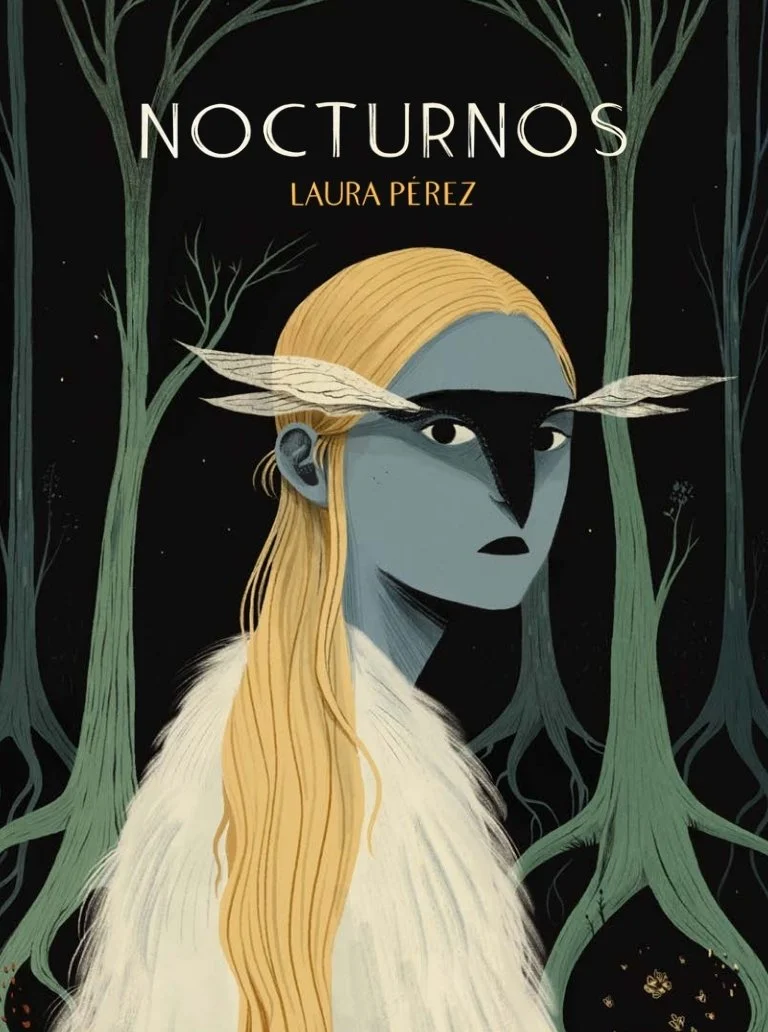
The day is divided into two. There is the dark, and there is the light. When the sun is up, the world gets busy. People work, walk, talk, eat, create – live in the light. But when the sun sinks, the world shapeshifts into a different place. Sometimes it’s quiet with lulling televisions, dreams and sleep. Other times, it’s loud and lively, thanks to drink, dance and throbbing music.
Laura Perez's Nocturnos is an ode to the night. Translated by Andrea Rosenberg, Nocturnos shares vignettes of people, places, and things amidst the darkness.
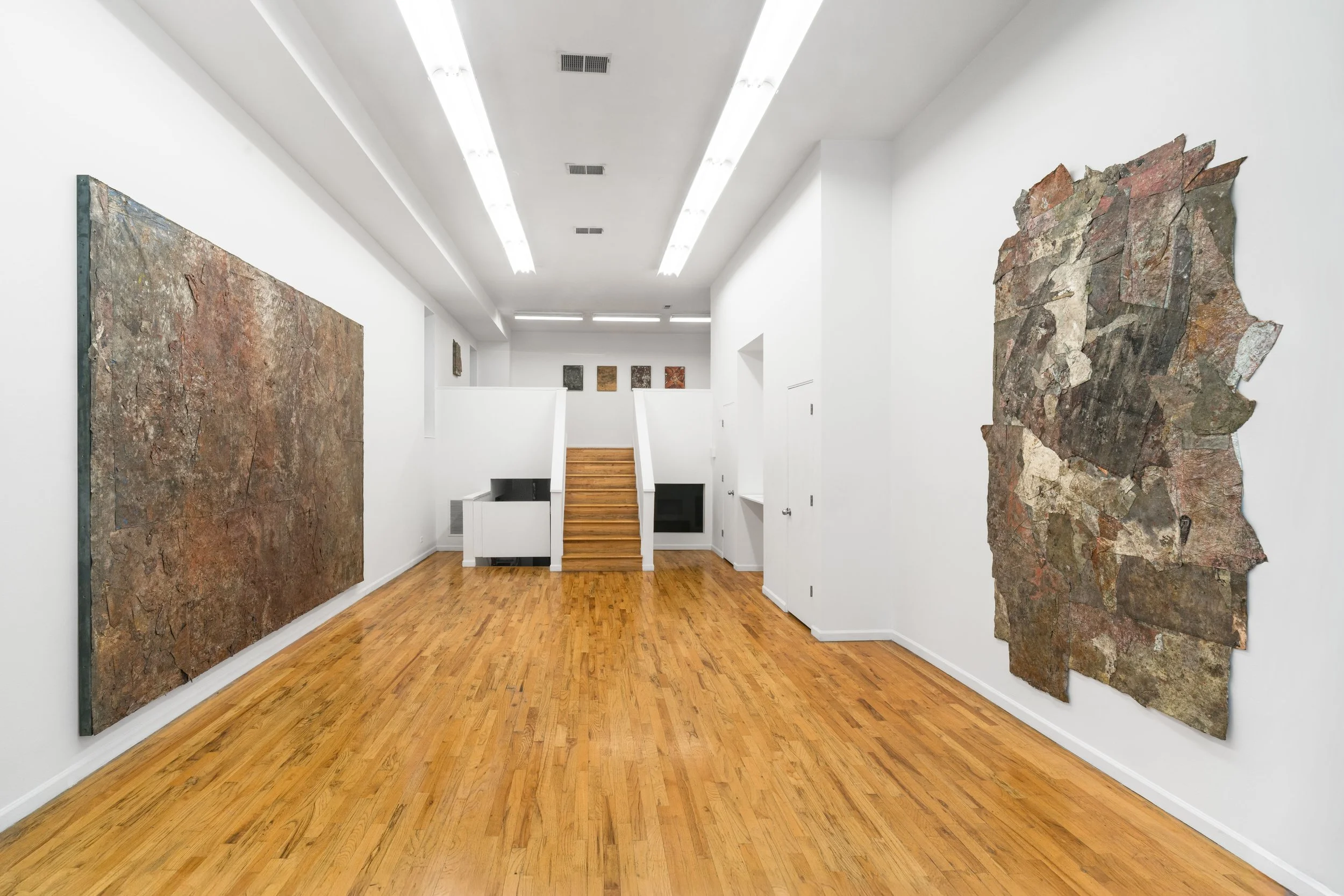
In the end, isn’t all art about dying? It’s a question I continue to ask myself as I consider Judith Geichman’s “Wiegala,” on view at Regards through October 24th. The exhibition—the artist’s fifth solo show at the gallery that’s represented her since 2015—takes its name from a lullaby by Ilse Weber, written while the Czech poet was a prisoner at the Theresienstadt ghetto from 1942 to 1944, where she worked as a nurse in the children’s infirmary before volunteering to follow her husband, Wilhelm, with their son Tomáš, to Auschwitz, where she and the boy were murdered. We know of the lullaby only because Wilhelm, who somehow survived, returned to Theresienstadt after the war to recover a collection of his wife’s poems that he had hidden from the Nazis beneath a garden shed.
It’s for posterity as much as for the audiences of today that we make art. Rare is the artist who hopes to outlive their work. For it to matter, art must endure, if only in our memory. Museums abound in the work of the dead. Nietzsche famously said, “We possess art lest we perish of the truth.” And the truth is it's only because we will all die that we value anything. And before you imagine being tortured forever, consider it’s only because it can die that life evolved the ability to even feel pain, or evolved at all, for that matter. Some art is more explicit in the way it asks us to contemplate our mortality. Assign it a title like “Wiegala,” for example; sometimes it’s context, like the recent passing of Geichman’s partner and husband of almost forty years, the artist and educator Frank Piatek. But some objects, by their very nature, induce such contemplation.

Natasha Mijares is a Chicago-based poet and visual artist. Her debut poetry collection, violent wave, merges the two disciplines in an effort to play with and complicate the reader’s understanding of space and how it fills the page. The book will be published later this month by Bridge’s recently launched poetry imprint, Allen Editions.
I spoke with Natasha about her process, each of us situated in our respective bedrooms—or a bedroom—me at my desk, my bed half-built in the background, fully encumbered by a recent move, and her on her bed, laying on her stomach, her legs bent at the knee and her feet swaying in the air. On a warm September afternoon, we were connected, briefly, by two computer screens. I asked her about the visual evolution of her poetry, what it meant for her to create from the body, and who inspired her to do so.
This interview has been edited for clarity.
Ruby Djuna Haack: Tell me about your writing process with violent wave. What informed your work?
Natasha Mijares: So, I have been, as a poet, working on ways of having a very expansive practice. I’m a poet and visual artist so I’ve always been challenging myself to mix worlds together or have a sense of a poem that isn’t just a poem, or a visual piece of art that is also written. Staying in the in-between spaces or the interstitial spaces is what my favorite kind of art is, so it’s always informing my work... I think those are the intentions and the things that inspire the formal qualities of the book. I feel like, as a poet as well, there’s this relationship to form that you develop that, for me, has always been positive. I feel like form is so interesting because it’s a set of rules, and how you manage them and break them, it’s something you have to learn. And I think that’s something I find interesting.
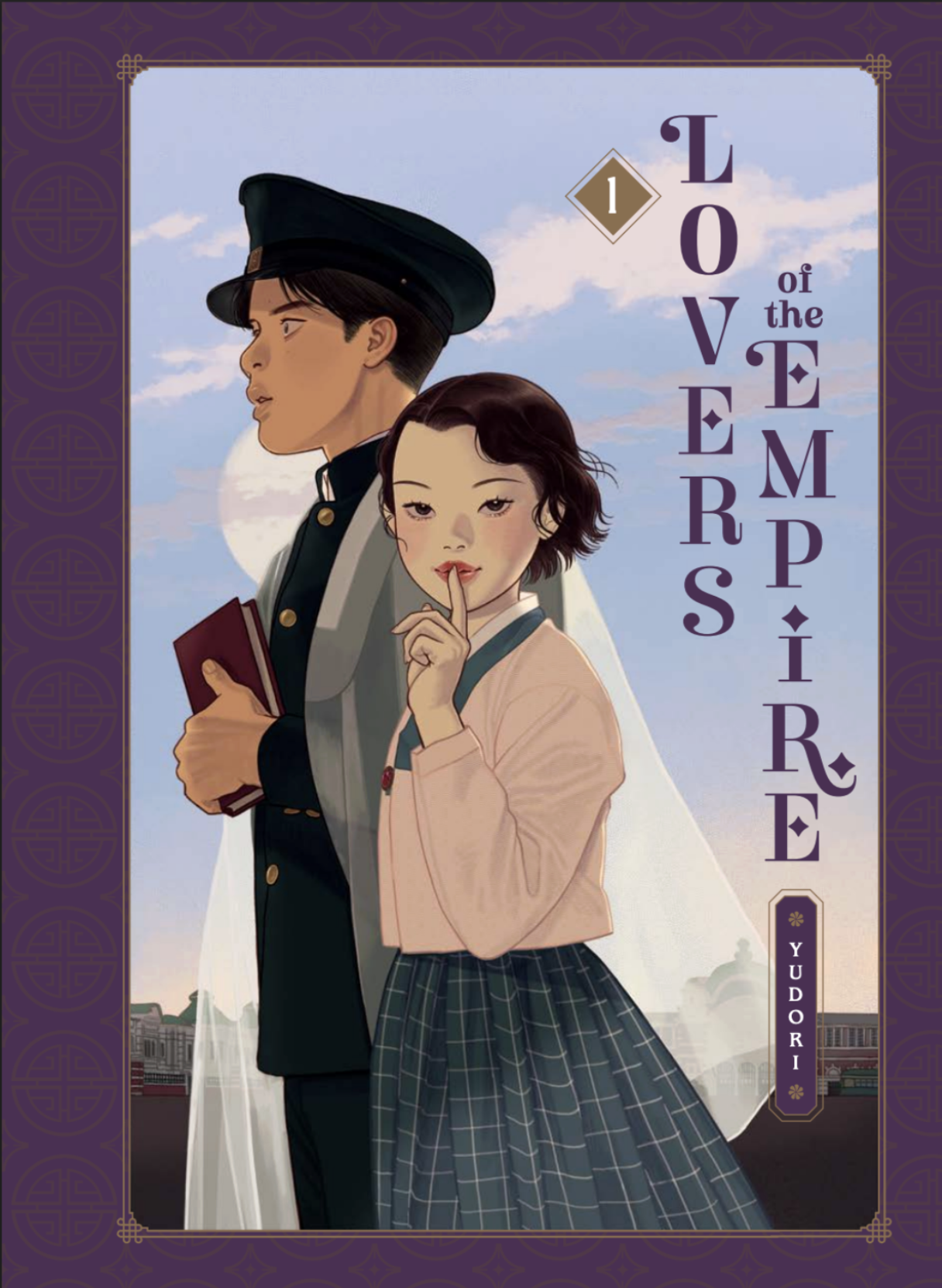
Jun Seomoon didn't fall for a girl. He fell for a life he'd never be allowed to have. Yudori’s novel, Lovers of the Empire, is set in the Japanese colonial capital of Joseon in northwestern Korea. The novel follows Arisa Jo, “the girl with the slimmest eyebrows” and daughter of a wealthy business man who owns a two-story, western-style fabric store, and Jun Seomoon, a young man Arisa’s father has taken in after an incident with the Japanese police resulted in the death of Jun’s father. Their relationship unfolds through this imbalance: Jun as the servant, Arisa as the girl whose family saved him. From the start of the graphic novel, as early as the cover of the book, Arisa and Jun are each other’s foils. Arisa carries herself as a woman of the modern age. She moves through Gyeongseong with confidence and attracts attention from everyone around her. Jun, on the other hand, is stuck in the ways of the countryside, holding onto the traditional forms of dress, speech, and life. His traditionalism not only leaves him stuck in the past, but alienates him from his current reality, leaving him constantly feeling like an outsider. However, Jun’s attraction to Arisa, a woman of the new world, pushes Jun to explore modernity first-hand, experiences otherwise unattainable to him. This tension makes Lovers of the Empire: Vol. 1 more than just a story about unrequited love. It's a metaphor about modernity being just out of reach and class being the reason it stays that way.
I followed Veronica Talon like I promised her father I would, even though the man was five years dead now and my obligations to him were over.
Larry Talon – my boss for nine out of the eleven jobs that had me transition from unqualified food critic to unlicensed gumshoe – was a private man with deep pockets, and when I started tailing his over-litigious brother-in-law over some missing motel room receipts, Talon expressed to me how very worried he was about his one kid Veronica, who was in her late twenties when I started to look out for her and make sure my late boss’s sole heir was safe. Now, at thirty-three, Veronica could still easily pass for a twenty-four-year-old and made damn sure to use that power to her advantage. Although she was in no way ever going to have to scrounge, the woman got mad kicks from conning lovelorn suckers out of their cash, and she had been pulling this very similar stunt on very similar men for over a decade. But right now, at the cusp of early middle age, she was just beginning to realize that she might not be able to keep pulling off this same con so easily for much longer – not in this town at least, and maybe not even in this part of South Texas anymore either, this border zone where, despite never having been cuffed and booked, she was starting to really look like she was up to something sinister to anyone who cared enough to think twice about how she stood to be seen when in line at Starbucks but never ever had to stand in line for a drink at a bar.
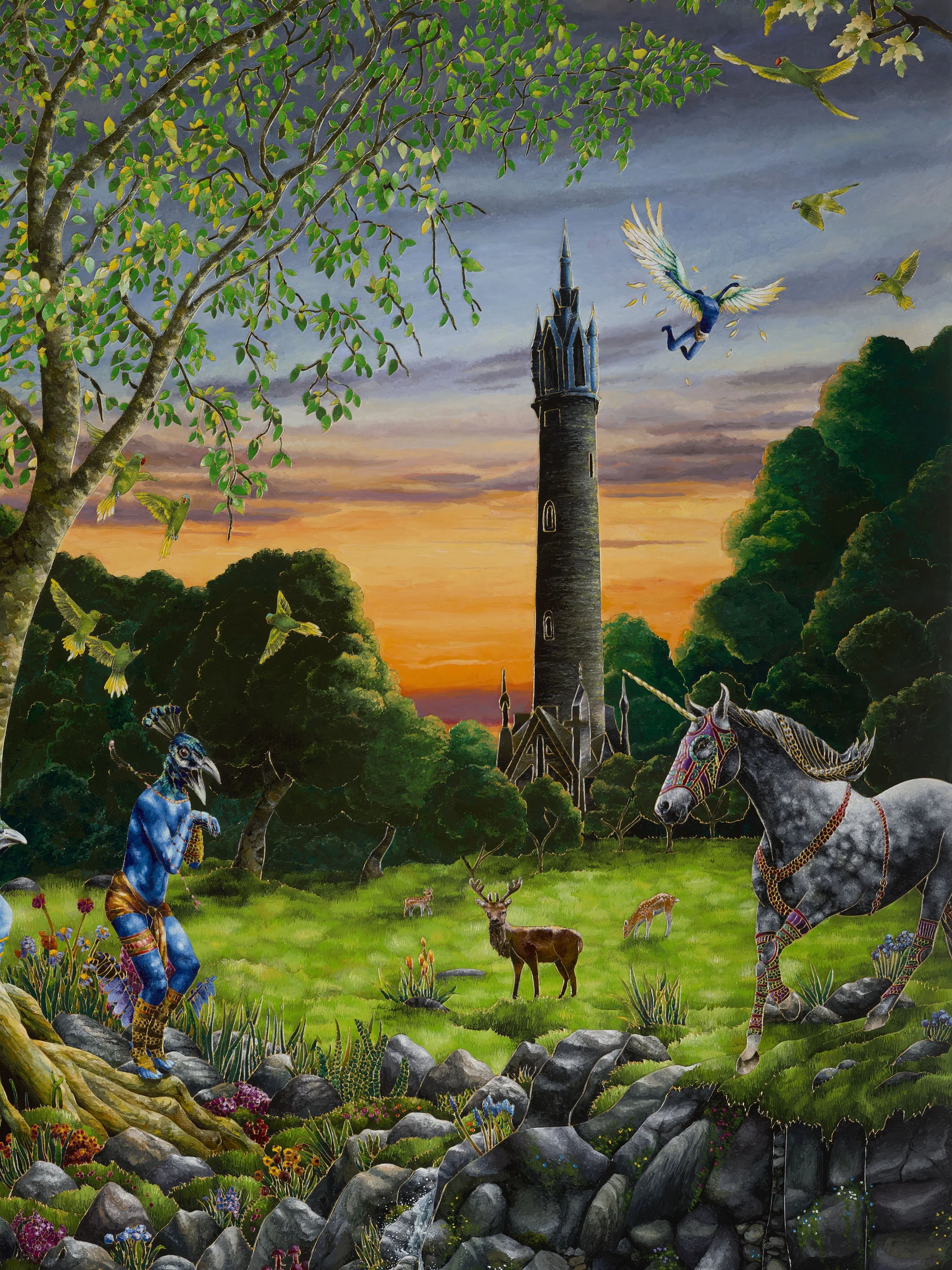
It is impossible to enter the first floor of the modern wing at the Art Institute of Chicago without staring in amazement at Raqib Shaw’s Paradise Lost. The painting measures over 100 feet long and comprises 21 panels portraying four chapters of Shaw’s life, filled with fairytale creatures and religious symbolic imagery.
Paradise Lost has been a work in progress for Shaw since 2009, but this exhibition marks the first time that the piece is being seen in its entirety. On one end, a human with a tiger’s head looks into the full moon from the edge of a cliff. On the other, a party of creatures with peacock heads and blue, human bodies laze about under a tree, holding parasols and playing chaupar. In between, there are deluges of water, cities crumbling, and bloodthirsty animals, fine-tuned with such precise detail that viewers can only see up close. At first, the scene appears to be vibrant, but serene—ocean waves crashing, cultural temples erected in the sun, and monkeys perched on tree branches. But upon closer inspection, darkness lurks in the details of these beautiful, grander scenes. The waves are violent, the temple is tumbling, the monkeys’ maws are bloody. These images serve as a symbolic reference to Shaw’s past.
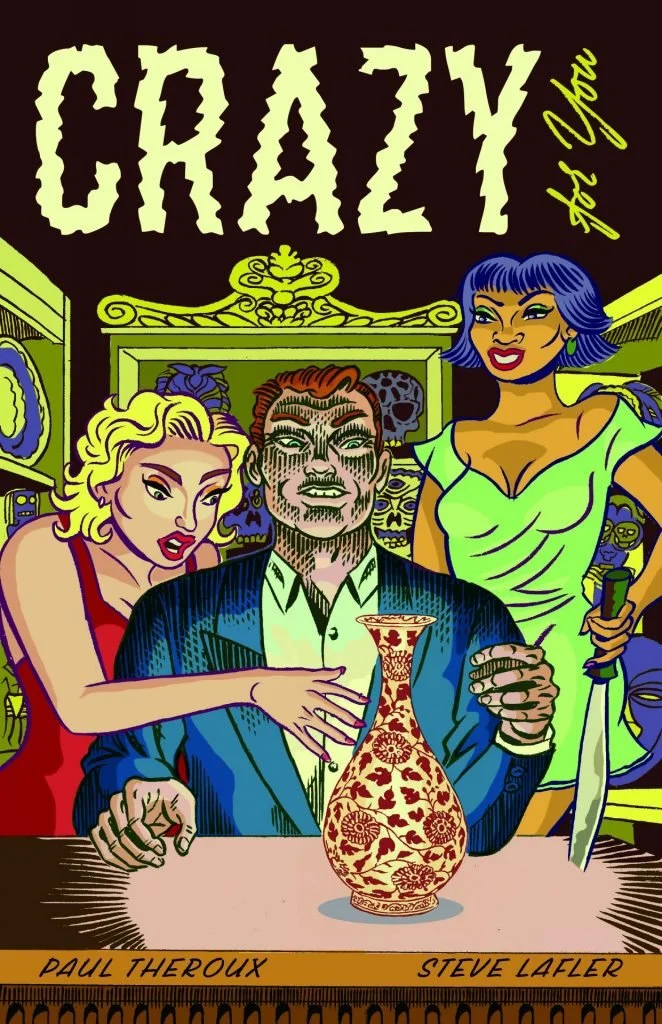
Drawn by Steve Lafler and written by Paul Theroux, the two stories collected here—“Siamese Nights” and “Minor Watt”—bleed sub-pop noir with an authenticity and seriousness that challenges the stark, black and white coolness of the book’s graphic style. Both follow men who have broken bad, tumbling into a darkness of narcissism and unchecked self-regard that leaves them blind to the wreckage they create—and to their own approaching ruin. In “Siamese Nights,” real human despair and longing for connection push against the surface pleasures of the genre, while “Minor Watt” takes us over the edge into a splendid portrait of narcissistic insanity. Both stories are rooted in a world of desperation and in the impossible ideals of creativity and freedom, ideals that boil over into a freedom from selfhood, replacing our ability to chart a course of conscience when blinded with the mean little passions of revenge, escape, and the seductive ignorances the sum of various minor evils can render.
Drawn cleanly with beautiful, ranging marker tones, Crazy for You adapts two stories that first appeared in Theroux’s 2014 collection Mr. Bones: Twenty Stories. The pairing is a fitting collision of sensibilities. Theroux, best known for a body of fiction and travel writing that includes The Mosquito Coast and decades of work tracing the desires, evasions, and moral compromises of people in motion, brings to these stories his familiar interest in drift, appetite, self-deception, and the places where freedom becomes another name for exile. Lafler, whose long career in alternative comics includes Dog Boy, BugHouse, 1956, and the Cat-Head Comics imprint, meets that material with a graphic language rooted in underground comics, jazz-age noir, grotesque comedy, and an evocative, almost sturm and drang aspect to his elastic figuration. The resulting pages go beyond illustrated literary adaptation, to a translation of Theroux’s moral unease into line, shadow, gesture, and a tensile anti-caricature that fits beautifully into the thoughtfully wrought, scenic pages.
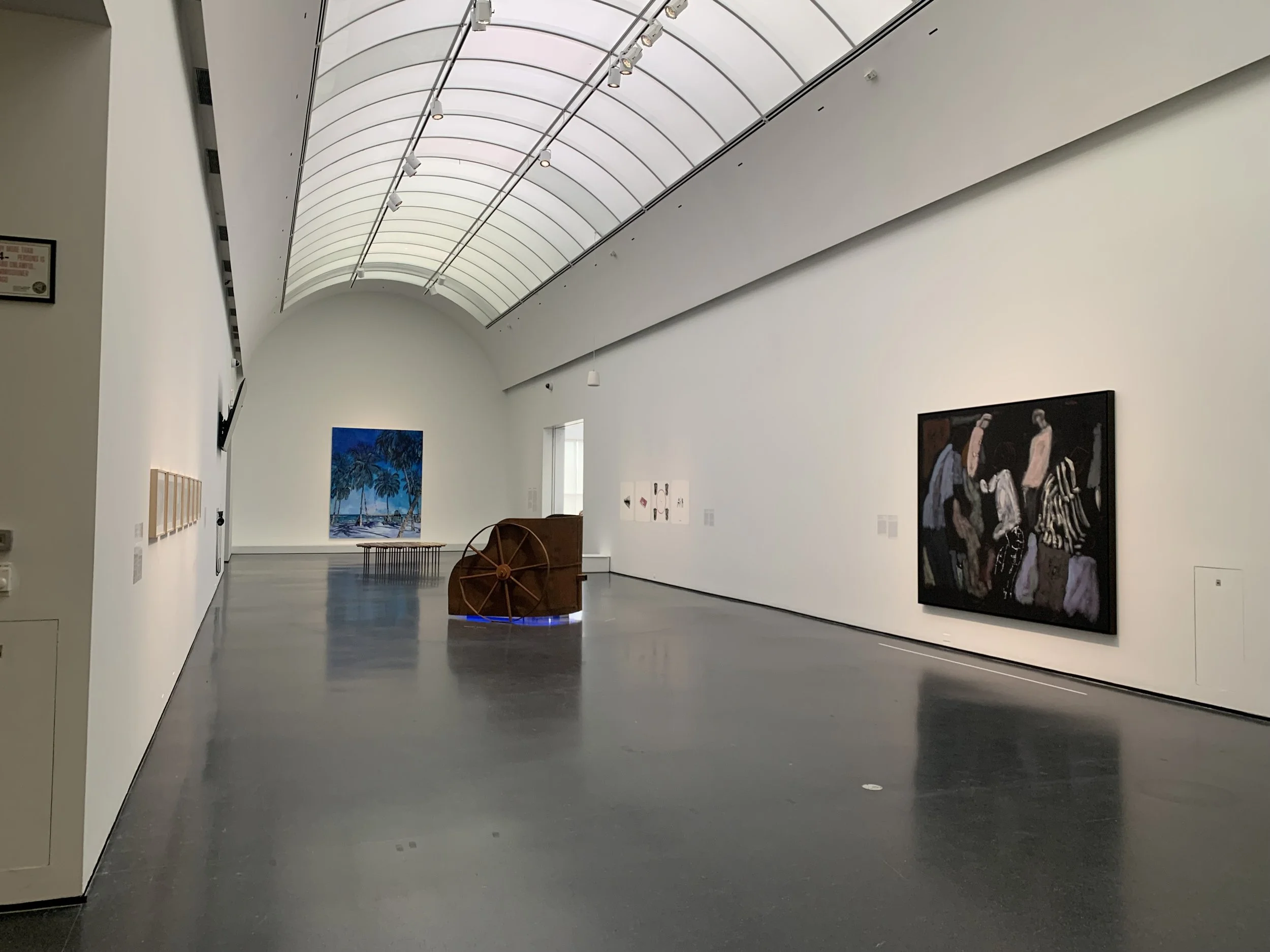
In 2019, the Puerto Rican people called for the resignation of the corrupt Governor Ricardo Rosselló after controversial messages between himself and colleagues were leaked, revealing homophobic and misogynistic hate speech, as well as statements made mocking victims of Hurricane Maria. While crowds ran to fill the streets playing diss tracks and the queer community invited people to dance to Reggaetón in front of an Old San Juan cathedral, Curator Carla Acevedo-Yates watched as a protest turned into a dance. This experience informed her new exhibition, Dancing the Revolution: From Dancehall to Reggaetón at the Museum of Contemporary Art Chicago. Standing outside the exhibit, one can hear the shouts of protest accentuated by the sweet beat of bass, beckoning them inside, and urging them to dance.
Dancing the Revolution: From Dancehall to Reggaetón is a Museum of Contemporary Art Chicago exhibit running from Apr. 14, 2026 - Sep. 20, 2026 that boasts 40 artists’ works across varying mediums. The enormous exhibit spans nine rooms of the Griffin Galleries of Contemporary Art, providing an overwhelmingly immersive exhibit. Curated by Carla Acevedo-Yates, Dancing the Revolution seeks to explore the cultural, political, and spiritual significance of dancehall and reggaetón music as it expands beyond its grassroots origins of revolution into pop culture and media.
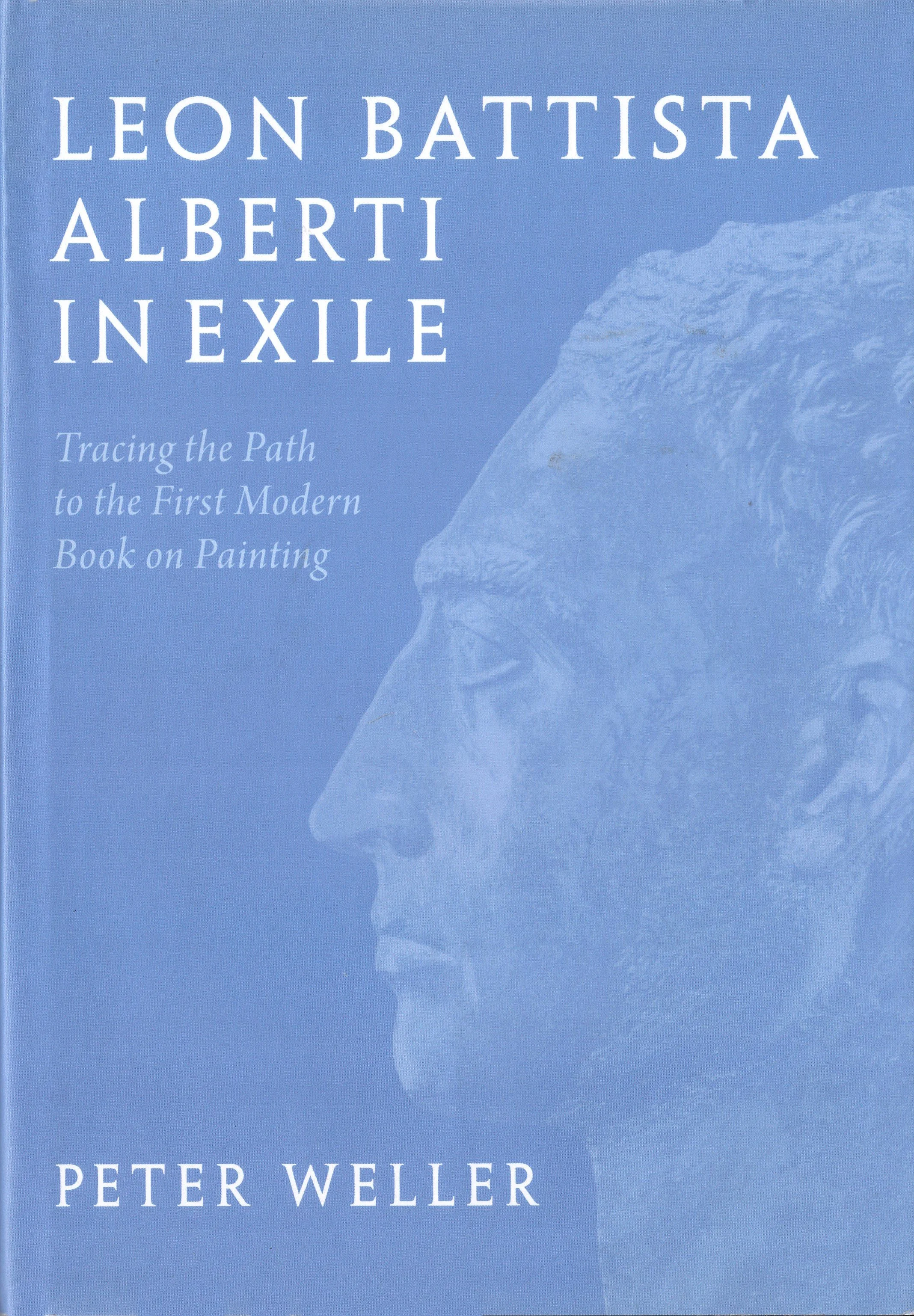
Peter Weller’s Leon Battista Alberti in Exile: Tracing the Path to the First Modern Book on Painting unfolds as a quietly revelatory study, reframing the familiar narrative around one of the Renaissance’s most polymathic figures. Rather than situating Alberti’s seminal treatise De Pictura purely within the context of his celebrated return to Florence, Weller redirects our attention to the artist’s earlier years spent in exile—in Padua, Bologna, Rome, and even northern Europe. It was in these formative environments, he argues, that Alberti absorbed the intellectual and visual currents that would shape De Pictura into what many regard as the founding text of modern art theory. The shift in emphasis may seem subtle, but its implications are profound: Alberti emerges not only as a Florentine prodigy but as a thinker forged in transit, his modernity born from displacement and encounter.
The book is carefully structured around the chronology of Alberti’s movements, beginning with what Weller calls the “Florence Problem” and then unfolding into extended discussions of his intellectual evolution in Padua, his years of study in Bologna, the resonance of his Roman sojourn, and finally, his return to Florence with a vision already deeply transformed by the wider world. This framework offers a map of intellectual maturation, showing how exposure to varied cultural, artistic, and philosophical traditions gave Alberti a vocabulary for perspective, narrative, and composition that would prove groundbreaking in the mid-1430s and give us De Pictura, the “first modern book on painting.”
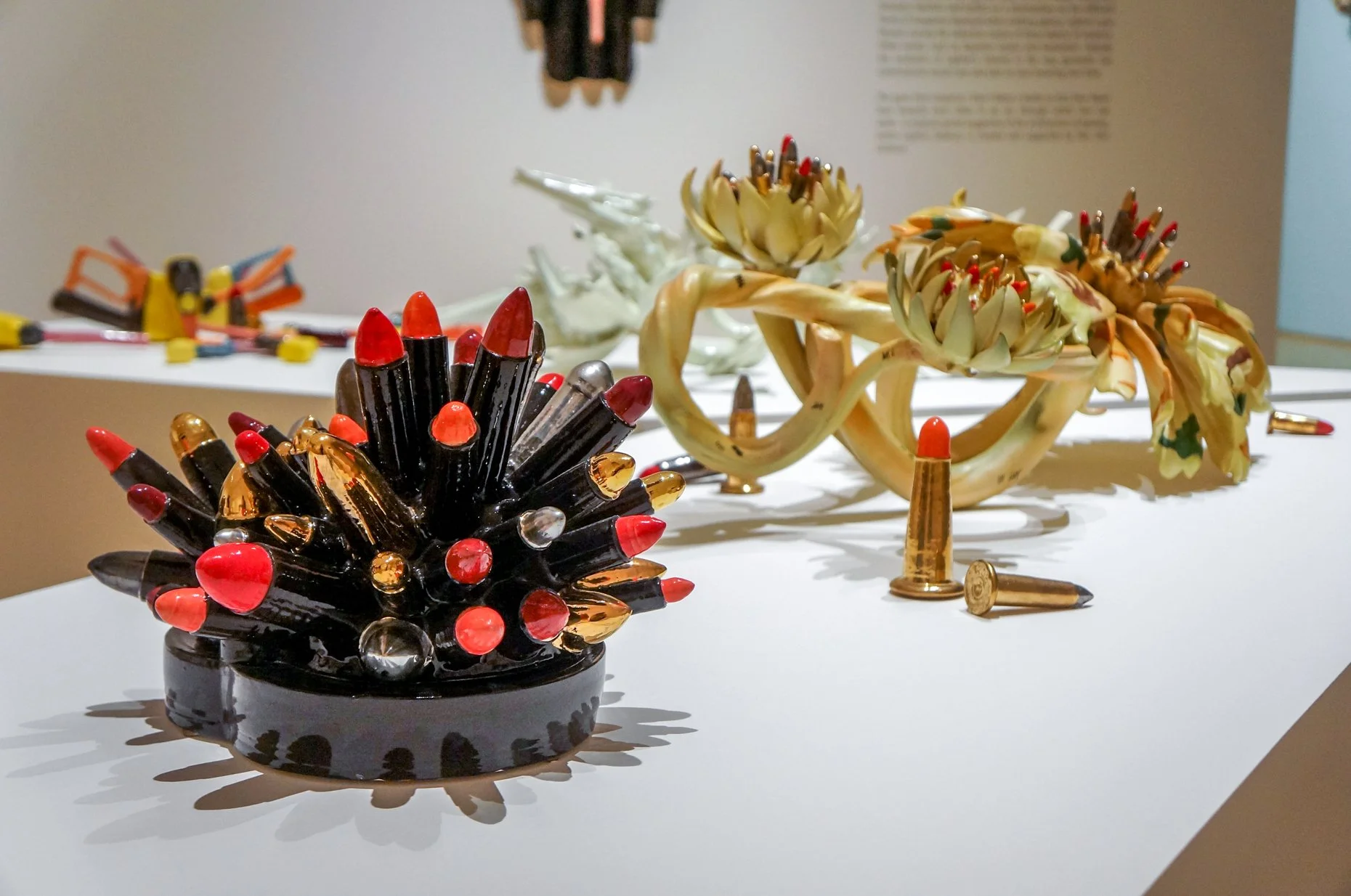
Somehow, the coverage about a Ukrainian woman asking Russian soldiers to carry sunflower seeds in their pockets “so they grow on Ukraine soil” when they die resurfaced on my feed. I pictured sunflowers sprouting out of blood-soaked soil and decomposing bodies, melted flesh mixed with ashes. They grow at 3x the speed in my mind’s eye, yellow petals stretching out like flames. My throat constricted. My eyes were welled with tears. The flowery fire licked my skin, leaving behind a shivering trail of mournful grief and tingling hope. Bright light wrapped up all the ugly things in this world and turns them into something else: an ephemera, a monument, an atlas. I saw flowers everywhere in Linda Lighton’s world.
On view at Nerman Museum of Contemporary Art at Johnson County Community College through May 6, 20206, “Linda Lighton: Love & War, A Fifty-Year Survey, 1975-2025” is a thoughtful retrospective exhibition featuring a wide array of ceramic sculptures by Kansas City-based artist, writer, activist, and educator Linda Lighton. Spanning across four gallery spaces, the exhibition provides a glimpse into Lighton’s colorful, botanical, fluid, and relentless world of creativity. As I stepped into the gallery, I was immediately swept off my feet by the natural elements in Lighton’s work. Floras, cacti, crawling veins, cacti… the sight brought me so much joy, I wanted to squeal about how cute they are and touch their petals and tell them how beautifully they bloom like I always did at an arboretum.

Visiting High Line in New York City on a cold December day (when I first visited), one might expect the plant beds to be devoid of vegetation. Instead, hardy grasses like the Shenandoah Red Switch thrive along the park’s elevated sidewalks. Plant lifeforms are further accentuated by Sopheap Pich’s massive sculptures of seedpods. These sculptures are displayed alongside living plants as part of High Line’s rotating and semi-permanent art installations. Pich’s Kânh Chhrôôl (Gluta Usitata), Melembu, and Khlông (Dipterocarpus Tuberculatus), comprises three large copper and steel sculptures of hardwood trees native to Southeast Asia. On display until September 2026, these sculptures are a reminder of the near invisible nonhuman, plant actors which also dwell in NYC’s urban environments. Like the plants they mimick, the sculptures flourish year-round, interacting and connecting viewers with the built environments they live within.

As I write this, Artemis II has just returned from the dark side of the moon. It is a milestone in the exploration of space, yet any uncomplicated sense of celebration feels misplaced. While NASA might have won this one, the contemporary space race is mainly driven by billionaires' private interests and their specious designs for the future of humanity. Elon Musk and Jeff Bezos have made no secret of their conviction that the boundaries of the earth and the limits of mortal bodies are problems to be solved, confines that can be escaped.
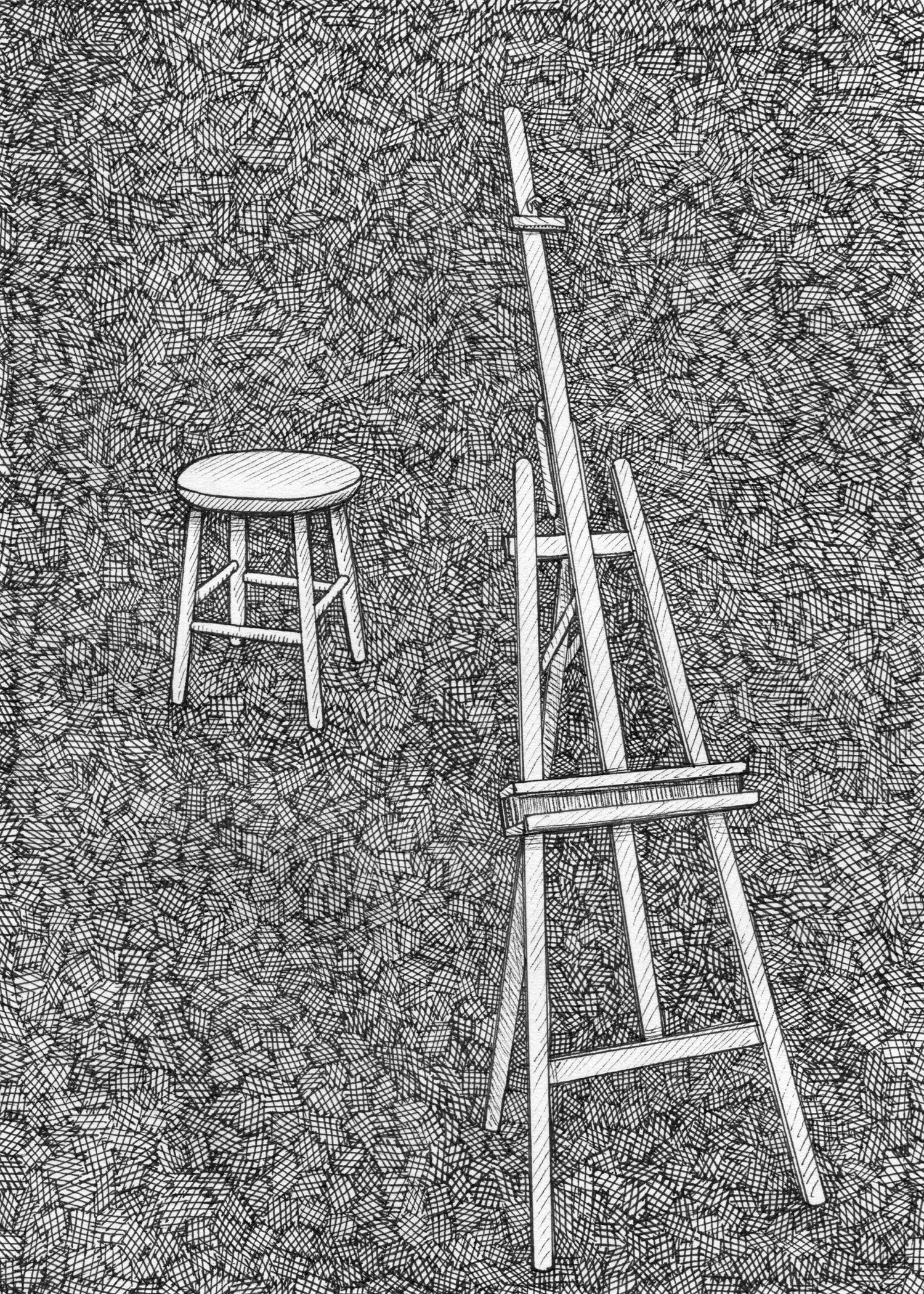
Ezra Safdie was twenty-nine. Dark eyes, dark Mediterranean skin, a long neck and large Adam’s apple, pursed mouth. The eyes were intelligent and searching, the mouth sardonic, often derisive; mostly he mocked himself. He saw couples holding hands at the Centennial Exposition and felt intense longing: a longing to be a different person and to have a different life. He had odd jobs at the Exposition. He washed dishes in the Turkish café, unloaded silk embroideries and carpets at the Turkish Bazaar next door, and sold olivewood trinkets at the Syrian Bazaar for four brothers, Orthodox Christians, whom he had met on board when the steamship brought him to Philadelphia six months earlier.
He shared a room with Irish day laborers in a tenement on Fitzwater Street in Southwark. He couldn’t always understand their accent and they couldn’t always understand his. He spoke Arabic, Turkish, Ladino, a little Greek, a few words of French; he thought his English was still poor.
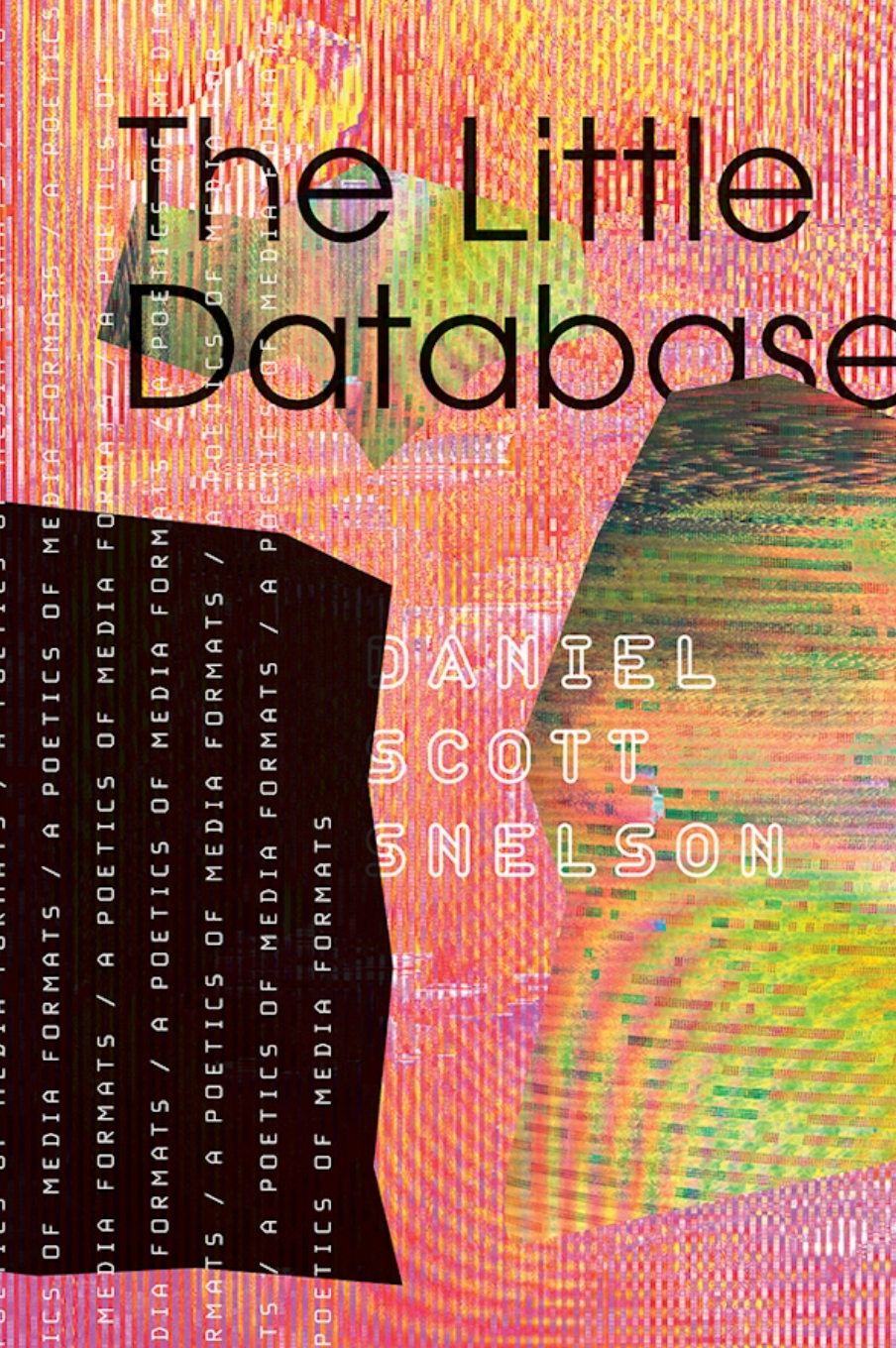
Daniel Scott Snelson is a writer, editor, and archivist working as an Associate Professor in the Departments of English and Design Media Arts at UCLA, where he serves as a member of the faculty for the Digital Humanities, the Laboratory for Environmental Narrative Strategies, and the UCLA Game Lab. His online editorial work can be found at PennSound, Eclipse, UbuWeb, Jacket2, and the EPC. The Little Database (University of Minnesota Press, 2025) marks his seventh publication, one which positions itself as "a poetics for reading the everyday objects that populate a hard drive."

I first met Jennifer Eli Bowen in 2022 when she hired me as a summer intern for Minnesota Prison Writing Workshop, an organization she founded in 2011 that brings creative writing programs into Minnesota prisons and creates mentorship and publishing opportunities for writers on the inside. I was hired to help put the final touches on a book project she and twelve incarcerated writers had begun three years prior, a project continuously impeded and stagnated by the pandemic and the confines of prison censorship. I spent most of that summer in the passenger seat of Jen’s car, our hair wet, our coffees in hand, as we embarked on our early-morning commutes to Faribault Correctional Facility. It was during these commutes, driving through the many small Minnesota towns that freckled the highway, chasing a sun that was already high in the sky, that Jen became not only a supervisor, but a mentor. I rambled, as I tend to do, about the many moving parts of the literary world that I didn’t quite understand but tried to piece together. Jen, generously, helped me make sense of it, and in doing so, taught me about writing’s political power, about its radical potential to unite, inspire, and mobilize communities across carceral walls.

This feels good. It’s been a while since (A) has felt this good. There are no drugs involved. One and a half tequila lemonades did the job—working just well enough before he dropped the second one on the floor by mistake. ¥1000 each, no tipping. Good deal, he thinks while remembering the Monday night specials in college where the beer was cheap, but bad... and you still had to tip.
The club is small and lit sparingly by an old Italian film projected on the wall behind the DJ and three small lamps that sit atop the bar equally spaced apart. The crowd, tiny at first, now bulges towards the sides as if it were undergoing mitosis. This DJ, the opener, is a moderately famous internet personality from America that (A) knew only from a few of his most popular videos. His style of mixing recently released indie pop songs with 2010s cloud rap is usually played as a joke, but he seems more serious tonight. The people around (A) love it, not knowing whether to laugh or dance as he swings jarringly between genres. It’s about this time that (A) decides that the film projected on the wall is for ironic effect.

In a world full of countless books, it’s become more and more evident to me that first impressions of books are similar to first impressions of people. These impressions may not be the most accurate or holistic, but they often set the scene for what’s ahead. Thus, when picking up a book to read, I find myself subconsciously looking for three things: an inviting cover, a memorable title, and an intriguing logline. Prince Valiant Sketchbooks: An Illustrated Memoir by Brian M. Kane checks all of these boxes.

When I first entered the exhibit Rieles & Raíces at the National Museum of Mexican Art, my eyes locked on a painting of Our Lady of Guadalupe framed at the back corner of the room. An icon of Mexican art and religious imagery, the portrait stood out amid surrounding diagrams, typewritten documents and 3-D train car models sitting on a table under the Holy Mother’s gaze.
The painting by Mexican painter Gonzalo Carrasco, undated but completed in the 20th century, originally hung in the Chapel of the C.B.&Q. West Eola Boxcar camp in Aurora, Illinois. The camp was one of many locations in the Chicago area where traqueros, or Mexican railroad workers, first settled in the Chicago area.
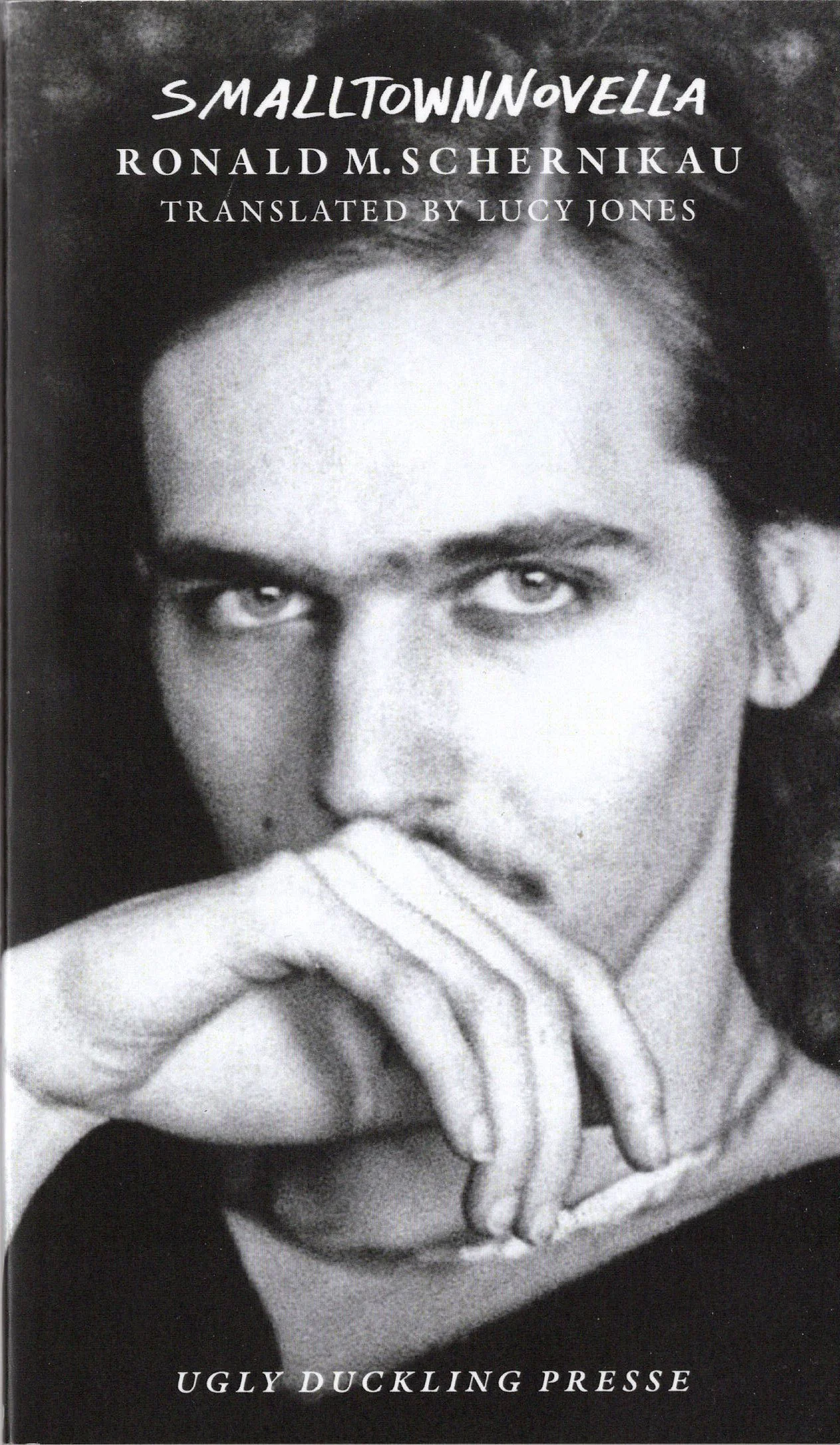
Readers interested in this first-ever translation of Ronald M. Schernikau’s SMALLTOWNNOVELLA should start with Ben Miller’s thoroughgoing afterword for the volume, published over at the Baffler. In it, he lays out much fascinating backstory to Schernikau’s personal life and socio-political contexts, the contours of which are crucial for understanding why this novella is more than another queer adolescent coming-of-age story: Schernikau was born in 1960 in Magdeburg in East Germany, smuggled by his mother to the West as a child, and raised in a small, socially conservative town where class tension, Cold War division, and criminalization of homosexuality shaped both his daily life and early writing. Miller traces how, after writing the novella as a teenager, Schernikau moved to West Berlin in 1980, entering a volatile mix of leftist politics, cultural theory, and queer subcultures, before later choosing to study and live in East Germany again out of a committed, if contradictory, belief in socialism. Throughout this trajectory, Miller shows how Schernikau’s queer life—often muted or displaced in his early fiction—was inseparable from the political pressures and ideals of his time, making SMALLTOWNNOVELLA not just a personal story of desire and alienation, but a document of life shaped by Cold War ideology, class struggle, and the fraught search for a livable queer identity.
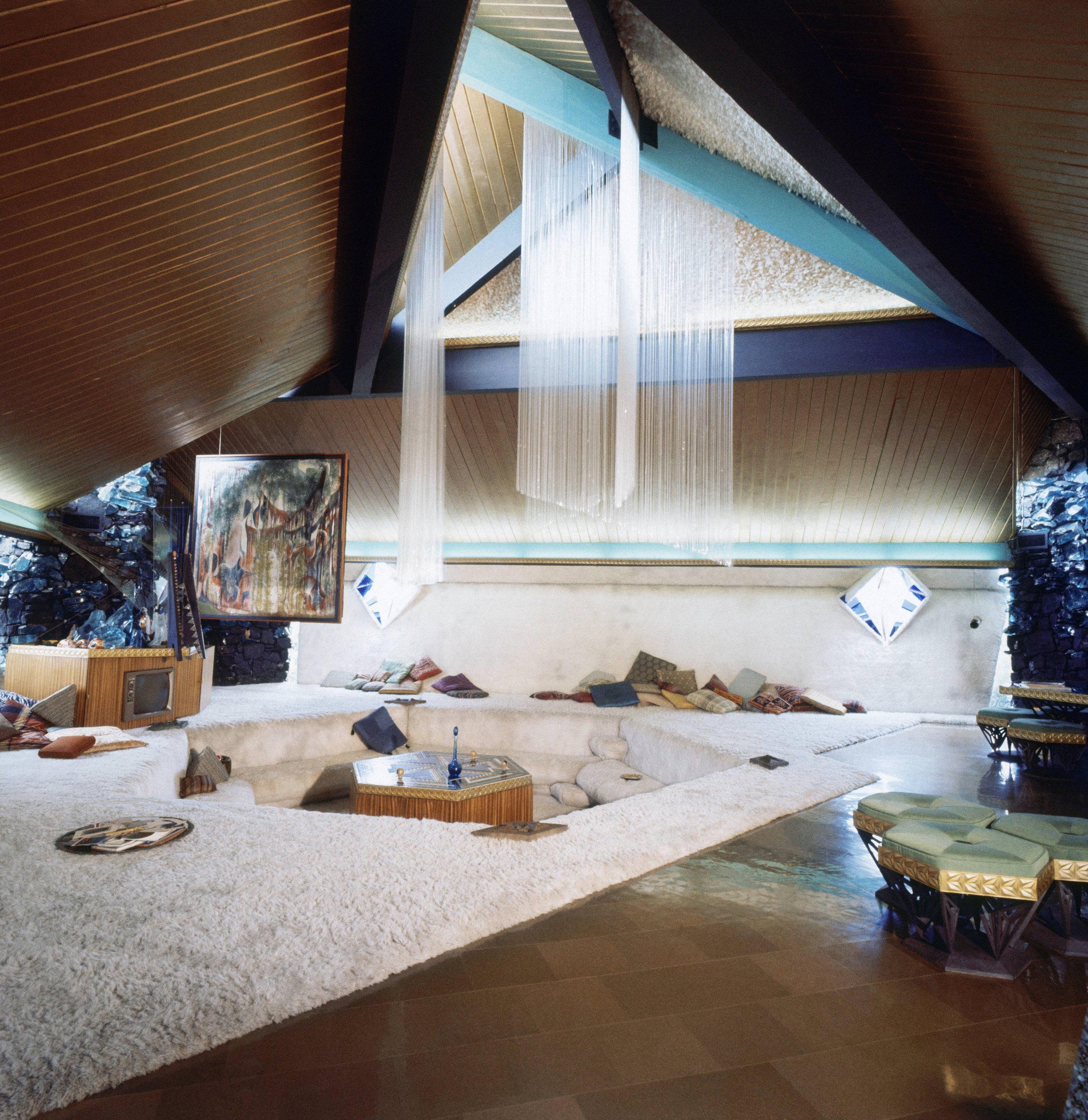
Popular architectural history, and popular American architectural history, is littered with numerous innovative practitioners, many with solid widespread practices, who for some reason never received much attention in their day and were ignored by east and west coast media and academic establishments that were carefully crafting the preferred narratives. The vast unconsidered landscape between the coasts was not worthy of attention except under very special circumstances. But, having said that, there were also many imaginative coastal architects who also failed to satisfy these narratives and receive media attention.
Philip Johnson, the self-appointed tastemaker, seemed particularly hostile to the Midwest pioneer spirit and Frank Lloyd Wright in particular. As one who brought the modern movement to the attention of the American public (he curated the Modern Architecture: International Exhibition at MOMA in 1932 at the age of 27) Johnson advocated largely for European architects or the steel-and-glass international style and dismissively labelled Wright as “the greatest architect of the 19 th century”— meaning a man of the past. At that time Johnson failed to recognize Wright’s third, and possibly the greatest, act in architecture which featured nearly 30 years of significant visionary work before Wright’s death in 1959 was about to begin. A few examples of the groundbreaking, cutting edge projects that Wright realized in this third act include the Guggenheim Museum in NYC, Fallingwater in Bear Run, PA and the Johnson Wax Headquarters in Racine, WI.

I was unsure whether the narrator was alive or not. Early on, she professes “Maman, I committed a murder.” She is speaking to us from a non-place, but her son is there. So is Kafka’s The Idiot, who presents himself as a character. Mdeilmm: Mole Speech (2024) by Hélène Cixous and translated by Peggy Kamuf is a striking reflection on life, death, and language. Referencing many texts, including Victor Hugo’s The Last Day of a Condemned Man, it weaves in segments from literature and life to form a portrait of a person searching for herself.
“I am writing this in human time it is not I who am dead, the soul accepts to occupy my body without being asked to do so, because from my study all my senses give onto the universe. I do not command. I state.” The book flows from segment to segment, weaving in her personal family history and scans of old documents, unclear what purpose they reveal in the context of the narrator’s identity, but we accept them as readers. They are beautiful to look at. It feels as though she is offering clues as we search, alongside her, for clarity. The book is heavily poetic, it often felt like pushing through thick fog to see a landscape.

They called it restitution, but it looked like every other deportation line I’d ever worked. Same cracked tiles, same folding chairs, same hum of machines louder than prayer. Only the faces had changed—pale, freckled, already pinking under the lights. Perfume like lilac and fear. Diamond crosses flashing at throats. Families clutching passports and monogrammed luggage like scripture, whispering, We belong here.

In her graphic novel Precious Rubbish, E blends satire into the story of her upbringing, with each panel constructing a fractured narrative. With a visual language inspired by pop art and midcentury cartoons, E confronts the harsh truths of her abusive childhood from an adult understanding. In doing so, she exhibits the healing power of art.
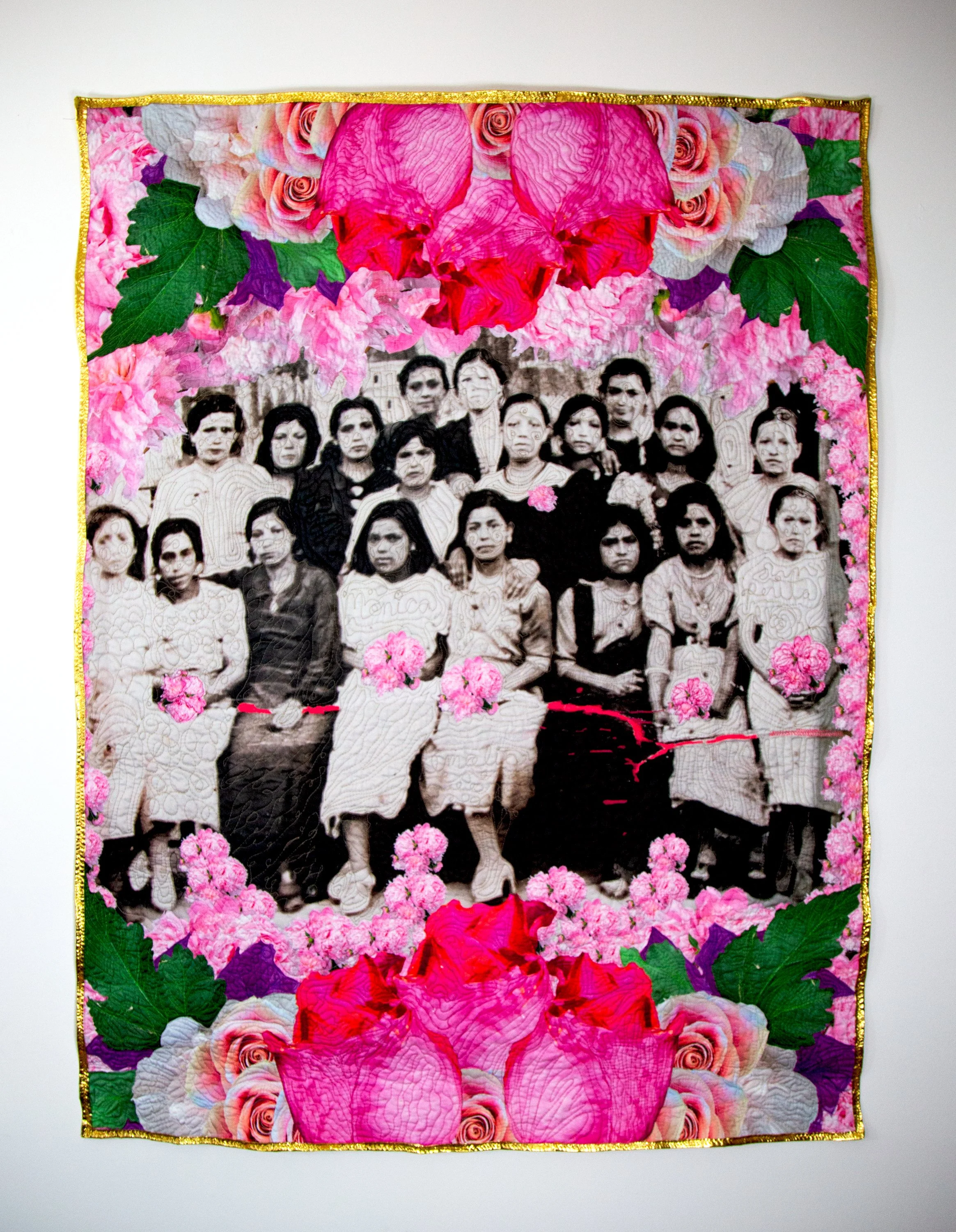
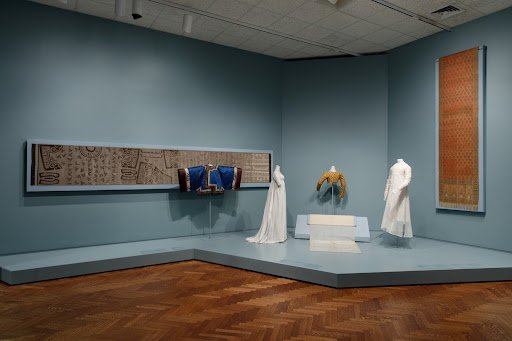
In the fall of 2022 I visited Anne Wilson's Drawing Room, an archive project from the artists’ textile collection informing her prolific creative practice. Opening the doors of her home and studio at a time when the world was just emerging from the threat of Covid 19, Wilson was also in the early research phases for On Loss and Absence: Textiles of Mourning and Survival, digging deep into the archive of the Art Institute of Chicago's Textile Department with fellow curators Isaac Facio, Nneka Kai, L Vinebaum, and Melinda Watt serving as senior museum advisor. On Loss and Absence: Textiles of Mourning and Survival spans four millennia, with artifacts dating from the 2nd century BCE to contemporary works made as recently as 2024. These textiles, which originate from all areas of our inhabited globe, speak to us in the present moment, the time and place from which we live. This editorial, rather than providing a review of On Loss and Absence: Textiles of Mourning and Survival, shares the perspectives and writings of three individuals who practiced slow, close observation to the textiles they encountered, featuring responses from Mariela Acuña, Vaidehi Gohil, and Caroline Bellios.
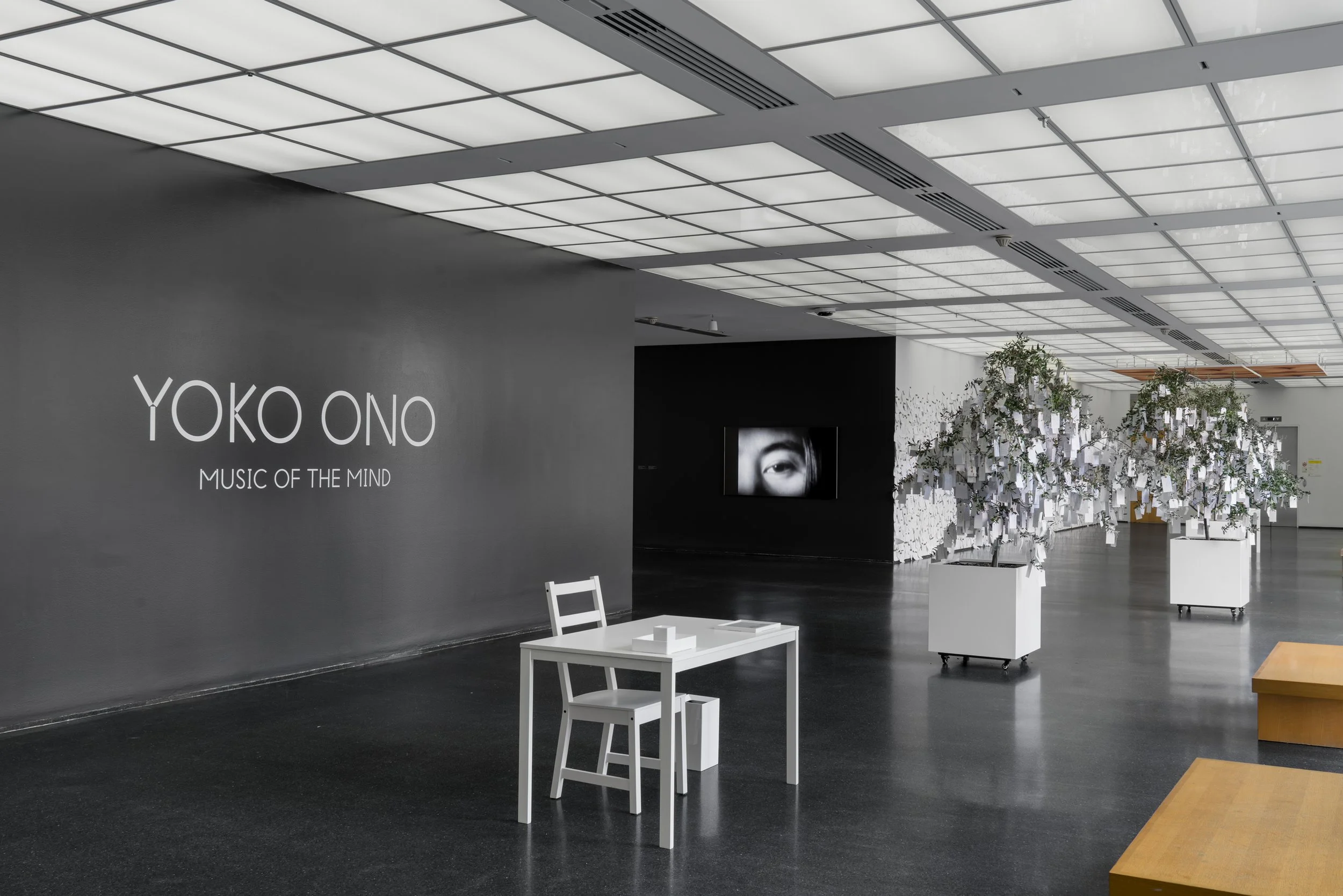
The first thing I encountered at Music of the Mind wasn’t an artwork, but a pair of visitors standing before one. They cocked their heads, whispered, then finally announced that they “just didn’t get how this could be art.” Their skepticism wasn’t malicious, it was simply confusion, mild irritation even. Yet the scene struck me as a perfect entry point into Yoko Ono’s practice, because this moment of grappling is not a failure of the exhibition but the mechanism through which it succeeds. Music of the Mind is built precisely for viewers like them, people uninitiated into the world of conceptual art, who expect clarity and receive provocation instead, who arrive at a museum wanting to see objects but instead are asked to think, imagine, touch, and complete the works themselves. Ono has always aimed to “bring the inside out,” to make the viewer’s interior reactions part of the artwork, and here, that dynamic unfolds in real time. The exhibition stages a space where unfamiliarity becomes activation and where skepticism is not an endpoint but the beginning of participation.
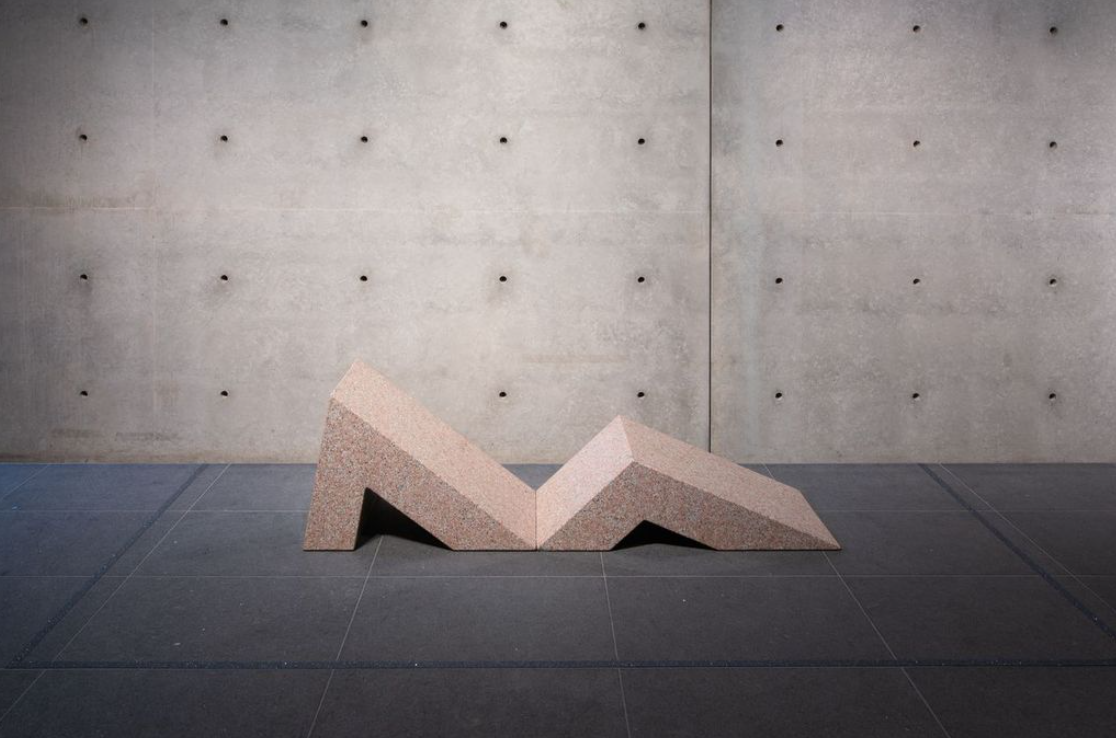
Scott Burton the artist has multiple points of entry. One may come to him by way of his work as a performance artist, a conceptual artist, a post-minimalist, a furniture designer, a public sculptor, a curator, or an art critic. And yet to brush up against Burton and reduce him to any one of these identities above is surely to miss the point. Scott Burton is a verse.

Little Pink Book: a bad bad novel is “wrong,” like how some guilty pleasures are “wrong.” Through her fan fiction and multidisciplinary novel, Kan-Sperling asks, why, in our attempts to discover ourselves, do we as writers and readers want misrepresentation, when it may initially seem impractical or harmful to explore? She takes readers to ugly and confusing situations that are somehow still beautiful, entrancing, and funny, where the violence isn’t glamorized by the overt aesthetics at play. In doing so she makes contemporary literature look like a prude—visually, linguistically, and thematically. I had never seriously considered that the novel could be more than tiny words typed out with black ink on a white page—until my time with the novel’s two main characters: Limei, and language itself.
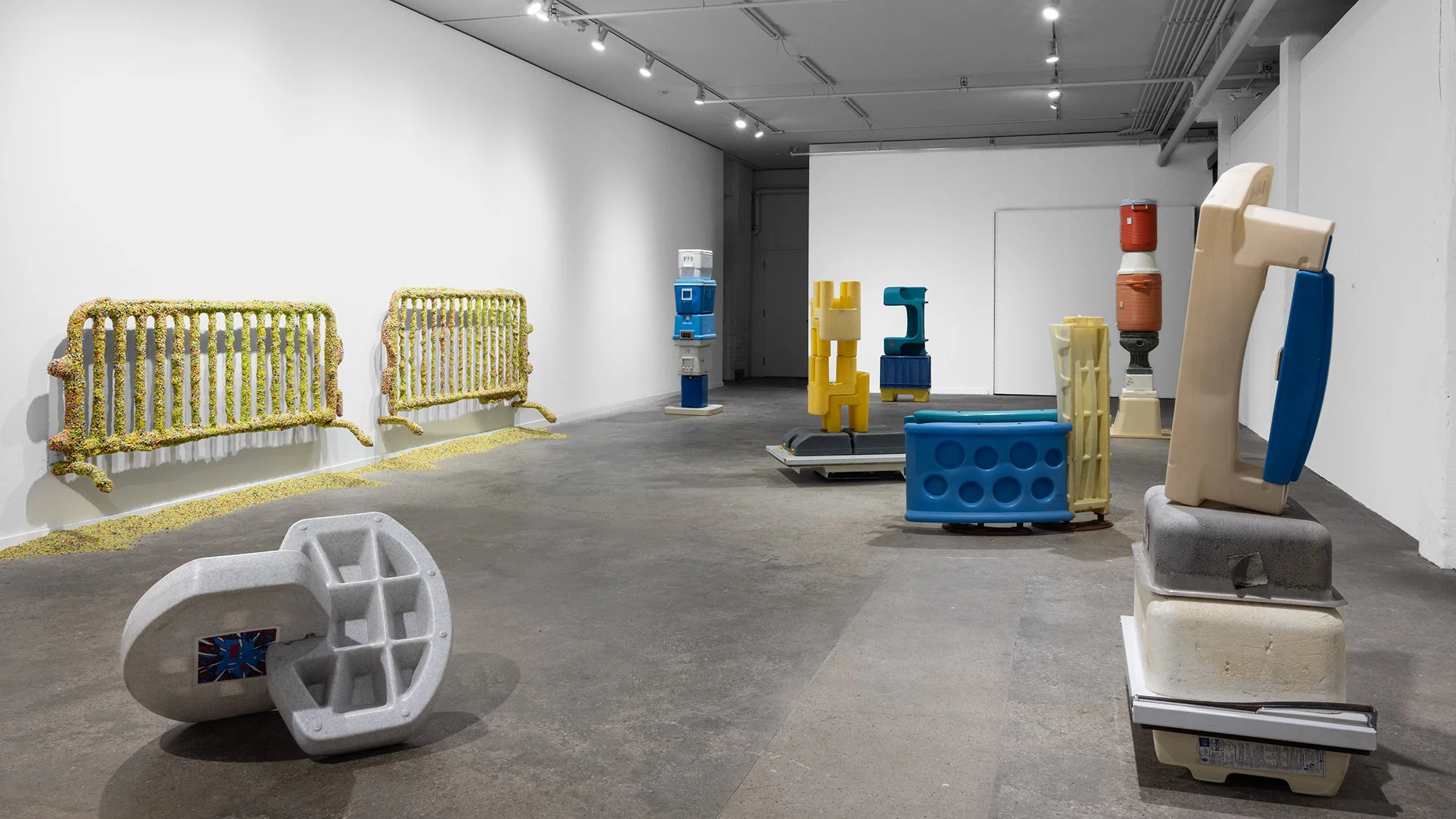
“How can we live without plastics? But, also how can we live without plastics?” Inverse questions like these continue to reverberate throughout conversations about climate change, including in environmental humanities and Anthropocene centered art exhibitions. In addition to these questions, SPACES’ current exhibition Everlasting Plastics considers the complexities of human relations with plastics and the ways in which these materials both shape and erode contemporary ecologies, economies, and the built environment. Not highlighted in the opening label, but also thematically present in the exhibition are indigenized worldviews of materiality and land and art making practices of salvage.
Magazine Archive

Little Pink Book: a bad bad novel is “wrong,” like how some guilty pleasures are “wrong.” Through her fan fiction and multidisciplinary novel, Kan-Sperling asks, why, in our attempts to discover ourselves, do we as writers and readers want misrepresentation, when it may initially seem impractical or harmful to explore? She takes readers to ugly and confusing situations that are somehow still beautiful, entrancing, and funny, where the violence isn’t glamorized by the overt aesthetics at play. In doing so she makes contemporary literature look like a prude—visually, linguistically, and thematically. I had never seriously considered that the novel could be more than tiny words typed out with black ink on a white page—until my time with the novel’s two main characters: Limei, and language itself.
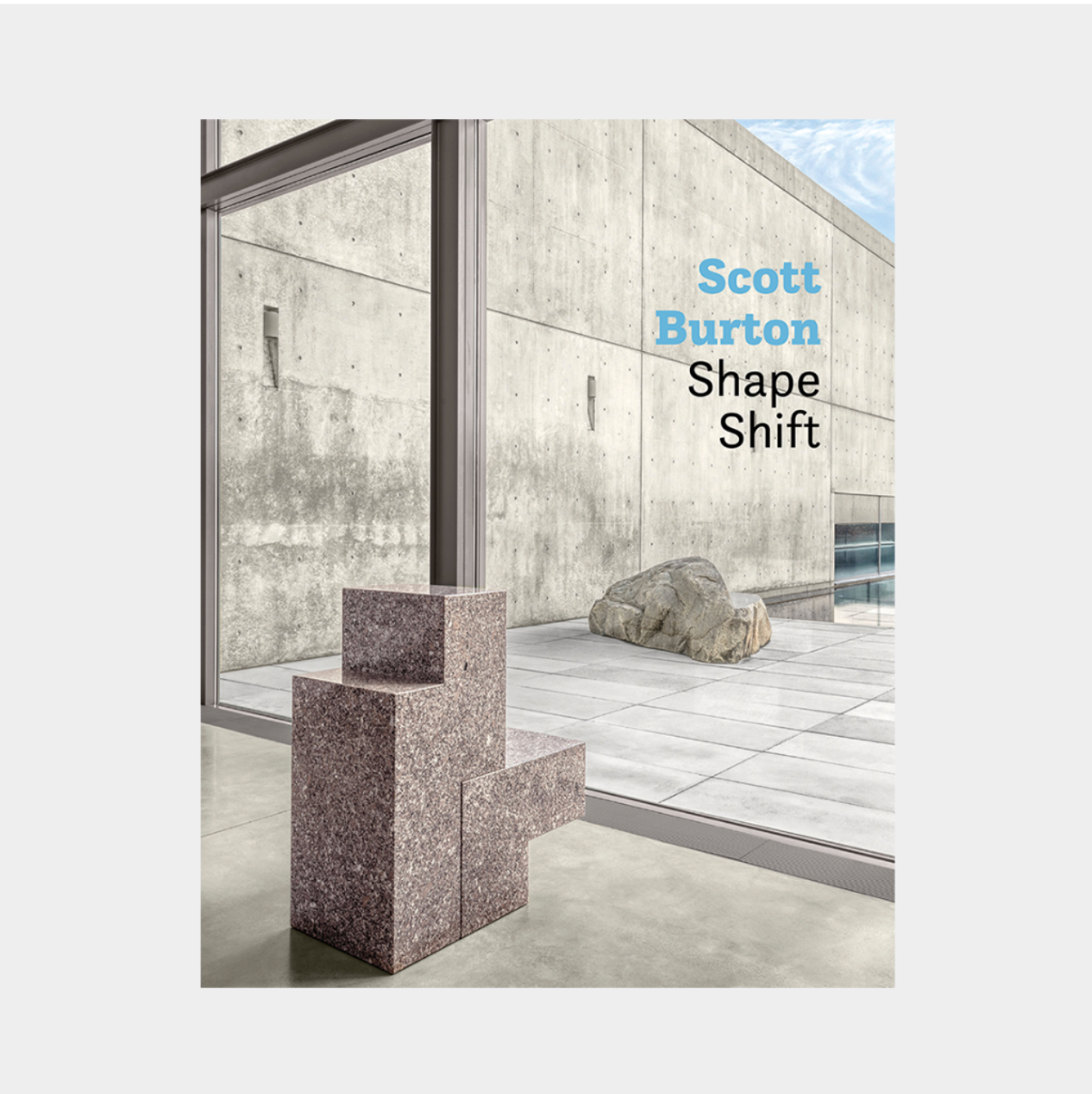
Scott Burton: Shape Shift - an exhibition originating at the Pulitzer Arts Foundation in St. Louis and now on display at Wrightwood 659 in Chicago is an engaging and much needed career spanning retrospective that is, and was, beautifully installed at two different Tadao Ando museums. Ando is a much-acclaimed Japanese architect known for his austere and precise minimalist volumes rendered in exquisitely realized concrete and Burton’s restrained expertly fabricated sculptures both enhance and complement Ando’s spaces. Burton, who died from AIDS-related complications in 1989, was in the midst of developing a body of publicly installed sculpture/furniture throughout the 1980s and his work is largely and only associated with this decade. Shape Shift broadens the basis of Burton’s work by presenting the full breadth of his activities as art critic and editor, as performance artist and as sculptor. This fascinating back story provides the foundations for his artistic practice and a new “reading” or basis with which to review his later demotic art.

Chicago artist Tony Fitzpatrick has long been recognized as an outspoken advocate of the kind of self-reliant, no-holds-barred approach to art-making that has long been recognized as the bold signature style of both Chicago art and Chicago artists. Bridge Magazine recently caught up with Fitzpatrick at his studio on Damen Avenue to discuss the city’s art culture, the failure of its art institutions and gallery systems to connect artists with the wider world.
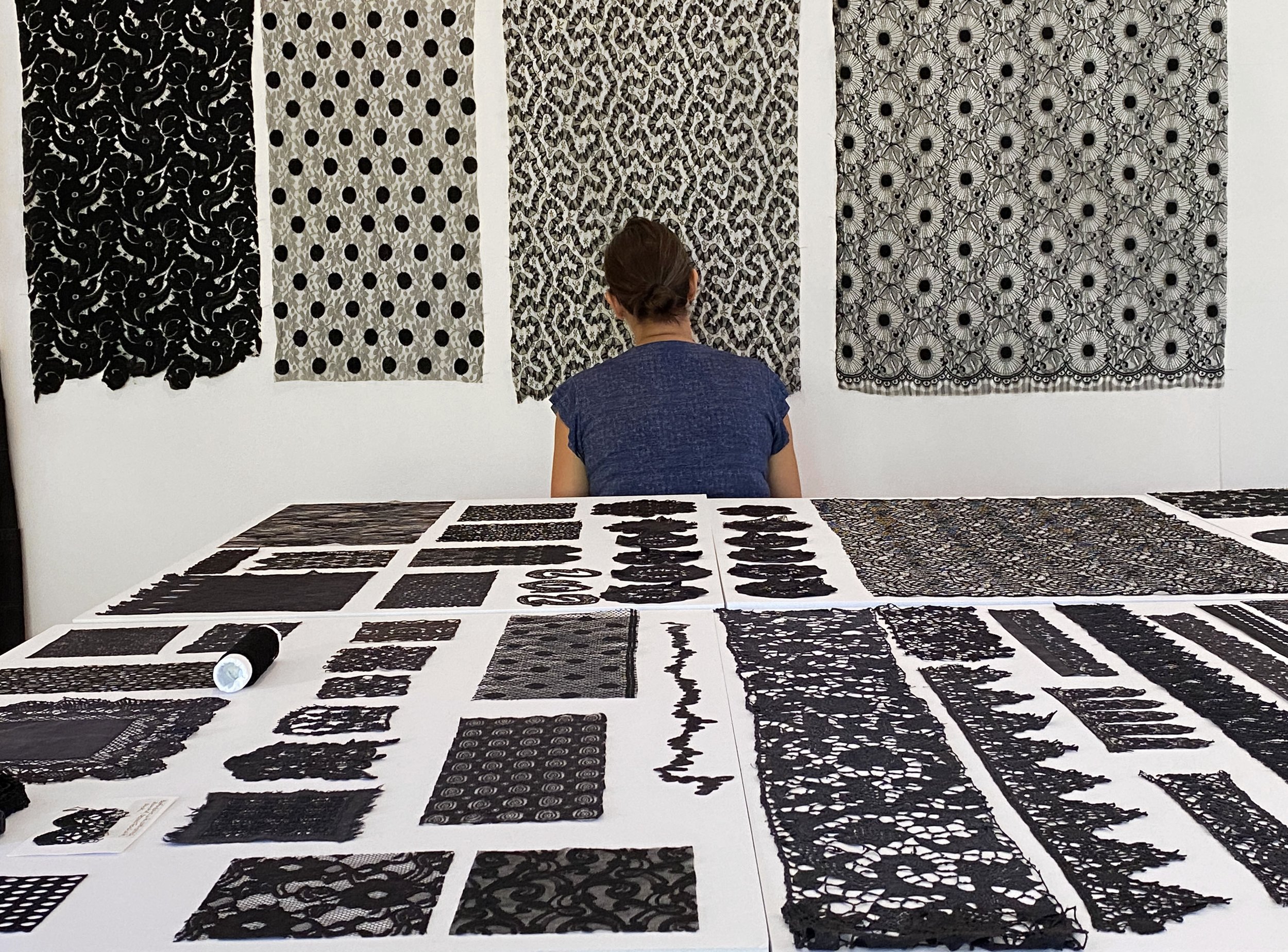
The Davis Street Drawing Room is sited in the front room on the second floor of a house on Davis Street in Evanston, Illinois. This is the home of artist and professor Anne Wilson.
I visit on a sunny day and the room is full of light. Wilson begins the visit by introducing the house and its history, pointing out architectural details like original fixtures, sinks, and a handmade leaded glass window. The house was built as a Victorian frame house in 1887, and the exterior renovated in the present prairie school style in 1909. From 1891- 1896 it was an upper-class boarding house. The room that is home to the Davis Street Drawing Room, Wilson surmises, could have been a drawing room: a space for its turn of the century inhabitants to retire for conversation after dinner. Back then, a drawing room might have been a space of gendered separation. More contemporaneously, the room has been the site of Wilson's practice, a space for unraveling the power dynamics of gender, labor, affect, and materials.
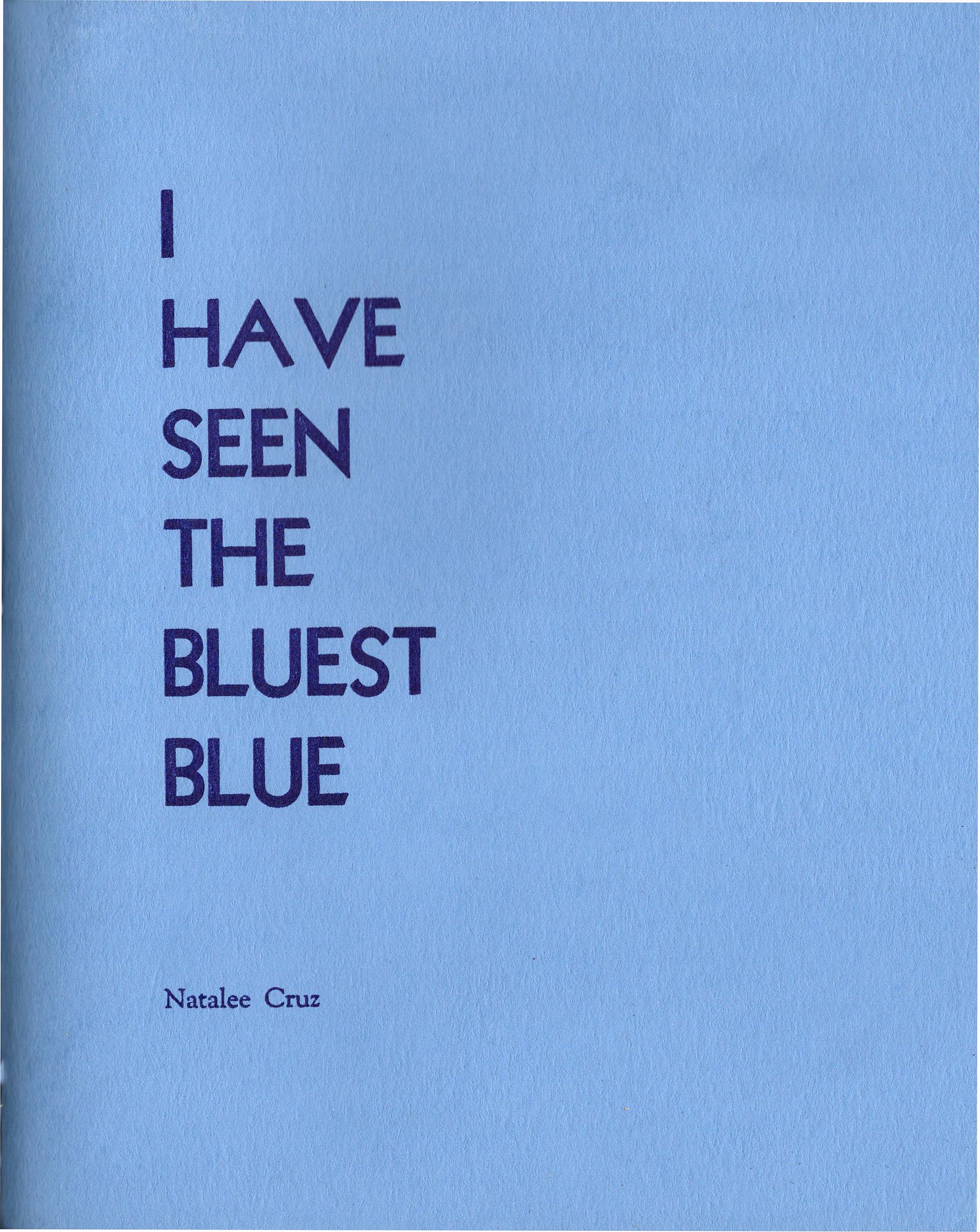
For me, this heart-wrenching debut by Natalee Cruz is among the best in poetry debuts this year. I could give no better analysis of the poetics and structure than Diego Báez does in his review over at Harriet Books, with its keen observation of the mood-shift in the poem‘s description of colors. Also as noted in his review, is how the book splits the narrative: it starts with the language of her father’s employer in the first section, who has written a letter in support of the return of the poet’s mother in law, who is facing deportation. Cruz riffs on the language of the letter in refrain throughout, invoking turns of phrase in numbered sections all under the header of that letter’s opening: “To Whom It May Concern.”
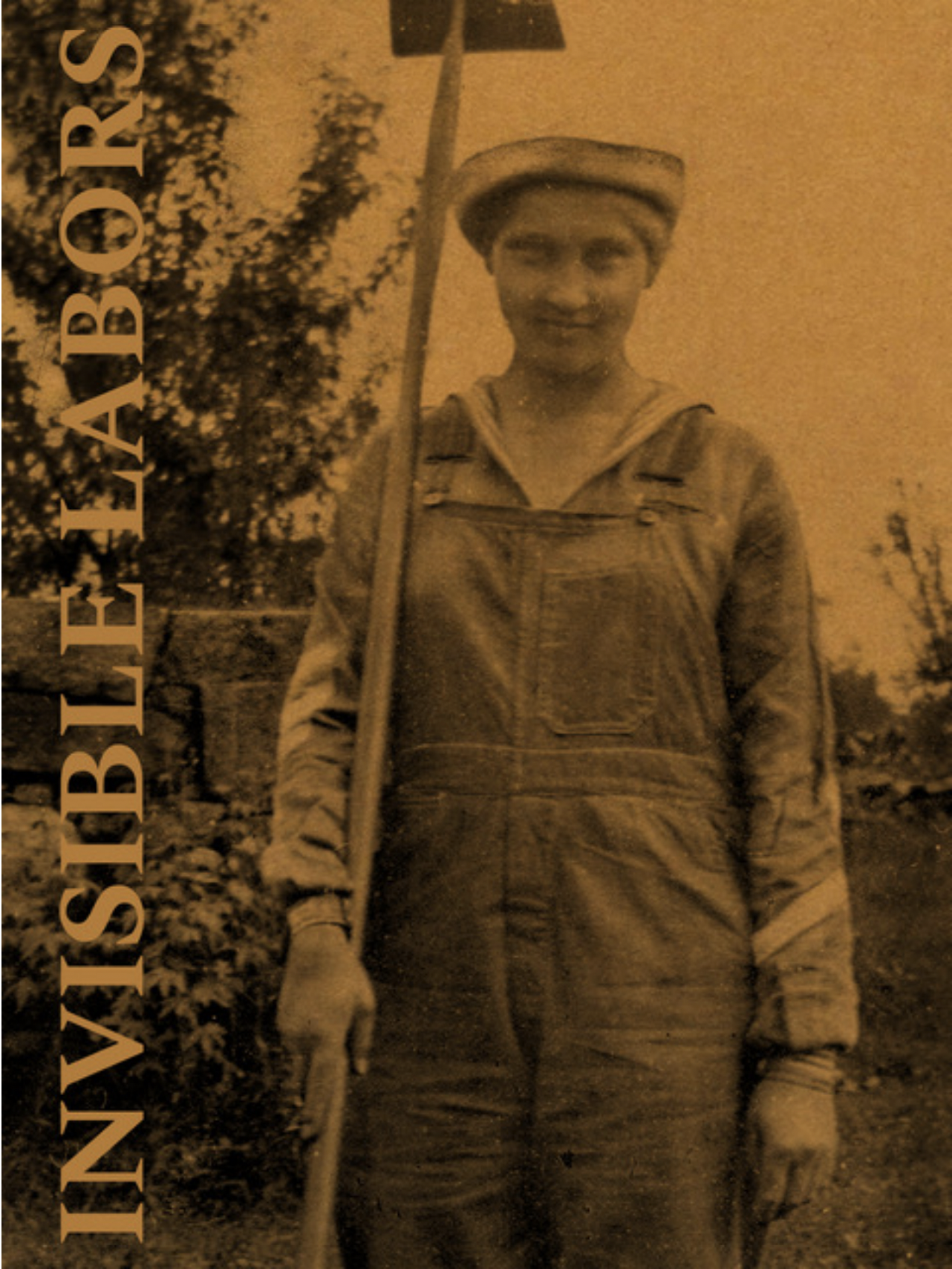
Inspired by Melissa Potter’s garden project for the 2021 Terrain Biennial at boundary, the art space founded by Susannah Papish, Invisible Labors explores the history of women and in the Beverly and Morgan Park neighborhoods of Chicago and adjacent Blue Island, Illinois. Produced by Potter and Papish, the artist’s book explores how “land-stewarding and progressive movements influenced” the work of the area’s residents. As well, the artists investigate the overlap of indigenous practices within the evolution of these social service histories, including the early work of Hull House, for example, through Potter’s interview with “basket-maker Kelly Church, Anishinaabe, who carries on the Potawatomi black–ash basket weaving tradition.”

Stepping into the empty gallery at the Renaissance Society a woman wearing a flesh colored unitard with sheer plastic-like pants, tan running shoes and a headband with a small tracking system attached was walking, with purpose, around the edge of the space repeatedly singing “on the street”, “on the street”, “on the street,” “on the street”. The four sides of the space were lit in red mixing with the late afternoon autumn light coming through the windows. In addition to her voice the space was filled with an electronic soundscape. You were immediately engulfed in the sonic sensory atmosphere Nour Mobarak had constructed.
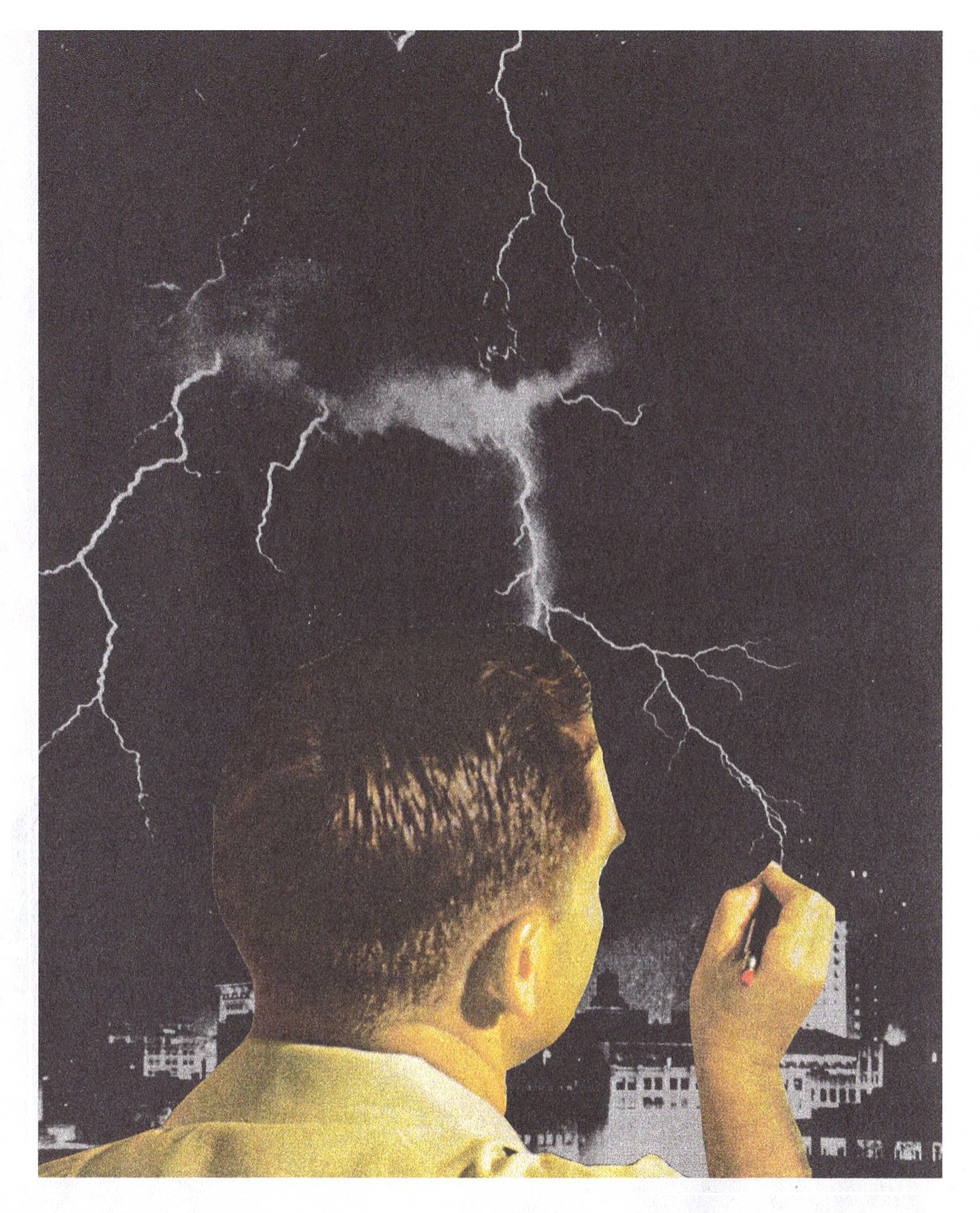
Every writer who has written a book knows the terror of post-book creative anxiety, the question of, “What’s next? What do I do now?”. For Kevin Sampsell, this creative anxiety set in after touring his novel “This is Between Us.” Though he was “working” on another novel (in the sense that he had a Doc on his computer he increasingly dreaded opening), he struggled with the idea of sitting down and performing the conscious labor of writing. In the course of “taking a break” from his novel to experiment and “have fun” with language, Sampsell turned to collage, purchasing stacks of vintage “National Geographic,” “Life,” and “Saturday Evening Post” magazines from a local thrift store. As Sampsell delved deeper and deeper into collaging, however — studying the works of John Stezaker, Jesse Treece, and Sarah Eisenlohr — he felt further and further away from the act of novel writing. He began to embrace collage as a new and exciting expression of his creative drives: to play, to cut, to collect, to re-assemble, to juxtapose, to defamiliarize, to blend, to archive.
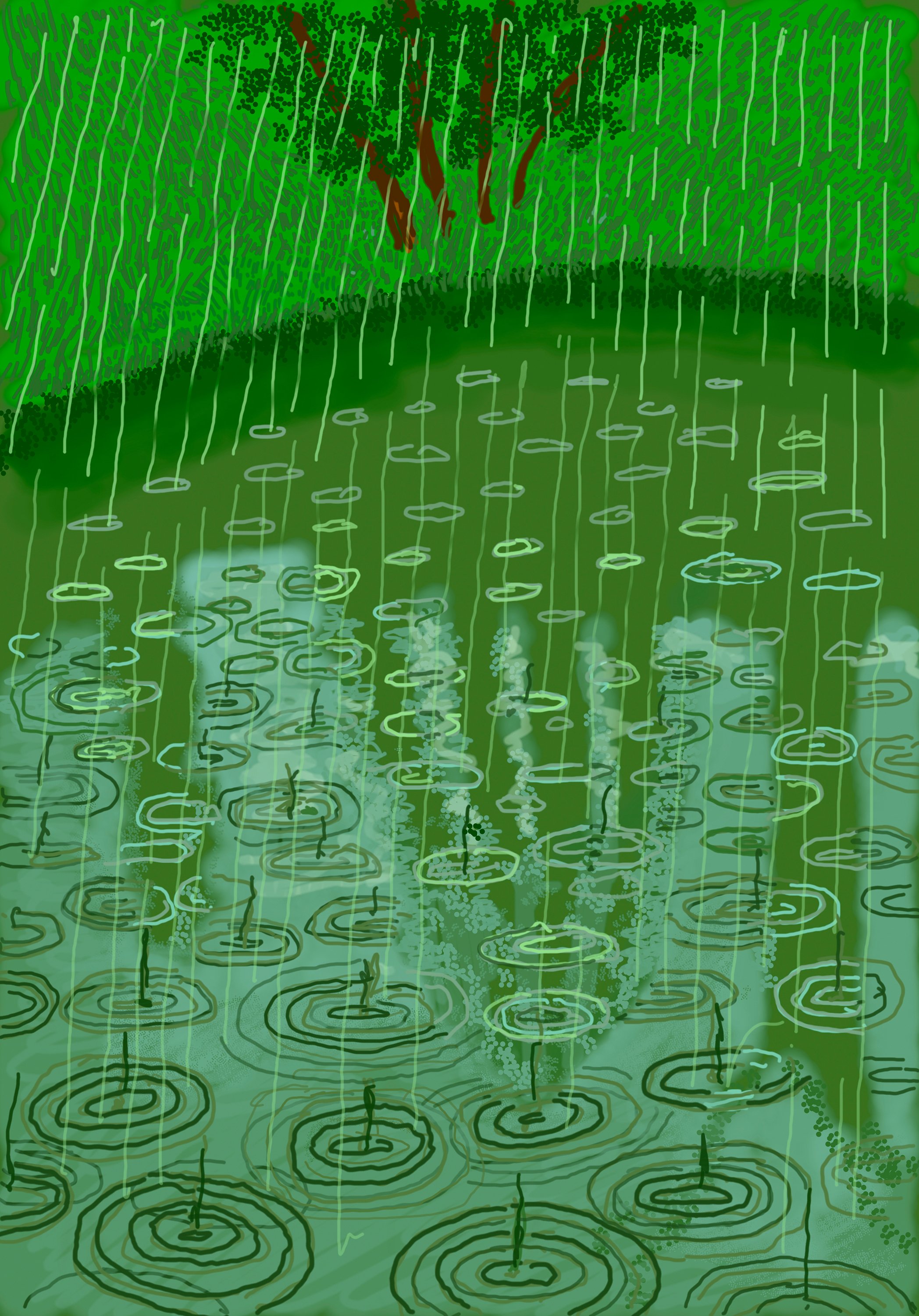
David Hockney. “22nd May 2020, No. 2.” © David Hockney. Image courtesy the artist and the Art Institute of Chicago.
David Hockney’s latest exhibition, “The Arrival of Spring, Normandy, 2020”, on view at the Art Institute of Chicago roughly coincides with his seventh decade of art making. Hockney is one of the most famous and celebrated artists in the second half of the 20th century. He is an English painter, draughtsman, printmaker, photographer and stage designer. He is also known for experimenting with new technologies, in this case the iPad, and it represents his third major showing of these images with previous shows in 2011 and 2013.
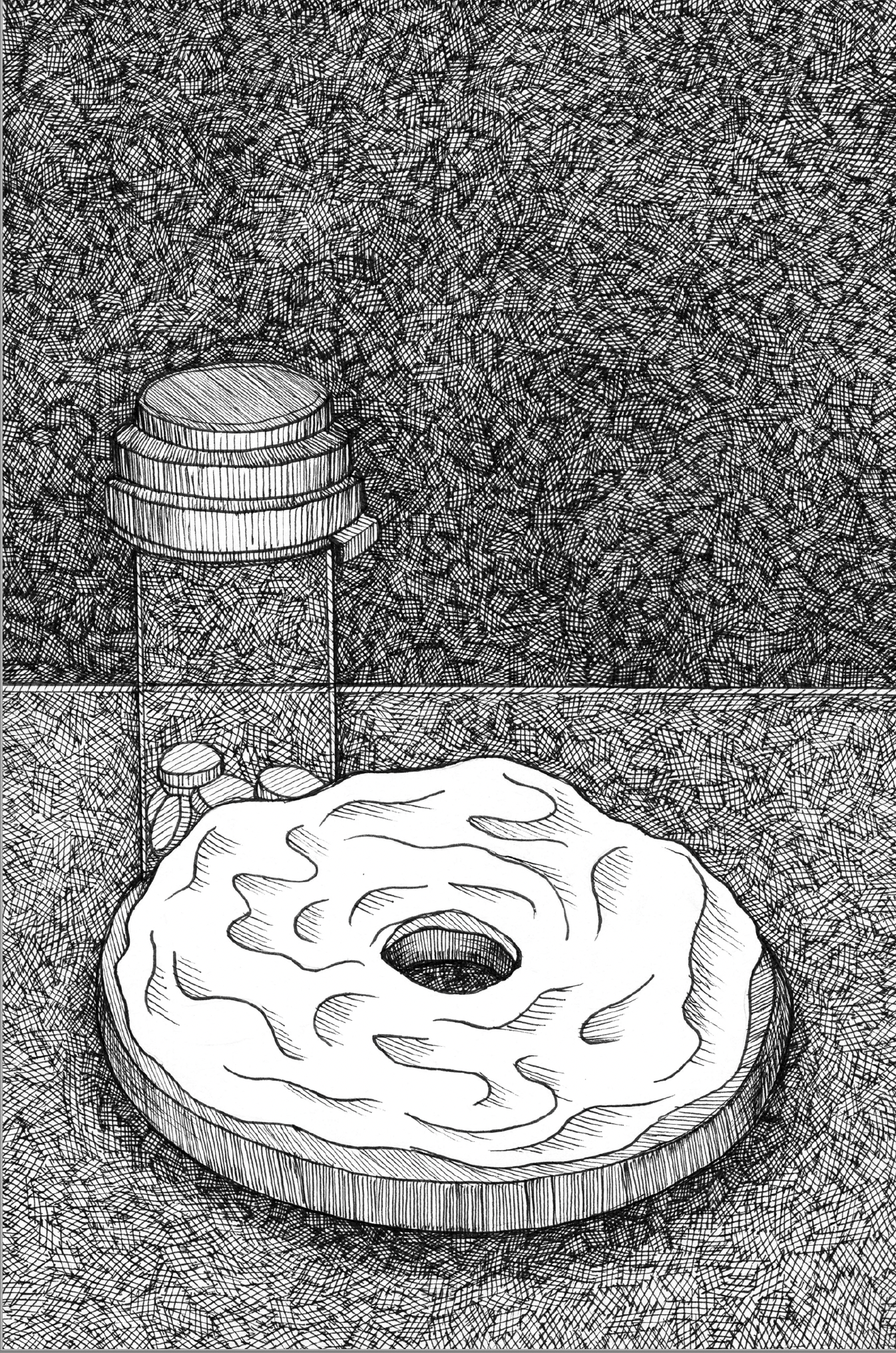
From the sidewalk I grab the flaking wrought iron railing with my right hand, plant my good leg, my right leg, squarely on the first cement step in front of me, and pull myself up. Then I swing my bad leg up, and pain flares from a constant dull ache to a sharp crescendo as I place my bad leg beside my good one, but the pain isn’t too bad, and that’s part of The New Normal. Last, I slip one of my crutches into my left armpit and stabilize my weight distribution with it.
Step one — done.
Eleven more to the front door of my apartment building.
I hate this process.
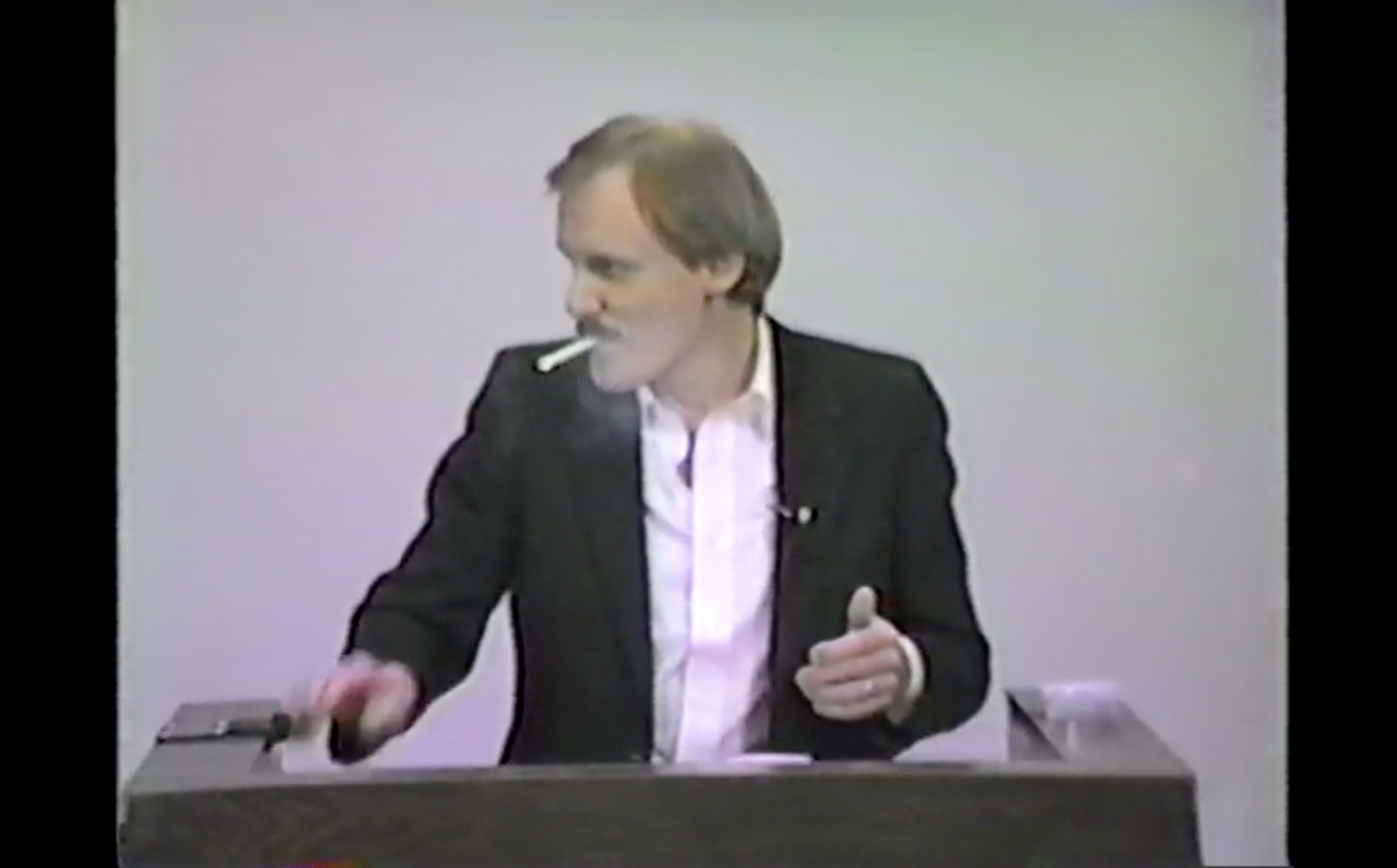
Peter Schjeldahl, who I was saddened to read had passed away this week at the age of 80, was a mentor and guiding light for me as a young writer and critic, and literally the reason I decided to have children. Let me explain: starting out in Chicago, I first met Schjeldahl early in my career, then as now indistinguishable from his role (as he liked to repeatedly point out, as the “big time”) New Yorker art critic. He had just been announced as the juror who would select the sculpture for a now-defunct program called Navy Pier Walk (back when organizations actually hired people knowledgeable in art for their public art programs). Founded by artists Michael Dunbar and Terrence Karpowicz, I’d met him through the Pier Walk program’s then-director Joseph Tabet, who’d hired me to write the catalog essay for the sculpture show’s 2004 edition.
Two weeks ago, the internet exploded with videos from the Coperni catwalk of Bella Hadid being sprayed with a white, unidentified flying material, rapidly drying in runway time to the conforms of her idealized figure. This new modality of dress, applied as easily as a spray on tan, formed a peelable, prefigurative layer with a substance called Fabrican. The internet audience went wild, affirming what the company referred to as “a new era in twenty-first century mass customization.” Within minutes this material, based in silly putty technology, formed a beautiful new bodily surface: a white, wispy, crisp edged, seamless slip dress. Fast fashion shows no signs of slowing down.
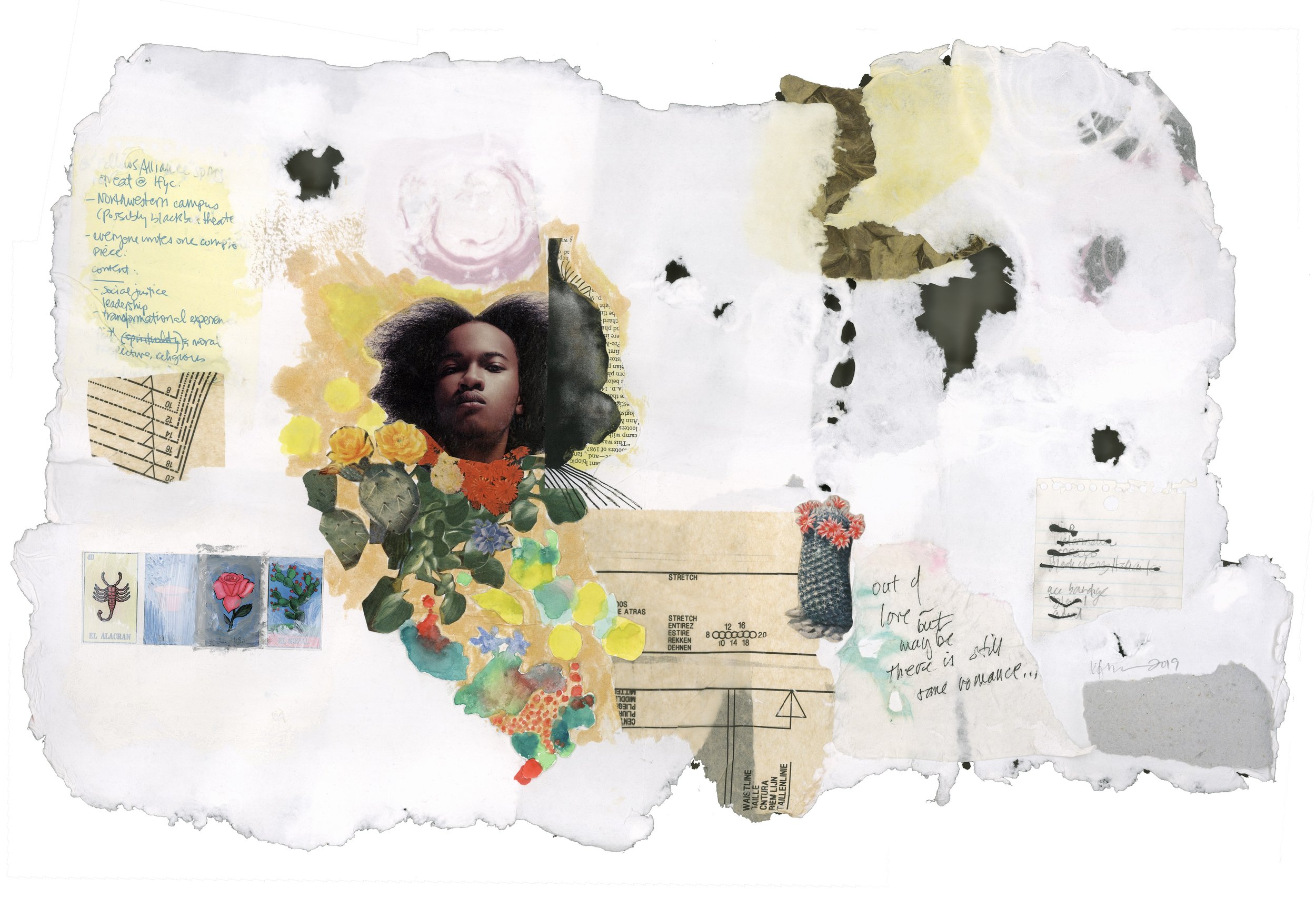
Krista Franklin’s first job was at a library shelving books in her hometown, a suburb outside of Dayton, OH. In the present day, like a librarian – or better yet, archivist, she collects materials from Ebony, Vibe and National Geographic magazines, vintage pornography, sci-fi literature and film, soul and funk music album covers and more. Anathema to an archivist, she cuts, dissects, and deconstructs the printed matter and reforms it into imagery that traverses a spectrum of time, place and identity.

“It had been a couple weeks since April from the front desk disappeared, and we had no leads on where she went. Mike was the first one to notice she was gone. Mike S – a lot of us are Mikes. He’d gone up to the front office to use their bathroom. We’re not really supposed to do that. Our boots are dirty, and we have oily grime on our hands. We try not to make a mess, but we always end up leaving little streaks around the sink and on the doorknob. Trying to wipe it off just smears it around worse. So the front desk girls always complain when we use their bathroom, but ours is out of order a lot … ”
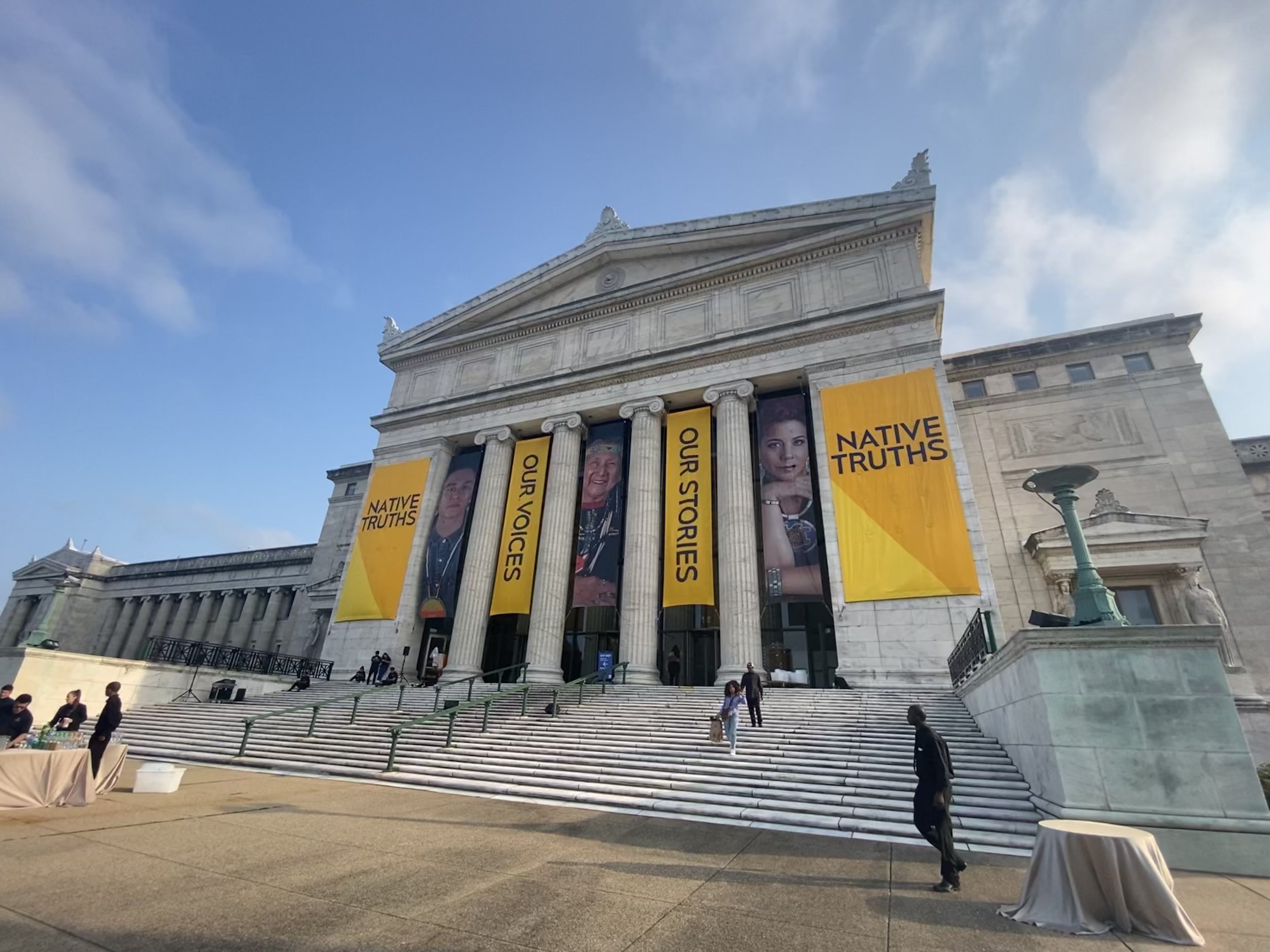
Chicago was founded on indigenous land, full stop. However, as imperialism expanded disguised as manifest destiny expanded, so too did the violence and erasure toward the many Native tribes that resided in the area. In spite of this, Chicago still has a vibrant Indigenous community, boasting the third largest urban Native American population in the country. While the Field Museum acknowledges they played a role in this erasure and can’t change the errors of the past, Native Truths is an attempt to create dialogue for a new beginning. The platform is given to contemporary Indigenous artists and community members to share their art, history, and culture in a way that’s never been done before.
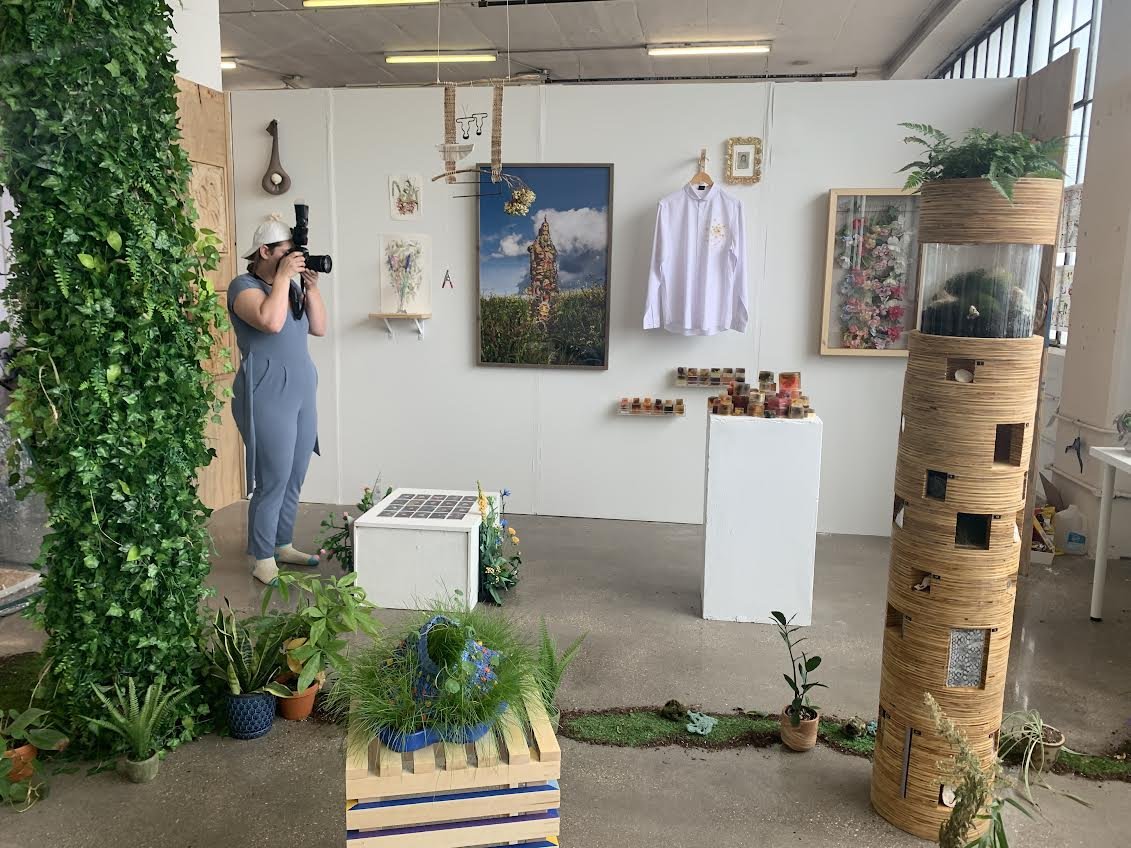
After a 10 year hiatus, the MdW fair organized by the Public Media Institute (PMI) team returned in a revamped and ambitious format for a new decade. DIY artist-run spaces, collaborations and collectives in Chicago and the Midwest are the energizing basis for creative work that transcends the region. The MdW fair succeeded in amplifying this democratic and utopian vision of what many consider the Midwest “regional” art world.

In 2014, I was driving a delivery route for Newcity, which I’ve done now for some years, and I was stopping by the city-managed, south side recycling center to toss the old copies. It’s a routine I’ve been doing every month now for probably fifteen years or so and, on a few occasions, like that day, I encountered a heartbreaking sight. When I opened the lid to the gigantic blue recycling bin, it was filled to brimming with someone’s discarded personal library.
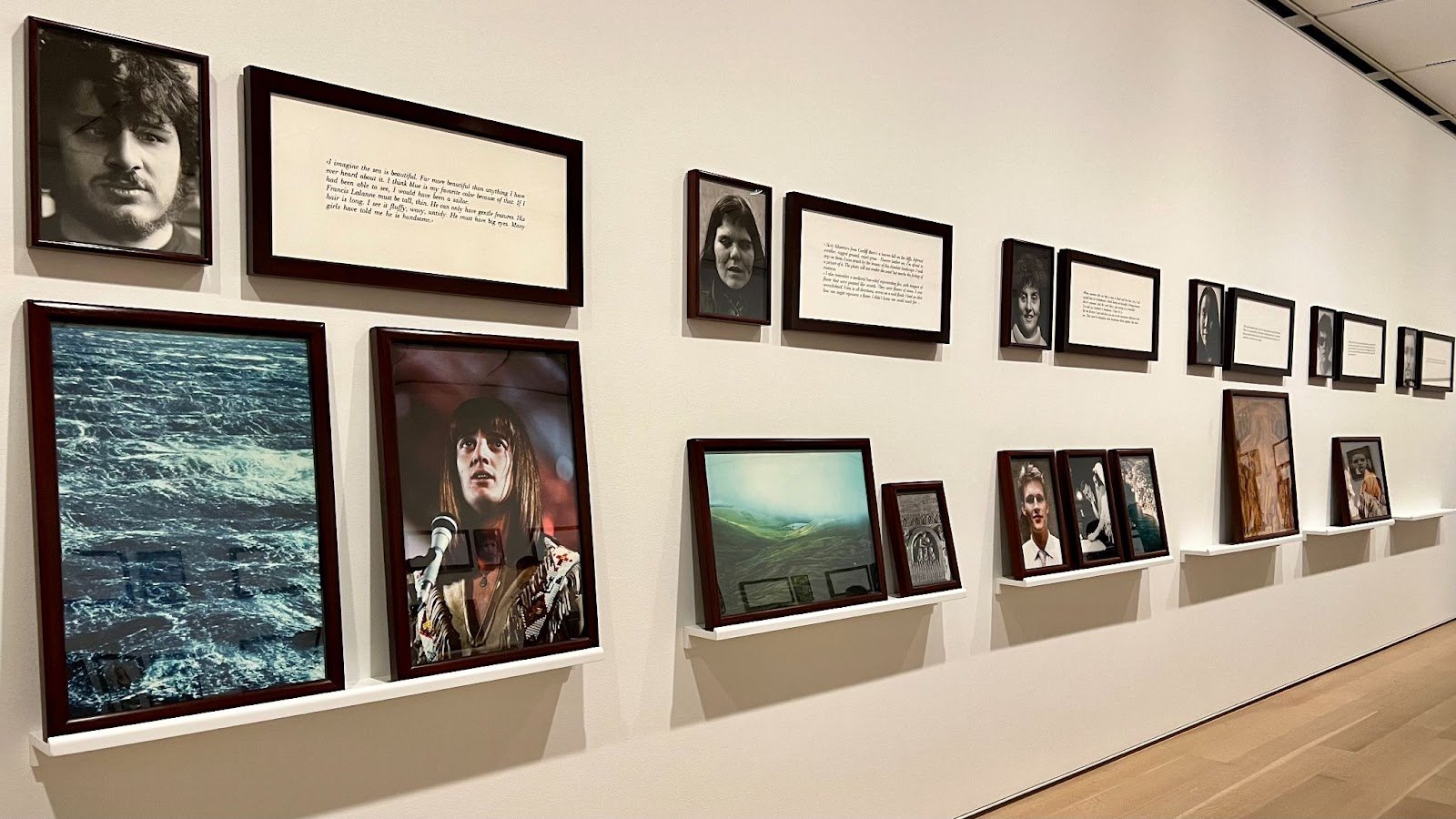
The Art Institute of Chicago is presenting Sophie Calle: Because — The Blind, which cemented Calle’s reputation as an artist who is part sleuth, part philosopher, and at least as much writer and storyteller as maker of images.

The exhibition “An Instrument in the Shape of a Woman” currently on view at the Chicago Cultural Center’s Michigan Avenue Galleries, features the work of Leslie Baum, Diana Christiansen, and Selina Trepp. Organized by Annie Morse, the show positions each artists’ immersive explorations of abstraction, the mutability of form, within the lens of gender.

There is no evidence of repair in Sandra Binion’s the beauty of something ripped.
Sandra Binion and I have a common sense of touch, grasping the same silk fabric used for a tunic I made for her upcoming project, “Rappaccini’s Daughter,” as we meet over Zoom to discuss her exhibit, “the beauty of something ripped,” at Alliance Française. The artist is sick with Covid after the May 11th opening, and this cloth provides a common sense of tactility for us to talk about her work from across the screen.

Wrightwood 659 is the host of Rirkrit Tiravanija: (who's afraid of red, yellow, and green), a culinary and civic-uprising-themed exhibition. Walking into Wrightwood 659 is a treat in and of itself, the architecture of the Tadao Andō building is incredibly conducive with their socially relevant exhibitions, enhanced by the textures in the walls, flooring, ceiling, and details which are usually uncommon in contemporary art galleries.

Bridge Journal Editor-in-Chief Michael Workman was joined by Deborah Maris Lader, Founder and Director of the Chicago Printmakers Collaborative, at the Richard H. Driehaus Museum to discuss the print techniques of a more than a century-long history of artist’s publications. Following the lecture, on Saturday, Nov. 13 from 2-4pm, Maris Lader gave this presentation of printing processes discussed in the lecture off-site at the Chicago Printmakers Collaborative as a third event in this series.

Loving Repeating is an exhibition of married couple Dutes Miller and Stan Shellabarger’s recent collaborative project, housed at the Hyde Park Art Center in Chicago’s South Side from April 10th to September 3rd. The exhibition explores themes such as relationships, loneliness and intimacy – all timeless but particularly pertinent in the age of the COVID-19 pandemic.
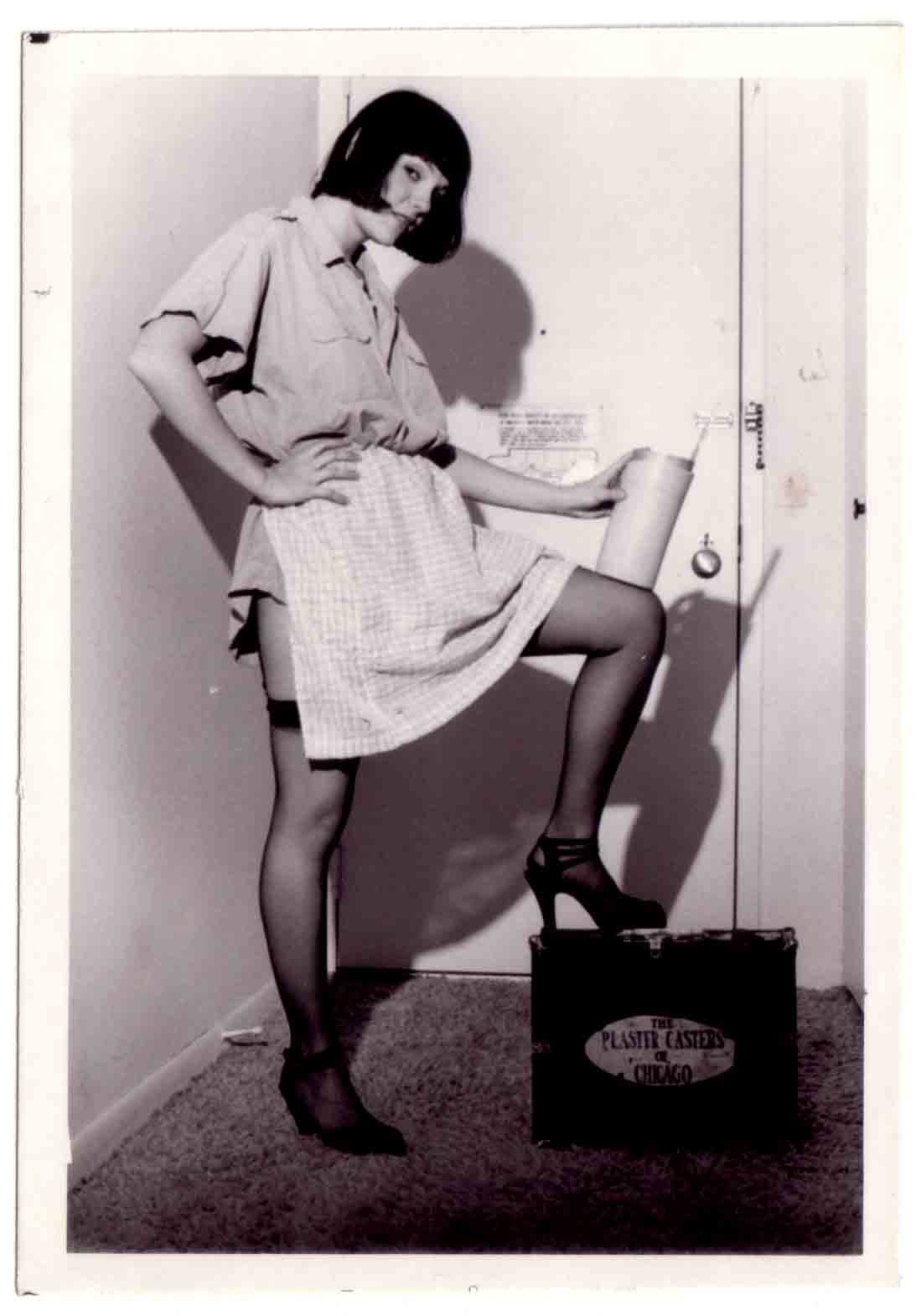
Last week, word started circulating quickly that Cynthia “Plaster Caster” Albritton had died at the age of 74. I’ve known and been friends with Cynthia since the late 1990’s, where I met her in the music scene, out every weekend at rock shows at Lounge Ax, The Hideout, Empty Bottle — all the usual haunts that dot the landscape of the Chicago’s vast and sprawling music scene.

As someone who spent a little more than a decade (from around 2003-2015) staging art expositions, I watched with amusement as the latest edition of EXPO Chicago went up and came down, to muted praise, just over a week ago.
When I first encountered the phenomenon of the international art fair in my late twenties (I organized my first exposition at the tender age of 33, just as I was becoming a new father), Chicago was the center of the global art fair market, back then mostly a nationalist phenomenon, and had been for decades. Every country had its own art exposition, but members of the Paris, London, New York and other major art world communities came to Chicago every year on mother’s day weekend for what was then a high-energy, high dollar trade event that had the feeling of something necessary to helping art flourish.

This House is Mine is an in-depth retrospective on late African-American painter Bob Thomas, housed at the Smart Museum in Hyde Park and curated by Diana Tuite. The exhibition is a much-needed reminder of the topicality and poignancy of Thomas' work, being the first museum show on the renowned artist in over two decades.

Ray Johnson c/o is a major exhibition featuring more than thousand pieces, with over one hundred collages alone, spanning at least 6 rooms in the Art Institute of Chicago. Johnson, commonly referred to as the “most unknown artist in New York,” was a trailblazer for mail art in the 1960’s.

“Subscribe: Artists and Alternative Magazines, 1970-1995” is a “they don’t make ’em like that anymore!” goldmine placed in the basement galleries of the Art Institute of Chicago. The crème walls and light paired with the vintage magazines and zines hung on the wall brings visitors back to the ‘80s.

The Arnold J. Kemp exhibition currently on view at the Neubauer Collegium Gallery is subtle, but demanding in its subtlety; the way the objects are situated in the spare academic hollow on the University of Chicago’s campus.

Erica McKeehen’s AUTHORING ALLURE is a visual invitation to explore sexuality, growth, identity. Through the lens of portraiture, she captures the vibrancy of burlesque performers and sex workers in their homes and shares the joys and realities of the freelance artist life, doing it all, and dealing with shame. McKeehen says “through my work in burlesque… I have learned to not only love my body but discover the strength and satisfaction of expressing my sexuality proudly.”
