
REVIEW: Review of Sopheap Pich’s Kânh Chhrôôl (Gluta Usitata), Melembu, and Khlông (Dipterocarpus Tuberculatus) at High Line, New York City
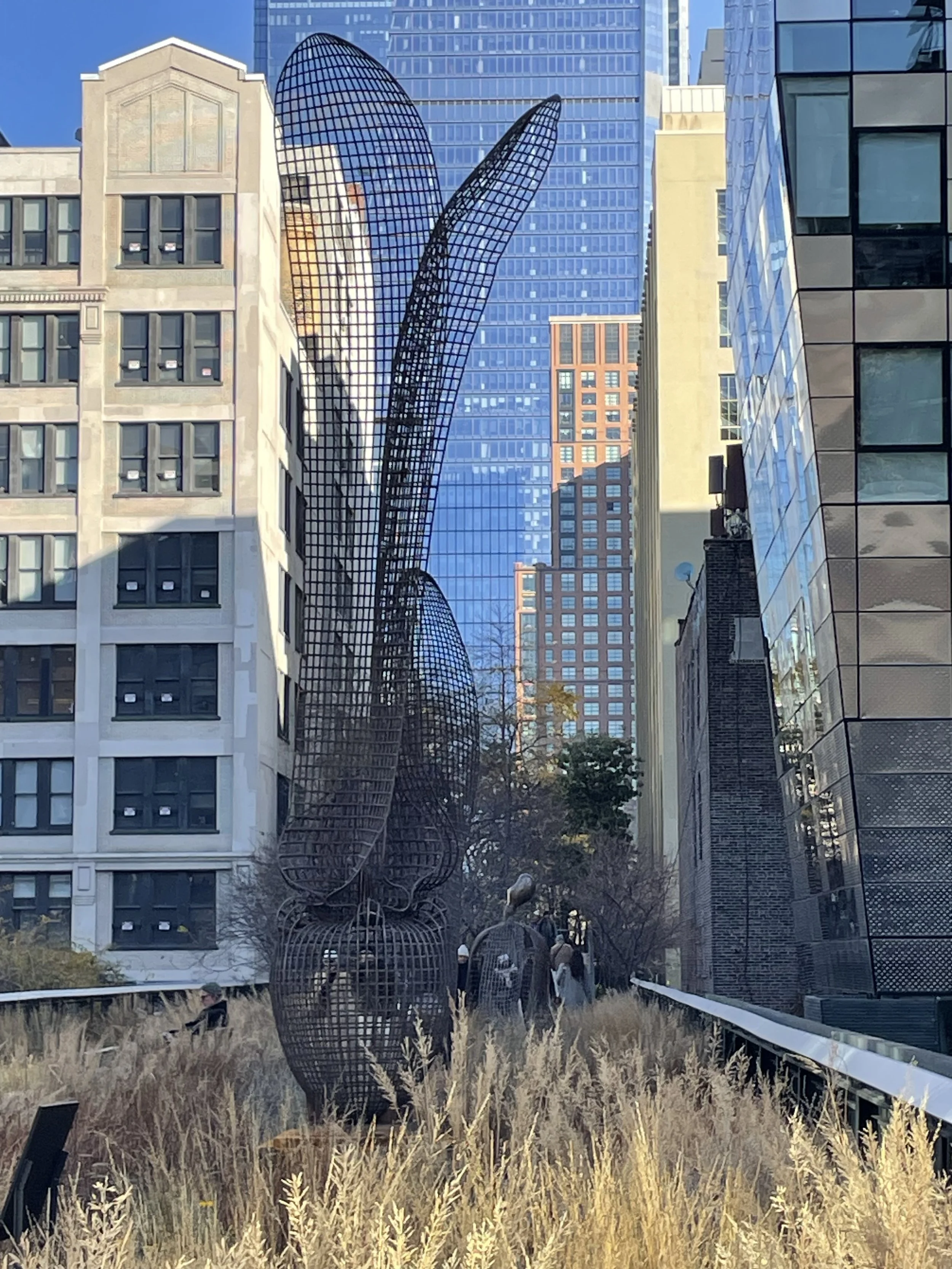
Figure 1. Installation view of Sopheap Pich’s Kânh Chhrôôl (Gluta Usitata), Melembu, and Khlông (Dipterocarpus Tuberculatus) at High Line, New York City (September 2025 to September 2026). Image by author.
REVIEW
Kânh Chhrôôl (Gluta Usitata), Melembu, and Khlông (Dipterocarpus Tuberculatus)
High Line
High Line at 24th Street, New York City, NY, 10011
September 2025 to September 2026
Review by Anneliese Hardman
Introduction
Visiting High Line in New York City on a cold December day (when I first visited), one might expect the plant beds to be devoid of vegetation. Instead, hardy grasses like the Shenandoah Red Switch thrive along the park’s elevated sidewalks. Plant lifeforms are further accentuated by Sopheap Pich’s massive sculptures of seedpods. These sculptures are displayed alongside living plants as part of High Line’s rotating and semi-permanent art installations. Pich’s Kânh Chhrôôl (Gluta Usitata), Melembu, and Khlông (Dipterocarpus Tuberculatus), comprises three large copper and steel sculptures of hardwood trees native to Southeast Asia. On display until September 2026, these sculptures are a reminder of the near invisible nonhuman, plant actors which also dwell in NYC’s urban environments. Like the plants they mimick, the sculptures flourish year-round, interacting and connecting viewers with the built environments they live within.
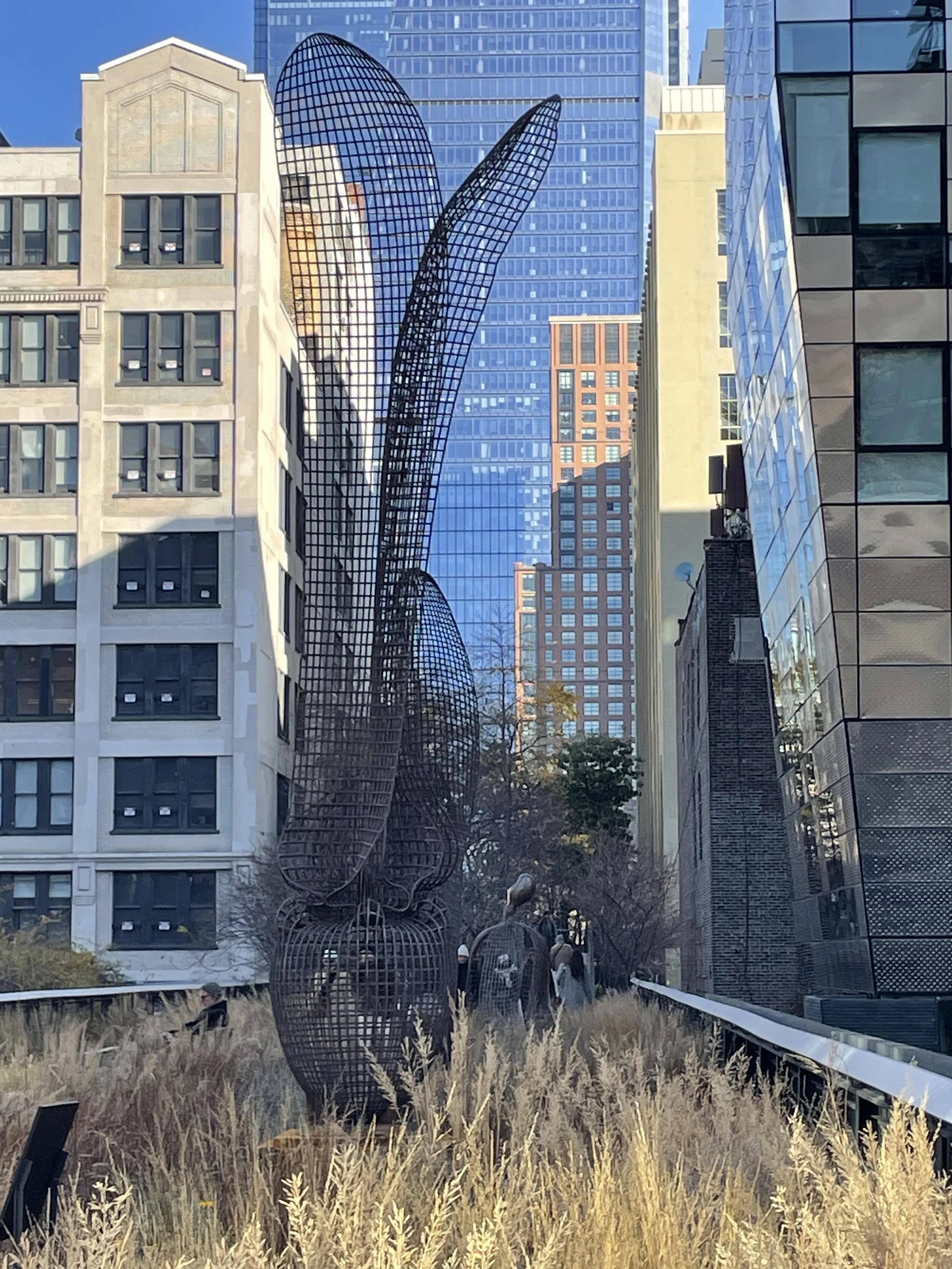
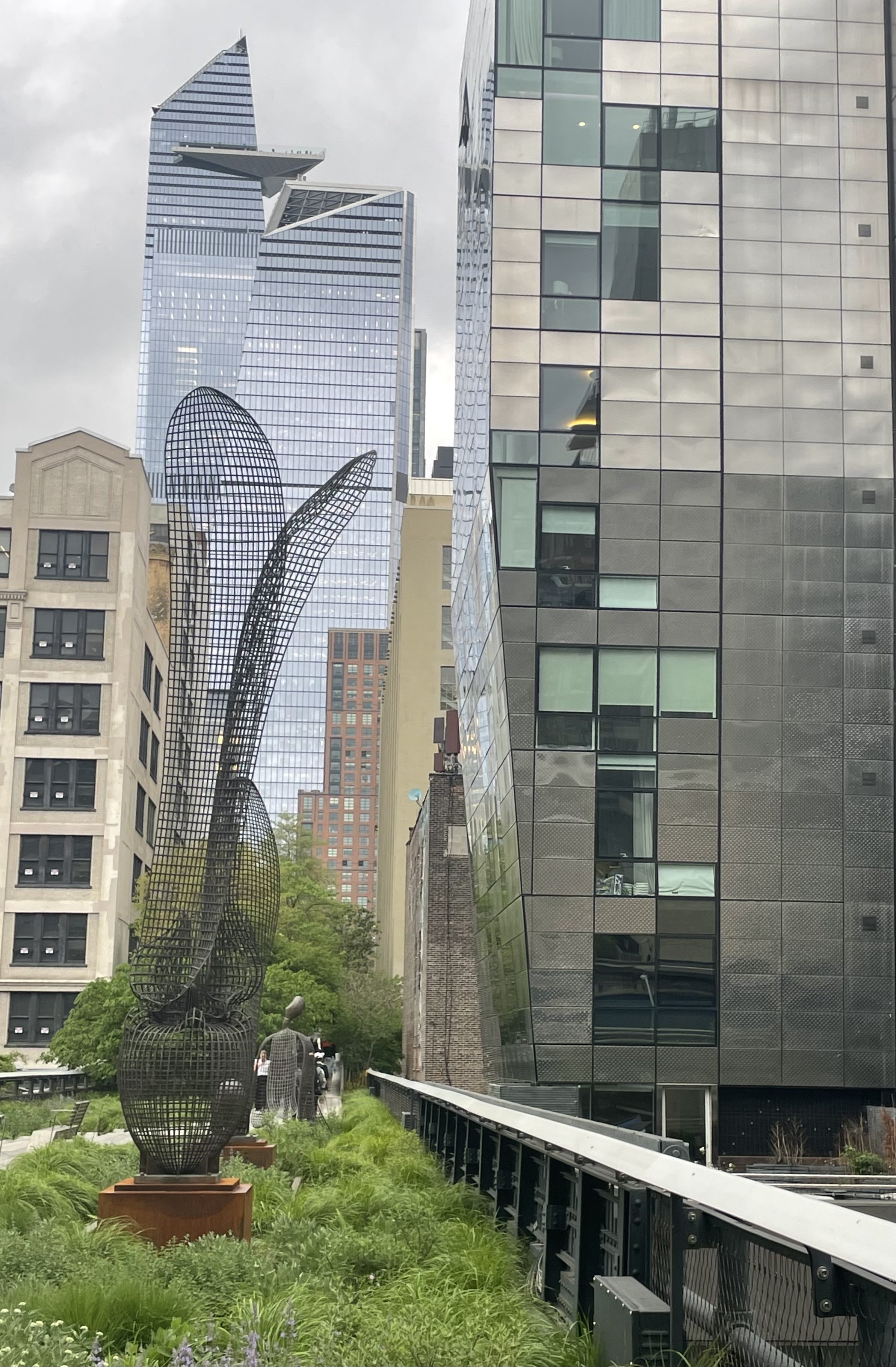
Figure 2 (left). Installation view of Sopheap Pich’s Kânh Chhrôôl (Gluta Usitata), Melembu, and Khlông (Dipterocarpus Tuberculatus) during Winter at High Line, New York City (September 2025 to September 2026). Image by author.
Figure 3 (right). Installation view of Sopheap Pich’s Kânh Chhrôôl (Gluta Usitata), Melembu, and Khlông (Dipterocarpus Tuberculatus) during Spring at High Line, New York City (September 2025 to September 2026). Image by author.
History of High Line
High Line is the first US public park to be built on an elevated rail line. Once where freight trains ran through the heart of NYC, these railway tracks fell into disuse in the 1980s and were officially opened as a public park in 2009. ^1 Now, High Line is home to over 500 species of plants, trees, and shrubs. All are self-seeded and were selected by garden curators because of their hardiness and natural occurrence. High Line is a model for repurposing and transforming unused industrial zones into dynamic public spaces. It allows for visitors to reconnect with natural environments despite New York City’s pervasive urban jungle.
Since its inception, High Line has brought plant forms into conversation with visual artworks including installations, murals, sculptures, and sound pieces. Other botanical gardens and living museum models often rotate exhibitions quarterly or semi-annually. In contrast, High Line commissions and produces artwork each year to be on display for one year or more. Displaying artworks for longer periods of time allows for visitors to return throughout the year to see how shifting seasons impacts their art viewing experience. Installed outside these artworks are also impacted by weather patterns, temperature changes, seasonal plants, animals, and a host of other factors. In the case of Pich’s works, when I visited the seeds in December, they seemed to be dormant or in the process of germinating. Comparatively, when I visited them again in May, they were surrounded by new plant growth and appeared as if they were about to sprout. Each time someone visits these site-specific installations, their visit is different and unique.
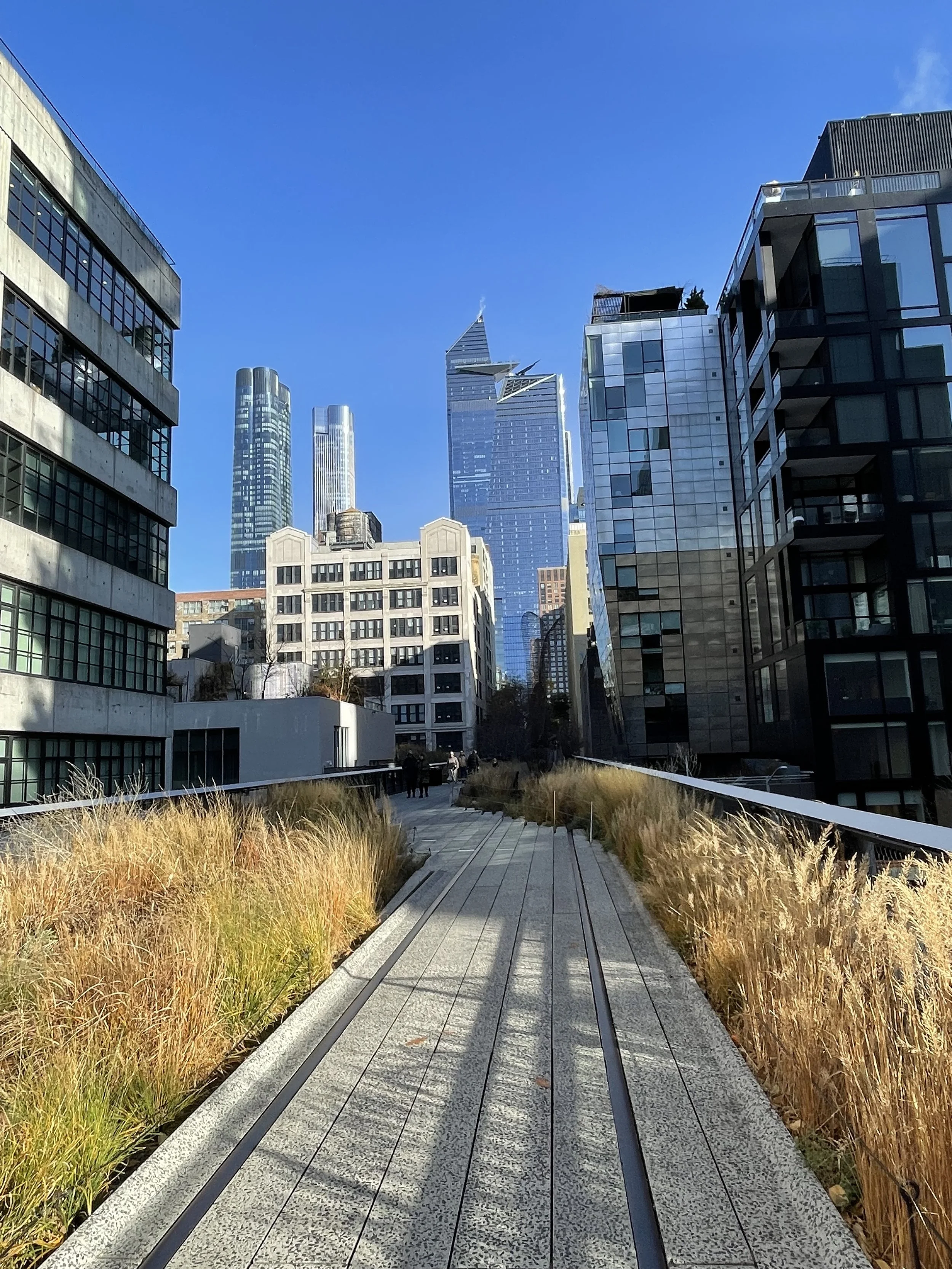
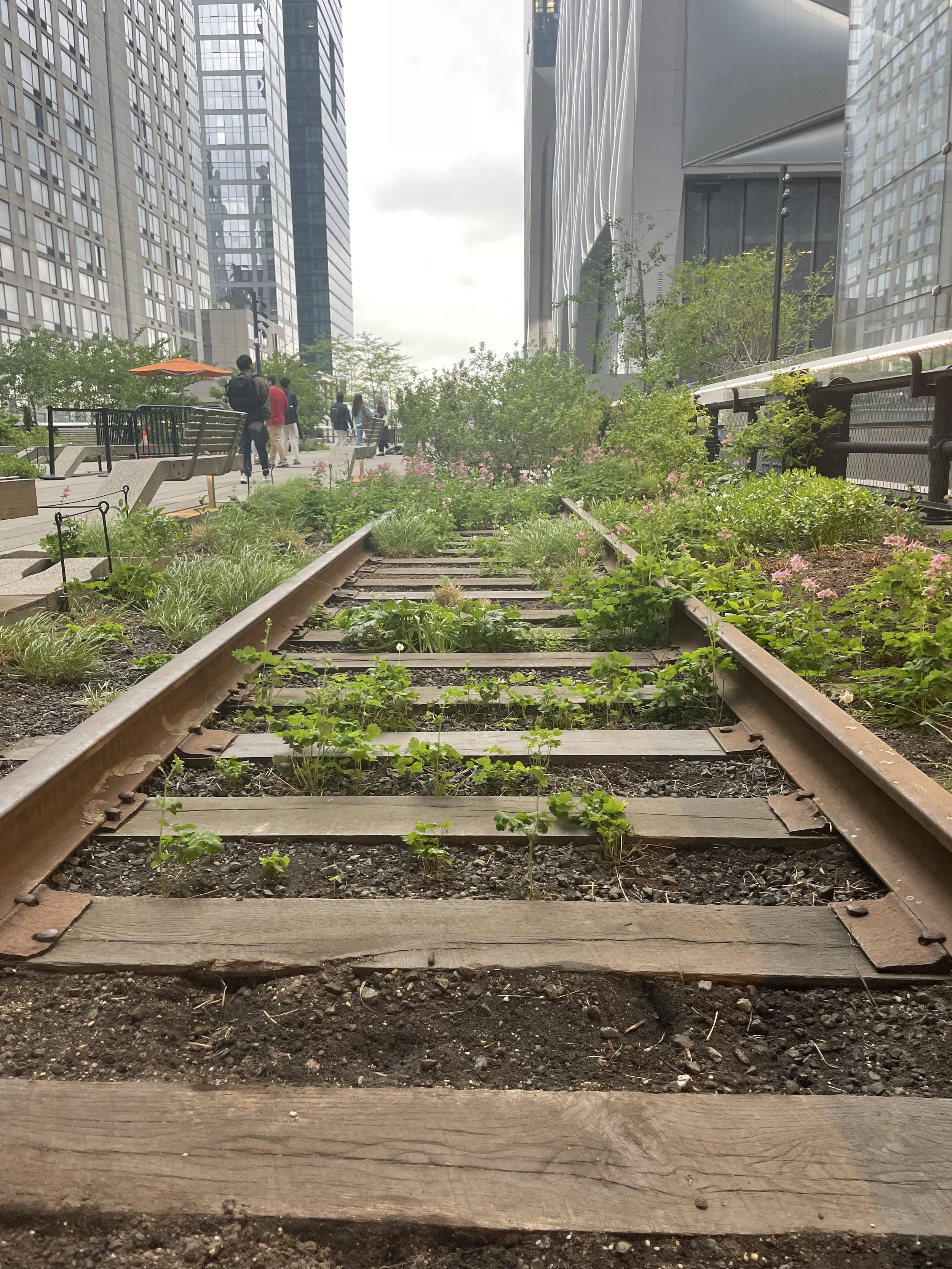
Figure 5 (left) and 6 (right). Side-by-side view of High Line during the Winter and Spring. Image by author.
Exhibition Description
Currently on view scattered along High Line’s 1.45 miles of elevated walking area are large scale sculptures and billboard paintings by Patricia Ayres, Derek Fordjour, Raven Halfmoon, Ximena Garrido Lecca, Tuan Andrew Nguyen, and Sopheap Pich, (who is the focus of this installation review). By artists from all over the world, these artworks are united by their connections to the natural word through their materiality, subject matters, or theme. For example, Fordjour’s Backbreaker Double (fig. 9), Halfmoon’s West Side Warrior (fig. 8), and Nguyen’s The Light that Shines Through the Universe (fig. 7) are made from natural materialities of sandstone, cardboard, and stoneware. Similarly, Lecca’s The Golden Crop depicts corn and Ayres incorporates organic shapes within her “2-18-5-14-4-1-14-3-12-15-14-6-5-18-20,” “7-5-18-20-18-21-4-5-8-5-9-6-20-1,” and “2-15-14-1-16-9-14-1.” Alluding to the physical environment through their installations, these artworks facilitate viewer understanding of how ecologies of rocks, plants, and animals inspire cultural production.
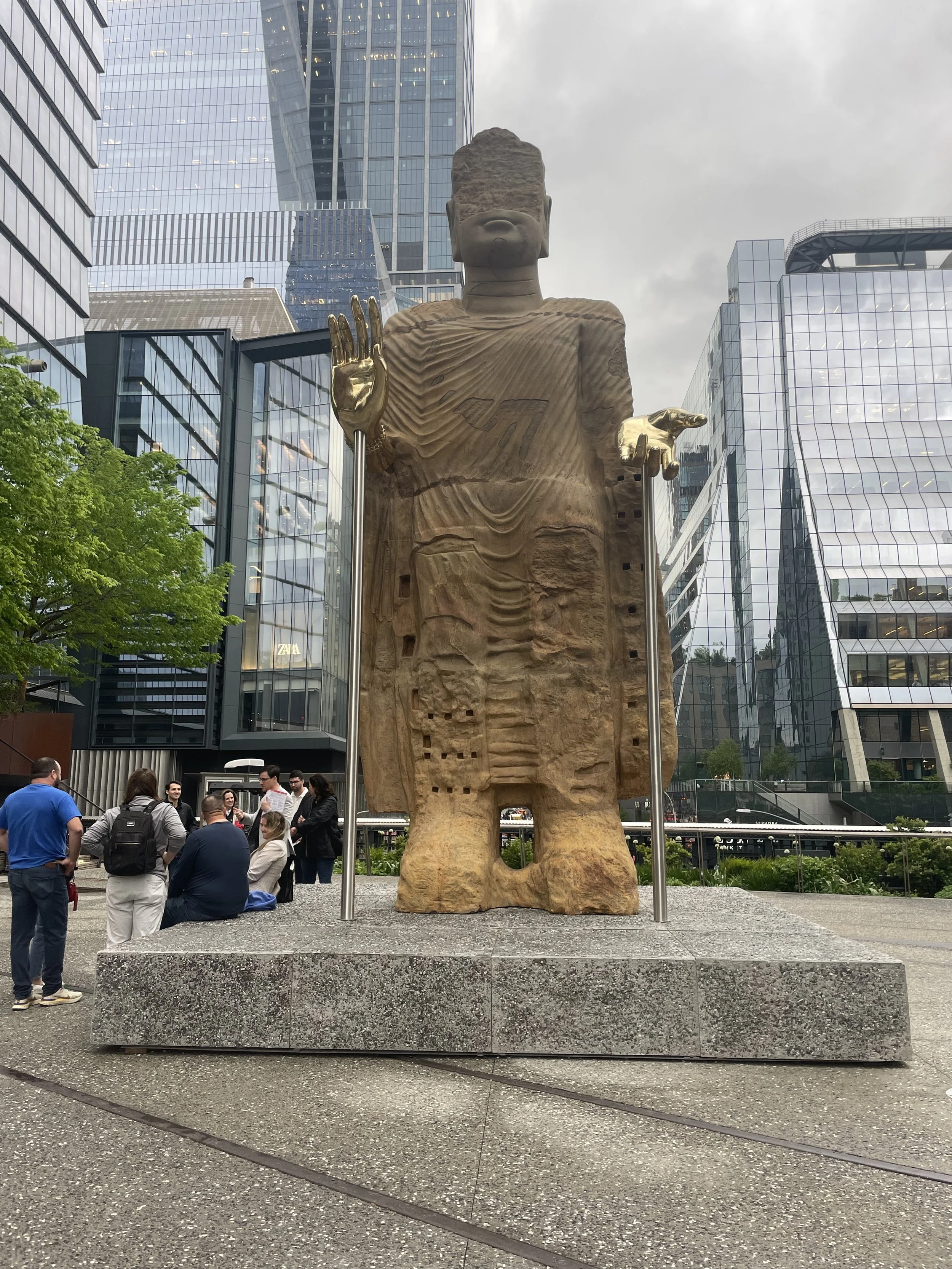
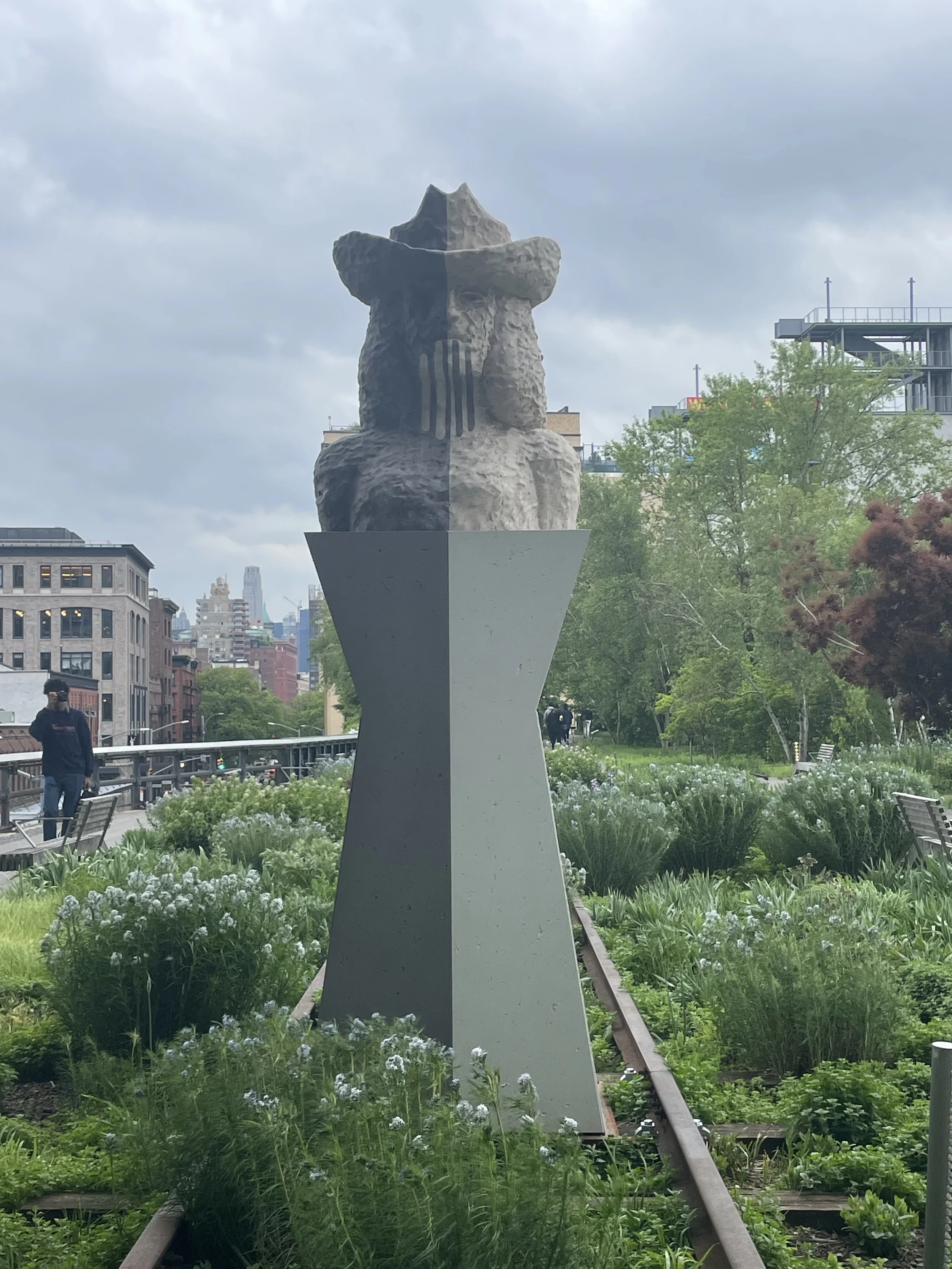
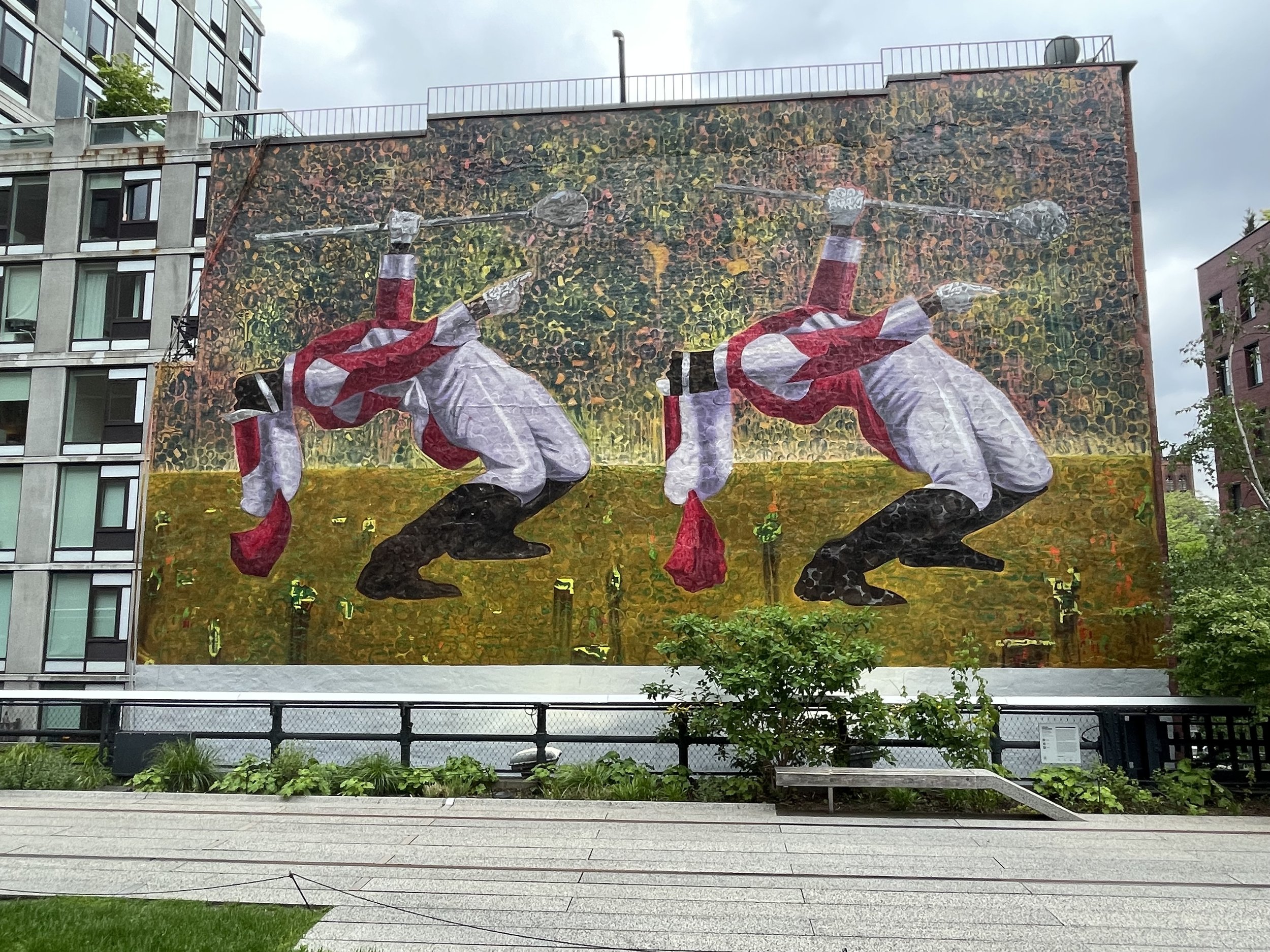
Figure 7 (top left). Tuan Andrew Nguyen, The Light that Shines Through the Universe, 2026. Sculpture, sandstone. Image by author.
Figure 8 (top right) Raven Halfmoon, West Side Warrior, 2025. Sculpture, stoneware and bronze. Image by author.
Figure 9 (bottom). Derek Fordjour, Backbreaker Double, 2025. Aluminum foil, cardboard, painting, newspaper. Image by author.
Pich’s Kânh Chhrôôl, Melembu, and Khlông: Description and Significance
Pich’s Kânh Chhrôôl (Gluta Usitata), Melembu, and Khlông (Dipterocarpus Tuberculatus) also dialogues with these other artworks and its surrounding environment through their form, materiality, and meaning. Without knowing the types of trees and where they originate from, the seeds operate as a trio varying in size and stage of germination. To an untrained eye they could almost be mistaken as the same type of seed in different phases of growth since they each have a sweeping plumule that emerges from their seed coat. The theme of growth is frequently explored in Pich’s work (figs. 10 and 11); often a smaller seed will be paired with a larger one or within one sculpture buds will be juxtaposed aganist flowers in full bloom. In the context of High Line, Pich’s sculptures communicate seasonal flourishing and plant life cycles happening in real time through the plants that surround the sculptures.
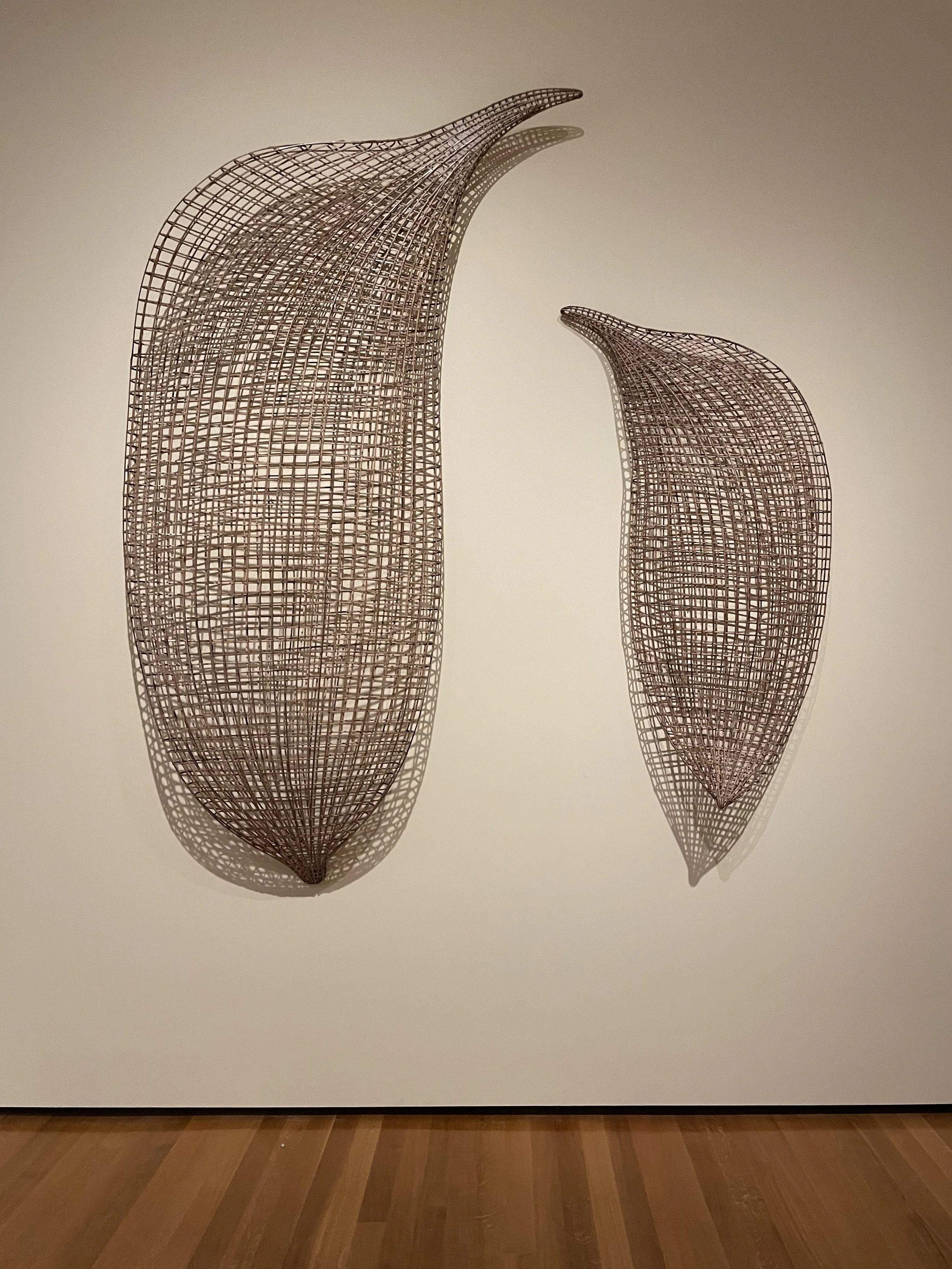
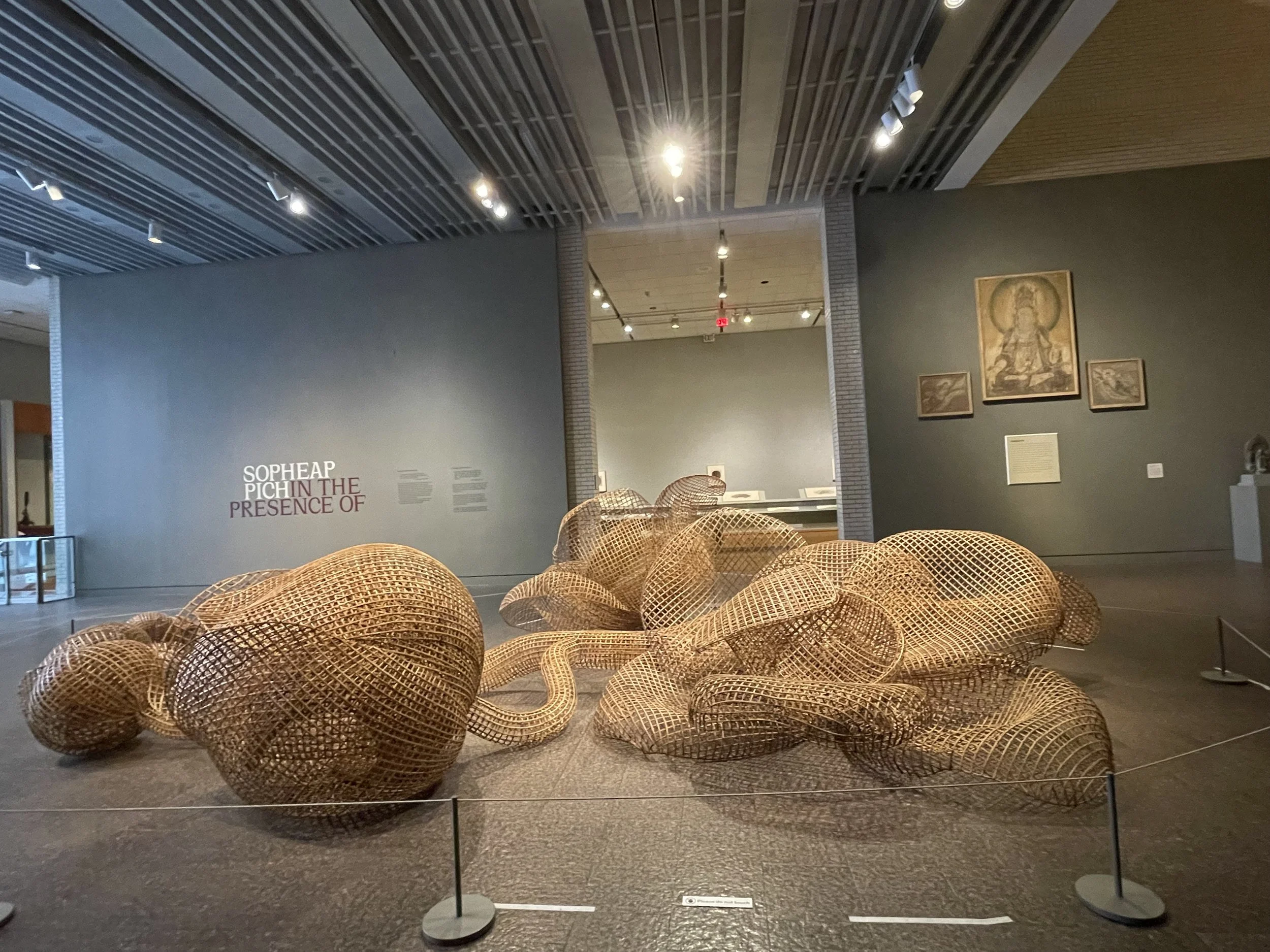
Figure 10 (left). Sopheap Pich, Seed Pods, 2015. Bamboo, rattan, steel wire. Installation view at the Cleveland Institute of Art. Image by author.
Figure 11 (right). Sopheap Pich, Rang Phnom Flower, 2015. Bamboo, rattan, metal, plywood. Installation view while on display at the Minneapolis Institute as part of the exhibition, “Sopheap Pich: In the Presence” of between October 25, 2005 to February 1, 2026. Image by author.
Knowing the specific species of plant that each sculpture is named after reveals that all three seed sculptures represent a different type of hardwood tree native to South and Southeast Asia. For example, the Kânh Chhrôôl, also known as the Burmese lacquer tree, is native to tropical Asia including Myanmar, Thailand, Laos, Vietnam, and northeast India. Similarly Melembu comes from Malaysia and Khlông from Cambodia—where artist Sopheap Pich was born and still practices art. None of the seeds have yet grown roots highlighting their ability to be blown by the wind and disperse to new places for growing. Each is a winged seed (or a samara) and when blown away from their mother tree will spin like a helicopter and glide away to be planted elsewhere. Elevated on High Line’s platforms and constantly buffeted by wind, viewers can almost imagine that Pich’s seeds are about to be blown away.
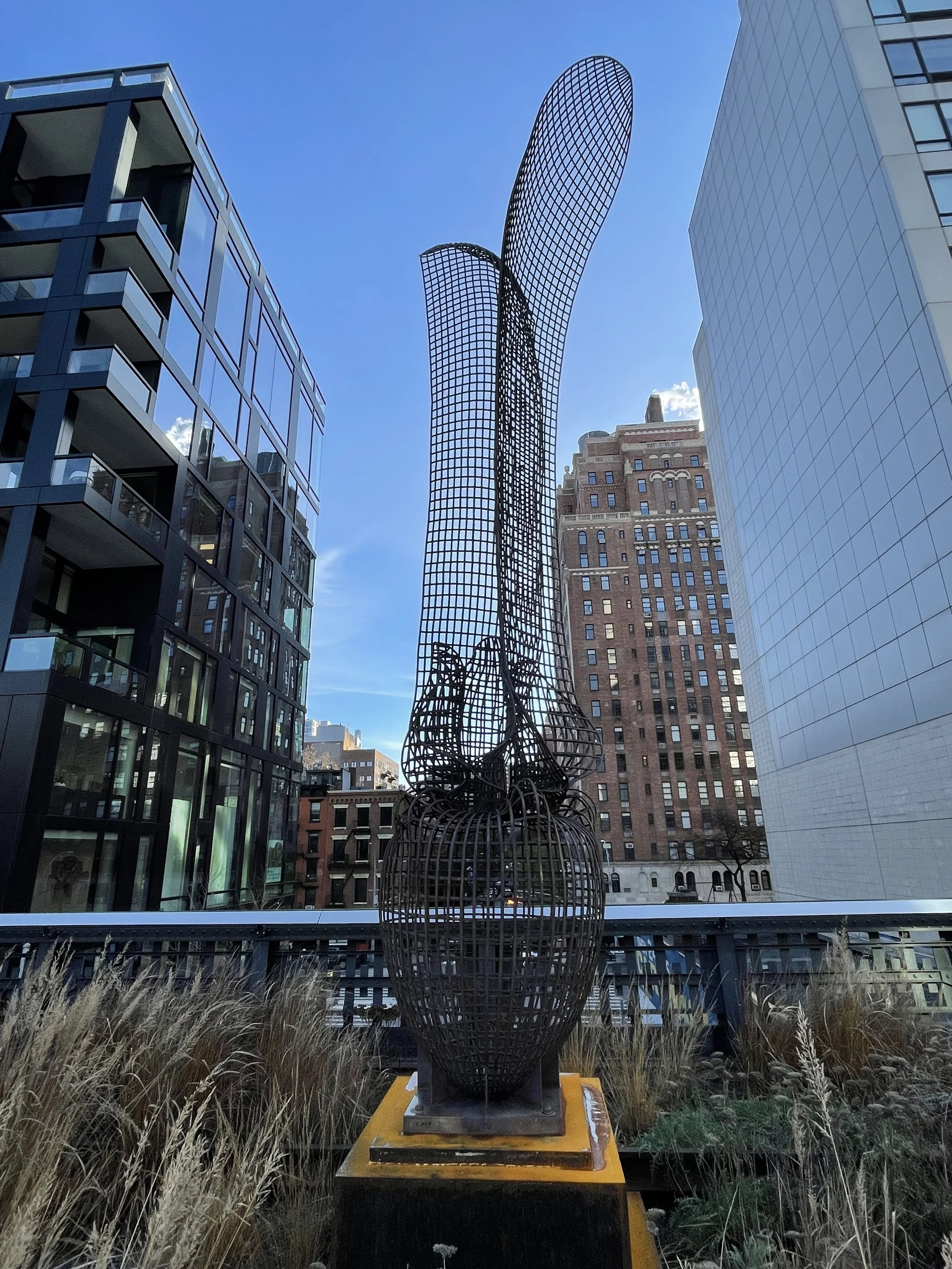
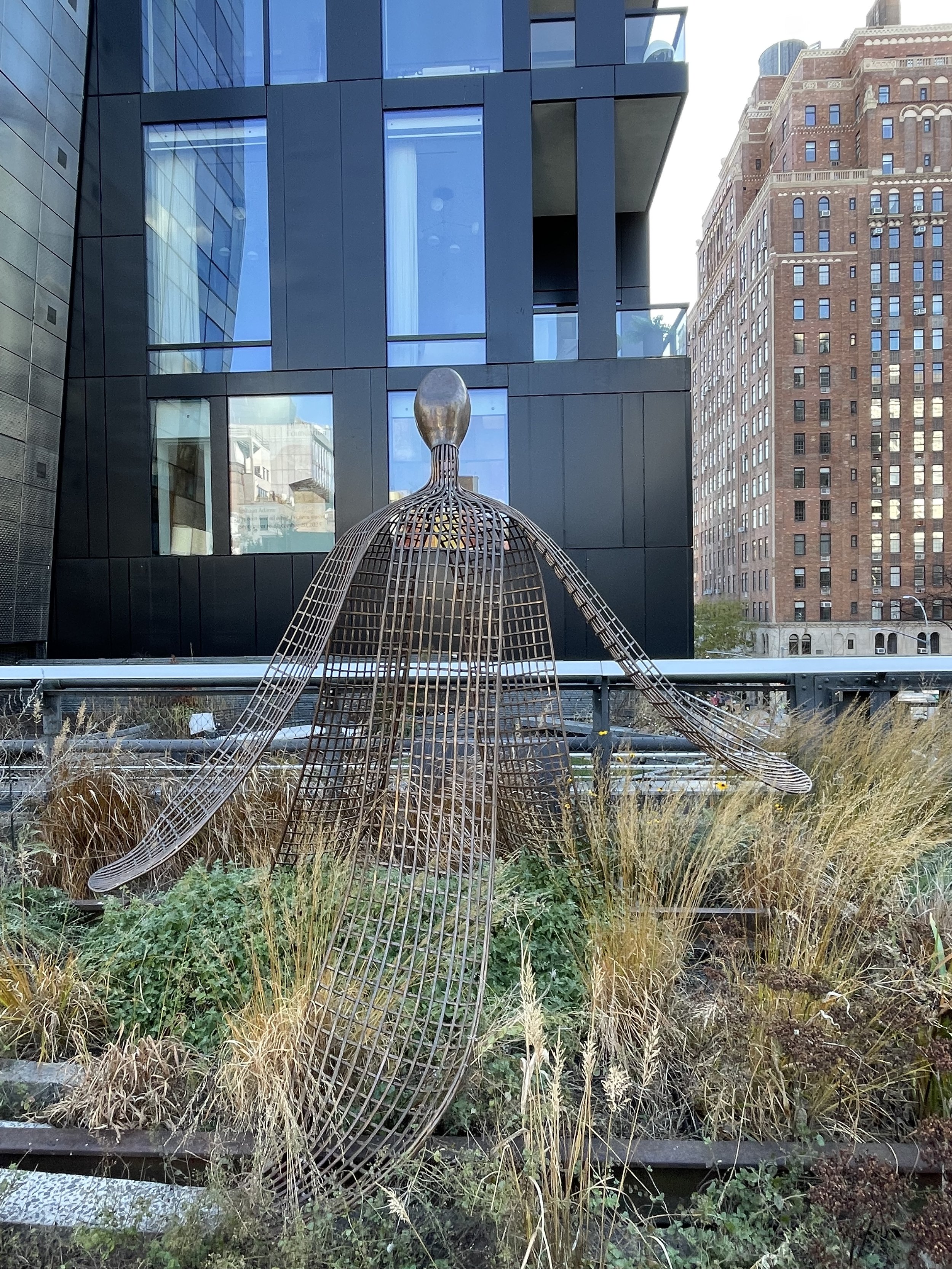
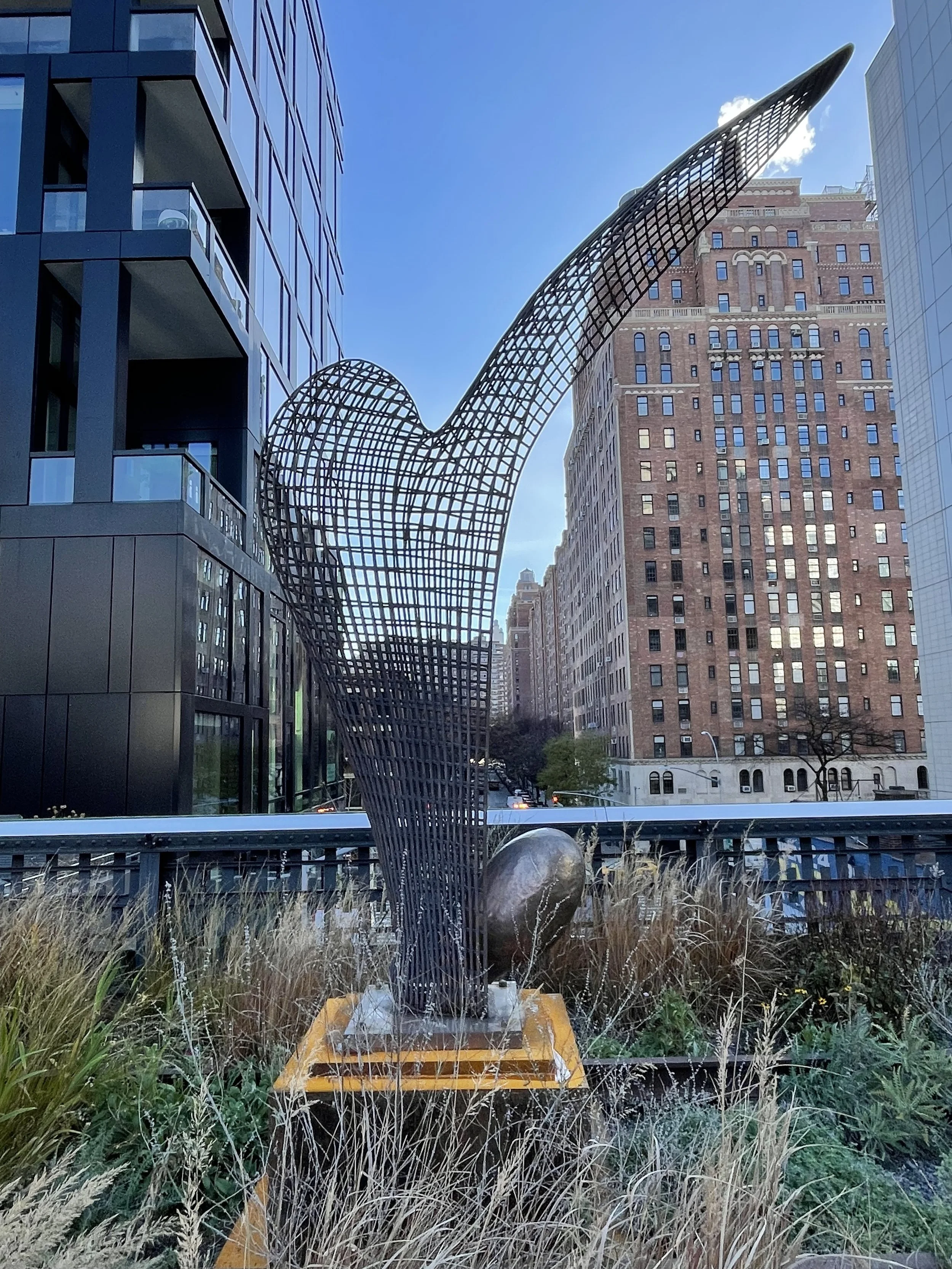
Figure 12 (left). Sopheap Pich, Khlông (Dipterocarpus Tuberculatus), 2025. Copper and steel. Image by author.
Figure 13 (middle). Sopheap Pich’s Kânh Chhrôôl (Gluta Usitata), 2025. Copper and steel. Image by author.
Figure 14 (right). Sopheap Pich, Melembu, 2025. Copper and steel. Image by author.
What stops Pich’s seeds from being blown from the High Line are their heavy metal materiality which keeps them in place. Known more for his massive rattan and bamboo sculptures (refer to figs. 10 and 11), Pich’s choice to use copper and steel for this semipermanent installation could be a choice of necessity and function. Metal lasts longer in outside spaces like that of High Line and weathers impacts of wind and rain better. While some traces of rust show on the sculptures from their months outside, their structures remain sturdy. Choice of material also speaks to the site specific nature of this commission. Pich’s incorporation of steel references New York City’s historic use of steel in late 19th century and early 20th century construction. The Tower Building (1889) and the iconic Flatiron Building (1902) were amongst the first steel structured buildings in the United States and came to define early skyscraper development. The material of steel lends itself to the formal quality of these buildings which are also mimicked in the latticed metal gridwork that makes up Pich’s seedpods. Both the seeds and the surrounding blue glass and concrete buildings follow organized patterns of vertical and horizontal lines. Pich’s materiality urbanizes his plant forms and makes them appropriate for city life by engaging the local building structures that surround his seed pods and their longstanding histories.
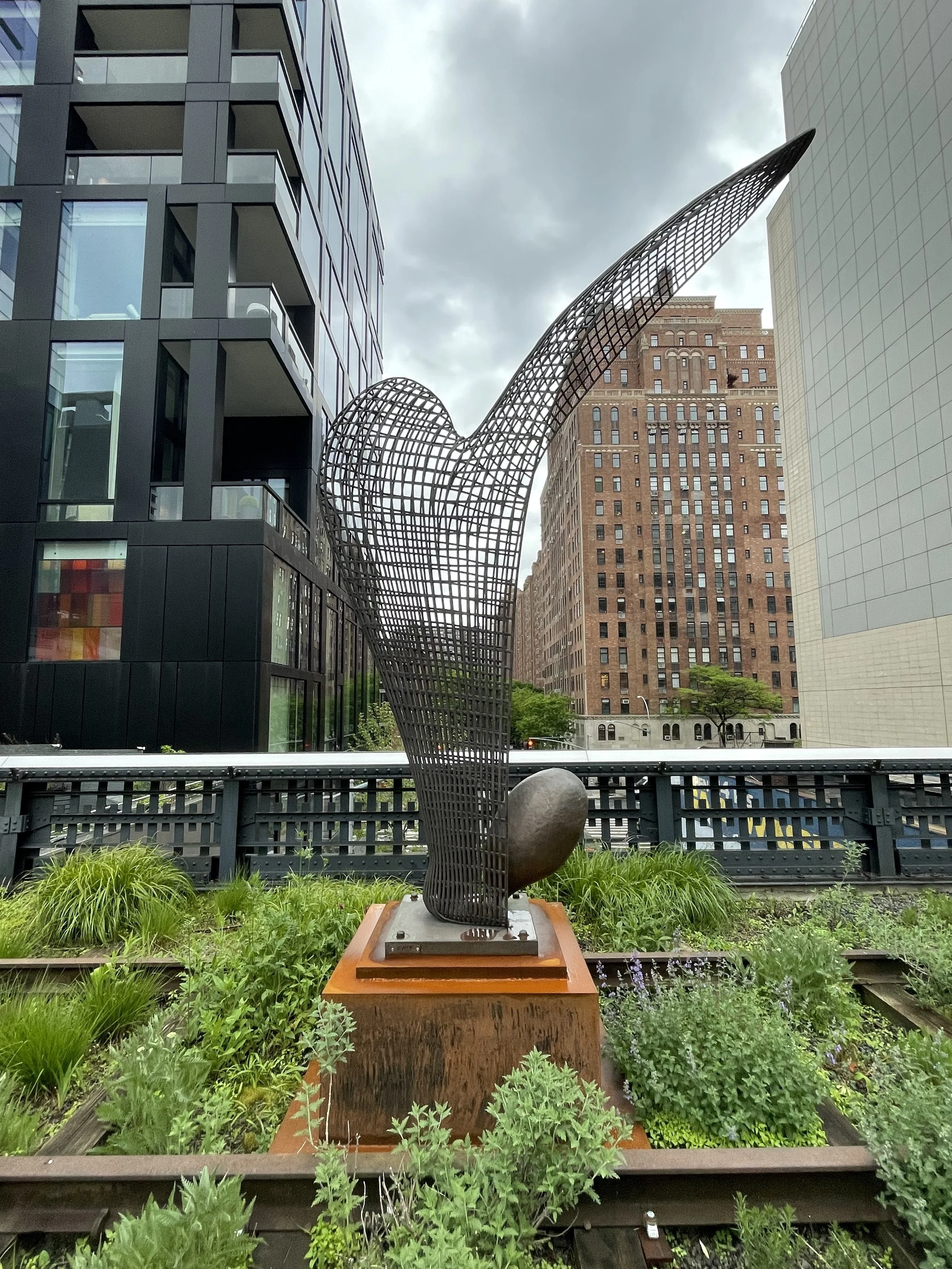
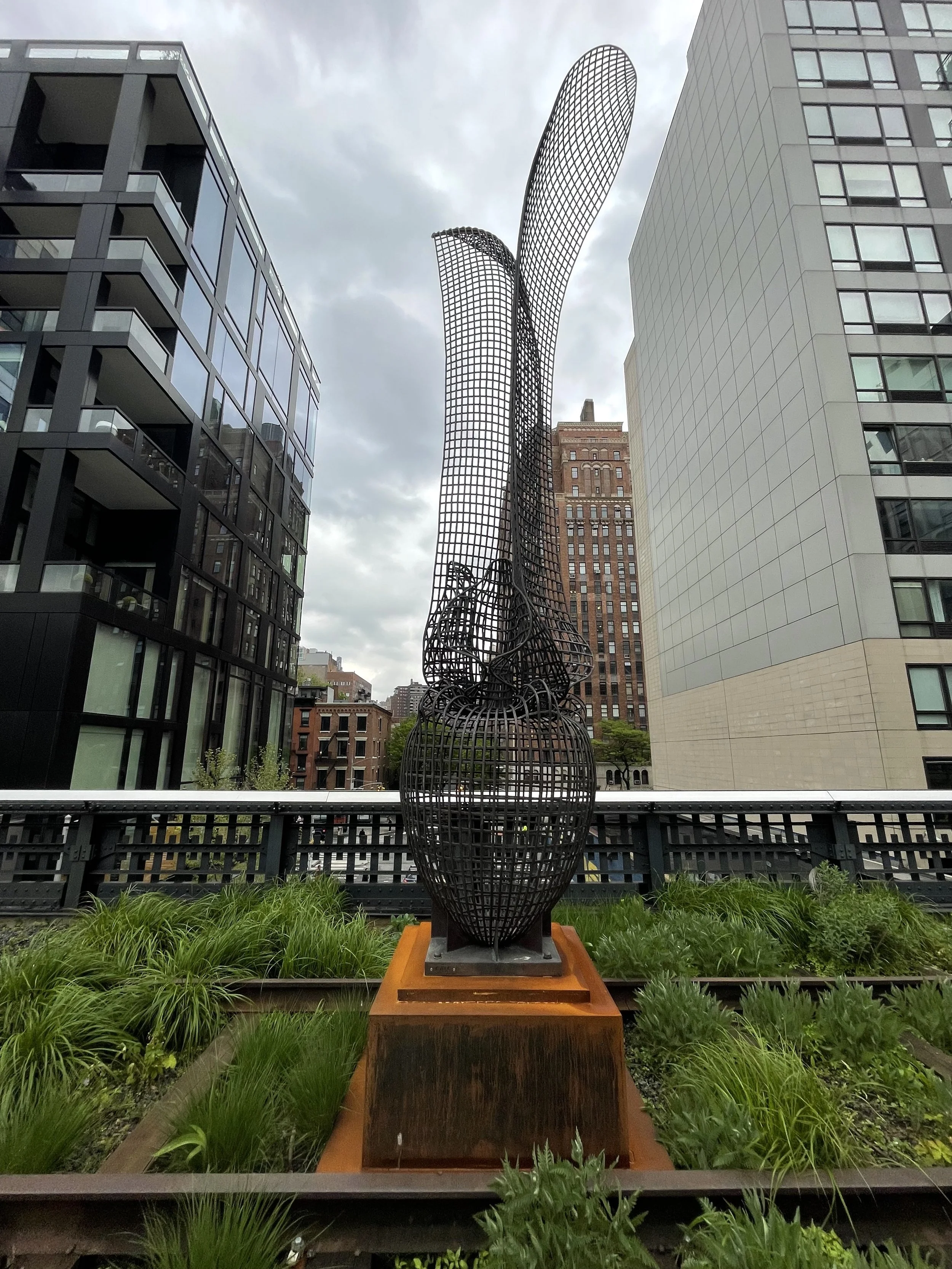
Figure 15 (left) and 16 (right). The latticed steel gridwork of Sopheap Pich’s Melembu (2025) and Khlông (Dipterocarpus Tuberculatus) (2025) reflects the horizontal and vertical lines of the skyscrapers surrounding the sculptures. The buildings and seedpods visually reference each other and add new meanings within the context of each other.
Material permanence directly corresponds with the multiple meanings that can be read from Pich’s works. Kânh Chhrôôl, Melembu, and Khlông were inspired by the hardwood trees that stand outside the National Museum of Cambodia in Phnom Penh. These trees used to grow prevalently throughout Cambodia but are now rare due to illegal logging and the timber trade. Ironically, the material permanence of the sculptures contradict the trees’ swift disappearance and scarcity in Cambodia. When these trees are cleared, often the ways of life that ethnic minority groups in Cambodia have practiced for hundreds of years are also disrupted. Side effects of the illegal timber trade have caused significant erosion of language, foodways, cosmological belief, as well as forced eviction from ancestral lands.
According to the exhibition label located near the base of Khlông, the seed pods demand “the attention we must give to nature and all it touches, from natural and man-made disasters to human migration and displacement caused by transformations in society and the environment.”² The sculptures reference the location of New York City as a common place for Cambodian refugees to settle in the 1980s following the Cambodian genocide. While NYC does not currently have a large Cambodian population, it is still a major hub for global migration from other countries. Pich’s sculptures are transplanted seeds from Cambodia just like many of the migrants who settle in New York City each year are also displaced populations. Through their gigantic size, Pich’s seeds make visible topics of diaspora, identity, and environmental ecocide which can be overlooked. The seeds are monuments to urban change in New York City and Cambodia and the human and nonhuman actors which bear the burdens of change. The sculptures are both durable because of their material, yet also translucent due to the gaps between their metal gridworks. This balance of opacity allows visitors to view everyday life through the seed structures, physically taking on the perspectives of these plants and the stories they tell.
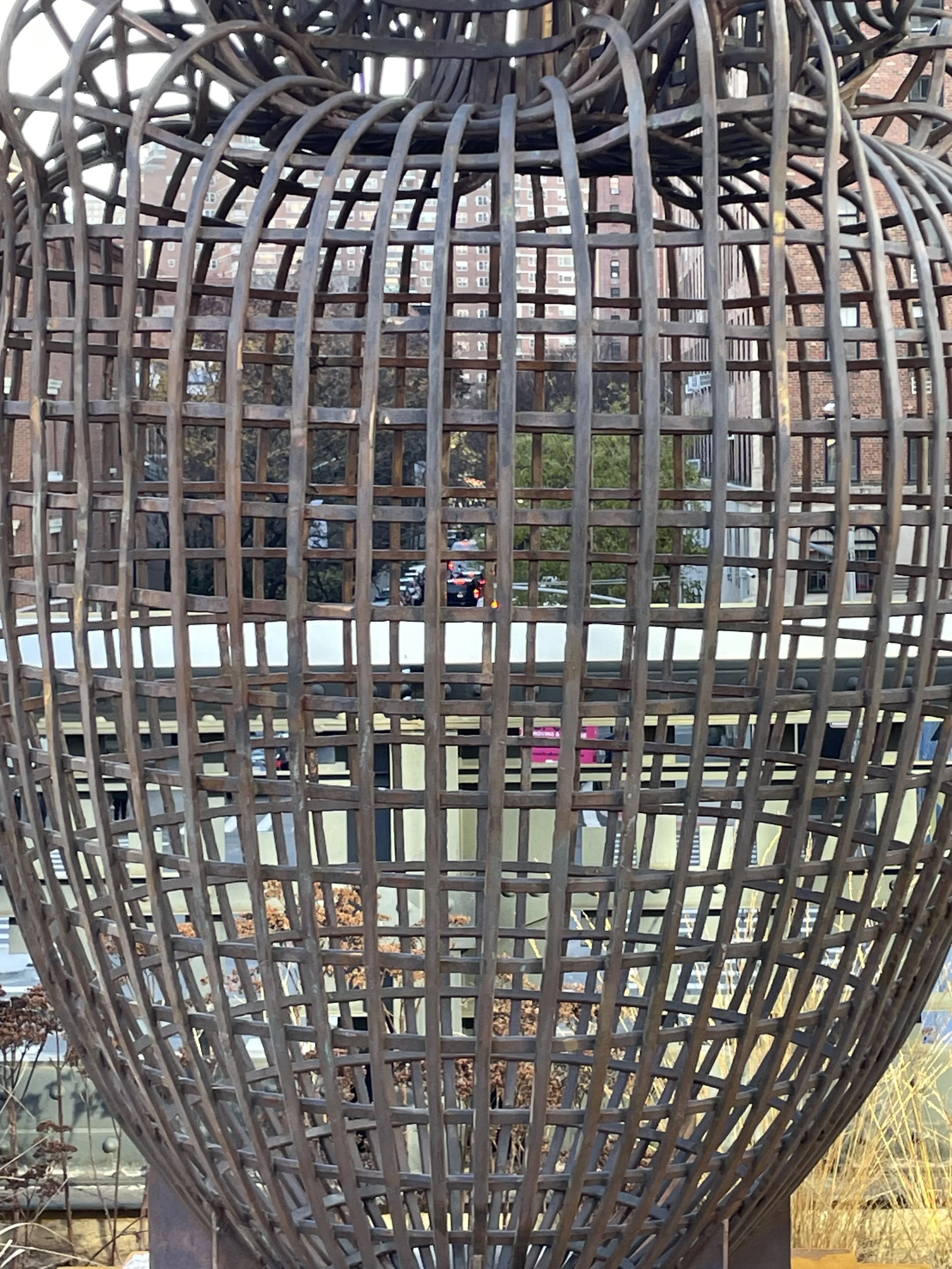
Figure 17. Closeup of Sopheap Pich’s Khlông (Dipterocarpus Tuberculatus) through which, everyday life of New York City is visible. The gridwork intentionally leaves gaps and holes which allow visitors to view the city through the lens of the seedpods.
Concluding Ideas
As a nontraditional art installation located in a public park, Pich’s sculptures effectively capture visitor attention through their large size and the ways that they engage with the history and visuality of their built environments. Their easy to read object label introduces passerbyers to Pich’s process and intention behind his artworks while also allowing viewers to draw their own conclusion about the placement, materiality, and deeper meanings of the works. Careful pairing of the artworks alongside plant forms and buildings that share similar forms and structures make the connections drawn between the artworks and their surrounding environments more clear. Finally a curated playlist of music for visitors and the frequent placement of benches along High Line’s art installations reinforces the park as a place of leisure and contemplation. It is the perfect reprieve from NYC’s nonstop busyness and should be visited throughout the year to see how artwork meaning is impacted by the changing seasonal plants and weather.
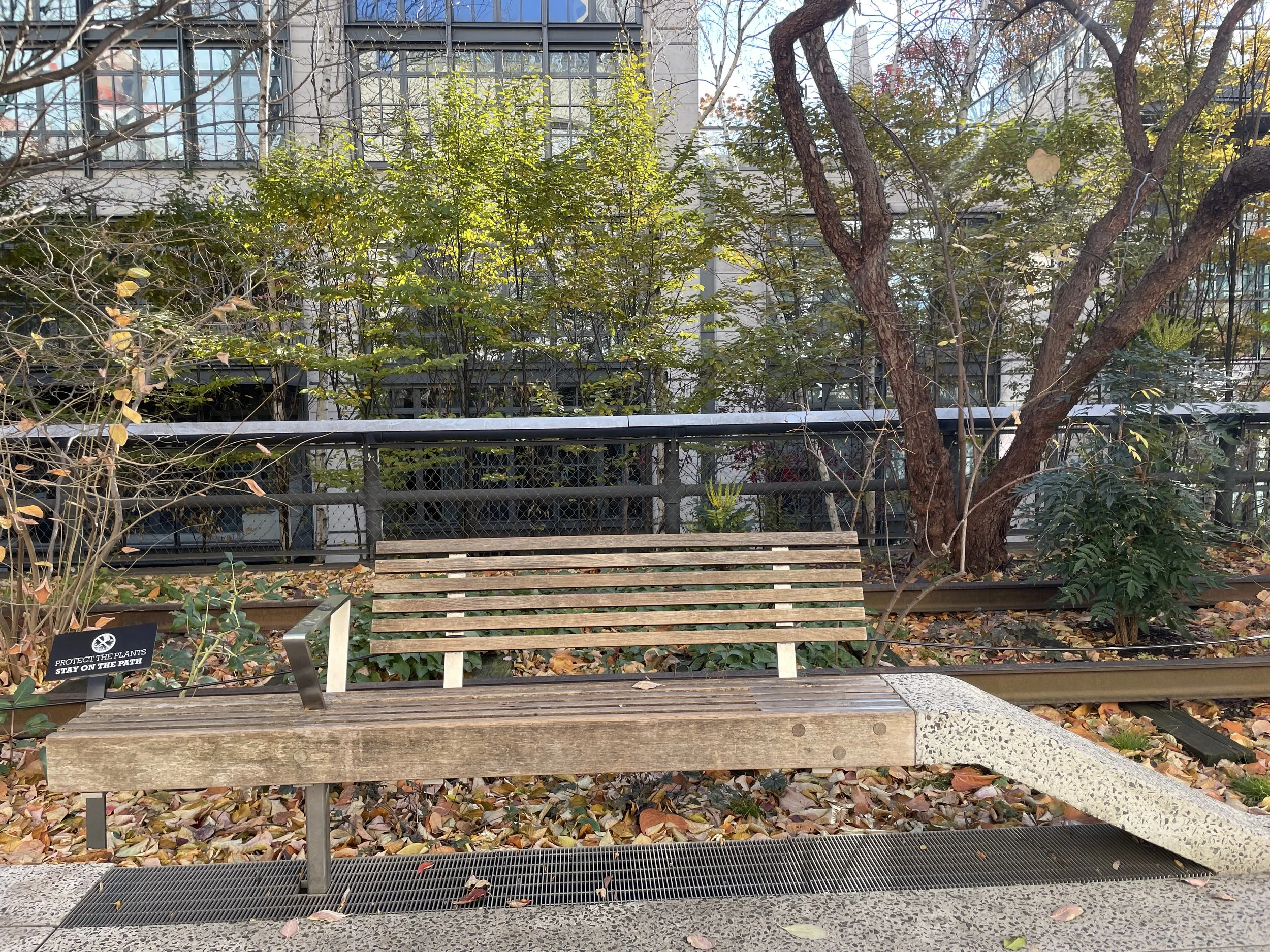
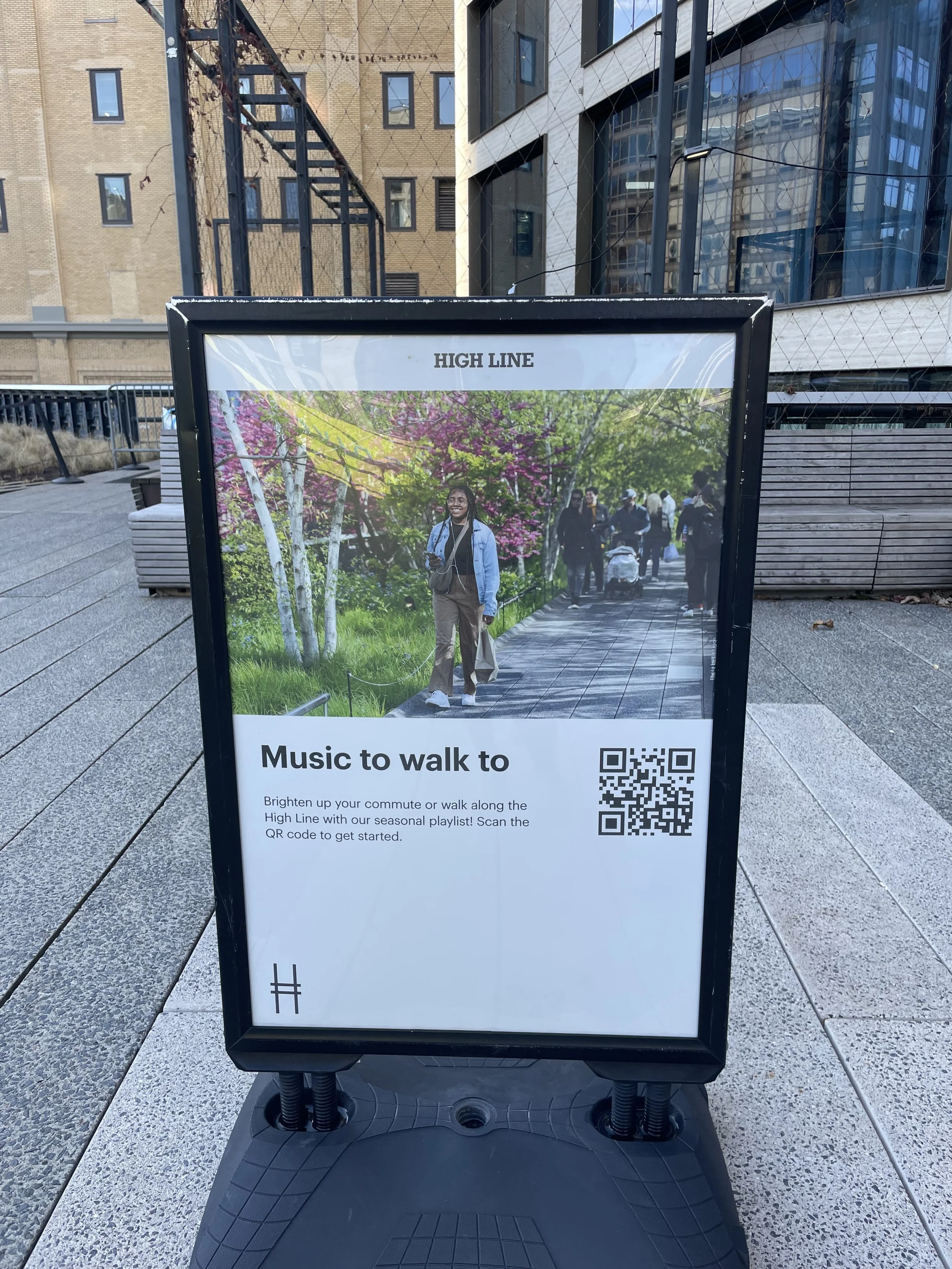
Figure 18 (left). One of the many accessible benches located along the High Line. Benches make High Line a place of leisure and observation for walkers. Image by author.
Figure 19 (right). Link to the playlist High Line staff curated to add an immersive element for visitors coming to High Line. The playlist is both an added aspect of programming and something that visitors can take with them and share with others related to their visit to High Line. Image by author.
Footnotes:
1 “History of High Line,” High Line, accessed on May 5, 2026, https://www.thehighline.org/history. Figure 4. Old railway lines that High Line is built over. Image by author.
2 Object label of Kânh Chhrôôl (Gluta Usitata), Melembu, and Khlông (Dipterocarpus Tuberculatus, High Line, 2025.
Anneliese Hardman is a curator, lecturer, and museum enthusiast specializing in Southeast Asian art histories. She holds a BA in History and Music from Palm Beach Atlantic University, a MA in Museum and Cultural Heritage Studies, and a MA in Peace and Conflict Studies from Pannassastra University of Cambodia. Currently, she is pursuing her PhD in Art History at the University of Illinois Chicago with a focus on contemporary Cambodian art. Her dissertation project explores contemporary Cambodian art that reflects relational changes of Southeast Asian environments and culture. You can find her other publications on Art & Market, Athanor, and Fwd: Museum Journal.
Like what you’re reading? Consider donating a few dollars to our writer’s fund and help us keep publishing every Monday.