


This program is partially supported by a grant from the Illinois Arts Council Agency.
Welcome to the Featured Film page for Bridge Video, now with more free access. Click here for our Fall 2026 program lineup. New all-original films, exclusively available on Bridge Video are posted here weekly on Fridays Sept-Dec & Feb-June. Click here to subscribe & view our entire collection of under-represented categories of film and video.

THIS WEEK’S FEATURED FILM PREMIERE: “Beneath the Sand the Sea”
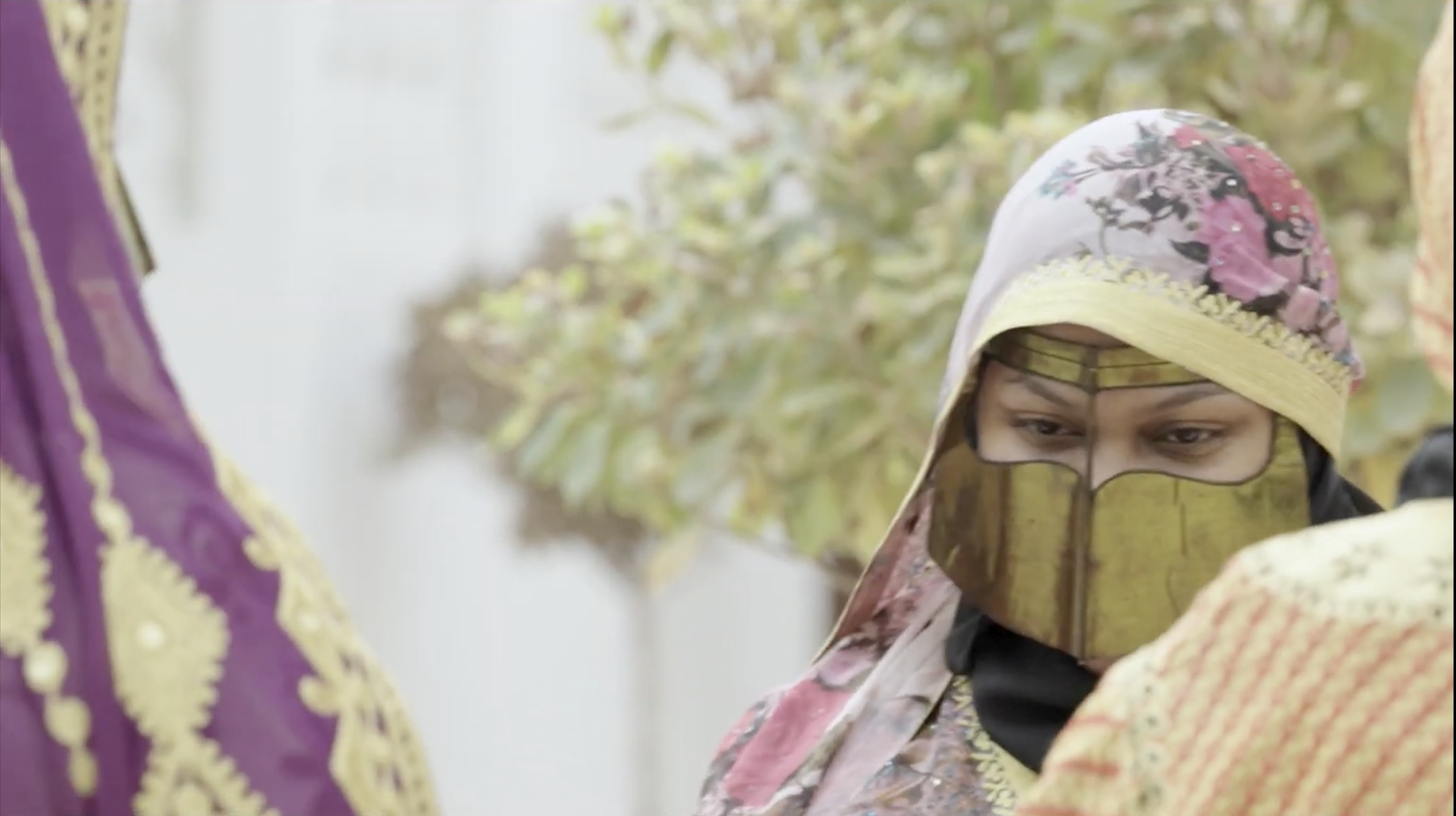
Bahrain, the land of two seas, is known for its fresh water springs. Since the time of Gilgamesh several millennia ago, people believed that Bahrain was the garden of Eden, lush and green with fresh water of mystic proportions to be worshipped. With the turn toward modernity and ever growing expansion these springs shifted from the sacred to the utilitarian becoming vessels to water crops and clean clothes. As the strength of the springs weakened so did the greenery and many local traditions, and now many are trying to remember how the water flowed from these mystic springs.
LIMITED ENGAGEMENT: "Prayer of the Sea” By Martin Gerigk
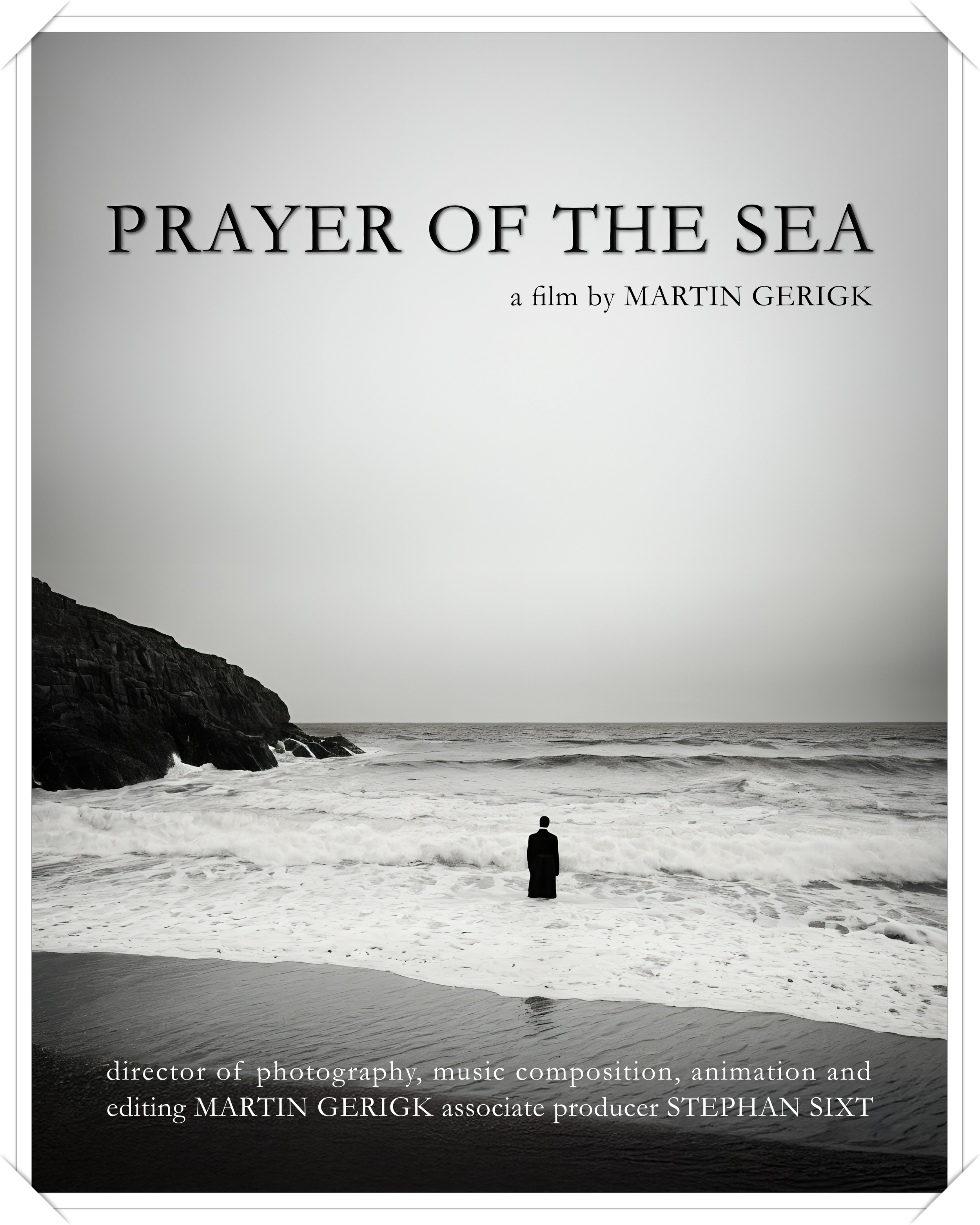
A composer recounts a dream from his youth that inspired the slow movement of his first string quartet, Prayer of the Sea. The dream, depicting a peaceful dissolution into the sea and wind, symbolized his future death. Decades later, rediscovering a drawing from the quartet's premiere - perfectly capturing the dream’s essence - revived its emotions. Now older, he reflects on the dream’s message: a serene acceptance of life’s inevitable end.
Prayer of the Sea is an audiovisual elegy offering a calm perspective on the universal experience of passing.

THIS WEEK’S FEATURED FILM PREMIERE: “The Obscurers' Steps”
The Obscurers' Steps is a single-channel video work composed of archival footage drawn from historical materials related to China and North Korea. I treat these images as “training material” for power narratives: built upon mass formations, synchronized rhythm, and monumental tableaux staged for an audience, they repeatedly compress individual difference and render “the people” as an orchestrated, visible body.
Through repetition, cutting, and looping, the work dismantles the mechanism by which an image is made to “hold together,” turning spectacle into a process that can be re-entered and re-experienced. As the narrative expands into grandeur, power itself becomes increasingly invisible.
Here, the video is not documentation, but training—forcing the viewer to oscillate between immersion and distance, and to sense how concealment produces a loss of self.

REWIND: "Driving Force” by Joanie Wind
Driving Force journeys through the banality of ecocide, circling metaphorical parallels in the capitalist treatment of nature, workers, and women. The gray protagonist ponders impending cataclysm and whether or not to have children.

THIS WEEK’S FEATURED FILM PREMIERE: "Grooms on Hold”
Grooms on Hold places viewers in the intimate, anxious final minutes of bachelorhood. A collage of audio and video repurposed from countless real wedding ceremonies, the film is a voyeuristic exploration of the tension between public joy and private vulnerability – a juxtaposition that reveals overlooked truths, and humor, beneath one of life's biggest moments.

THIS WEEK’S FEATURED FILM PREMIERE: “Ocean Screensaver”
Past and future worlds collide in a meandering fairytale about the most coveted, fabled object of all: the screensaver. With narration based loosely on mythologized, imperialist stories about the Philippines' Pearl of Lao Tzu, 'Ocean Screensaver' is an investigation of narratives, truths, and reclamation among repurposed waters.

THIS WEEK’S FEATURED FILM PREMIERE: “Drifter’s Inferno” by Ethan Edvenson
An experimental video about containment, wandering in a sea of white noise, and drawing as video.
Drawing as video.
Drawing is video.
Drawing video.

THIS WEEK’S FEATURED FILM PREMIERE: “Pandas Are Pandas” by Yuchi Ma
“Pandas Are Pandas” is an experimental video work that traces the strange afterlife of the Giant Panda as both national mascot and diasporic memory. The work begins with the 2023 recall of pandas from U.S. zoos to China, a seemingly administrative event that, for the filmmaker, resonates with the experience of being a Parachute Kid—an unaccompanied minor sent abroad for education, only to face eventual uprooting. The Giant Panda is not merely an object of affection or cultural pride. It is a symbol freighted with contradictions: fiercely protected, globally exported, politically neutral, and ideologically saturated. Both the panda and the Parachute Kid occupy spaces of cultural projection, suspended between nations, never fully belonging to one. In questioning what makes the panda ‘Chinese,’ the filmmaker considers how meaning is formed through repeated crossings between native and foreign lands. Yet these crossings are shaped by capital, containment, and control systems, a constructed space of simulated belonging.
“Pandas Are Pandas” reflects on the absurdity and melancholy of these conditions. The possibility of return is always there, yet deferred; to stay is both a privilege and a quiet act of estrangement. Weaving together archival footage, personal anecdote, and pop-culture ephemera, the work reflects how a creature once deployed to soften China’s global image has come to mediate the filmmaker's relationship to home, exile, and the ambiguities of identity. Framing the panda as subject and cipher, the filmmaker examines the residues of migration, nostalgia, and the dissonance between representation and reality. The work invites viewers to consider how national symbols outlive their intended meanings, and what they come to represent for those suspended between here and elsewhere.

THIS WEEK’S FEATURED FILM PREMIERE: “marathon”
marathon explores emotional endurance and persistence in long-term romantic relationships.

THIS WEEK’S FEATURED FILM PREMIERE: “Holy Afterbirth”
Holy Afterbirth is an experiment in absurdist horror. A person holds many versions inside themself. Religious and patriarchal ideals imbed arbitrary rules. The mind tries to make sense of pain through nightmare. Thoughts act as ghosts, haunting reality. Like memory, the film degrades, distorts, and reimagines a moment in time.
Interweaving live action, stop-motion and rotoscope animation, Holy Afterbirth captures the breakdown where divisions between real and imagined dissolve. At its heart, this mirrors the deconstruction and transformation in queer lives. Queer bodies are villainized by church and state, which are allied in the current nationalist regime. Yet, our bodies remain precious.

THIS WEEK’S FEATURED FILM PREMIERE: “GASTROMANCY” by Judy P. Steele
Listen for gastromancy in this eerie exploration of one woman’s struggle to rise above quickening anxiety and fear that bind both her inner and outer voices.

THIS WEEK’S FEATURED FILM PREMIERE: “Repertoire of Death” by Guadalupe Arellanes
A lucid dream leads to a dance with Death.

THIS WEEK’S FEATURED FILM PREMIERE: “Running Away (Learning about my culture on YouTube)” by Audrey Clarendon
This single-channel screendance portrays my complex relationship with my Antillean heritage and American upbringing through archival footage of the history/culture of my island, computer windows, dance, and blue screen technology.

THIS WEEK’S FEATURED FILM PREMIERE: “NO MORE THAN ANYONE ELSE” by Marcelese Cooper
Blending candid interviews, experimental moments, and reflective narration, this 55-minute personal doc explores what it means to grow up when the people who love you also struggle to accept who you are. Through screen-recorded calls with friends, street interviews, and distant footage of everyday life, I examine my upbringing as a queer non-binary trans person—where love, expectation, and shame often coexisted—among a sea of other stories about adolescence. Anchored by a conversation with a close friend and fellow artist, the film sits in the tension between care and rejection, asking if anyone is even really special—or maybe all of us are.

THIS WEEK’S FEATURED FILM PREMIERE: “Solum | Soil”
This work was created by Moving Matter, a collaborative research team developing methodologies for making. Each project includes many artists across dance, costumery, music and film who devote themselves to innovative modes of making that break habits of privileging human-centric design over more-than-human materials and the wellbeing of the planet.
The team is interested in collaborating with raw materials as a way of developing new choreographic approaches, wearable designs, and material generation for screen dance, installation and performance - finding different ways that human-generated design might learn from the choreographic intelligence of our earth’s shifting materials.

THIS WEEK’S FEATURED FILM PREMIERE: “Wax on Top of Me”
Centered on the weight of perceived movement, ‘Wax on top of me’ combines frame-by-frame animation and heavily crunched footage of movement. During the video, the improvised movement comes from one of the artists (Molly) captured in real time by a distorted surveillance-like camera. The handheld footage is flat and sharpened by the in-camera limitations, leaving traces of digital imperfections of the movement.
Afterward, the individual frames were printed out and the artists created wax silhouettes for each frame, all re-imported into the digital video. The contrast between the footage and beveled wax creates a strange mirrored movement, building into itself like the weight of our movement in memory versus the real shapes our bodies make.

REVIEW: Diego Marcon, “Krapfen” at the Renaissance Society
Diego Marcon’s Krapfen closed at the Renaissance Society two weeks ago, leaving me haunted by its hallows. The Italian artist, in his US debut curated by Myriam Ben Salah, presented this film through the double doors of Cobb Hall, confronting viewers with the backside of a gridded and clamped LED screen before they could face the unified front of it. Every inch of wall in the 3200 square foot gallery was rendered in an egg yolk veneer of yellow paint, complimented with matching wall-to-wall carpet and electric cables. The Ren’s gothic arched windows, opaqued with a white film, foreclosed the outside world of the University of Chicago’s campus, flattening the exterior light source for the unfolding of strange and familiar events.
Krapfen’s 4 minute and 44 second loop begins with the switch of a light, turned on by a dark haired figure lying prone on a bed covered by one pink and one baby-blue blanket. With face cocked toward the crack of a closet door, The Kid, a rosy-cheeked person with green almond eyes of non-specified gender, is aroused in a bedroom trimmed with egg yoke yellow wainscoting and matching wall to wall carpet. The Kid sits up and fixes their gaze outward, towards the viewer, conflating the gallery space with their own room. For five seconds, subject and viewer stare into each others’ interiors. This titillating pause is interrupted by a window blown ajar, white curtain flowing open to reveal a cornflower blue sky.

THIS WEEK’S FEATURED FILM PREMIERE: "Zoonomia” (Dec. 5-12)
Zoonomia represents an imaginative investigation into how things might have evolved if events had followed a slightly different trajectory, allowing for hybrids of existing organisms, the return of extinct species and unpredictable motivations, interactions and outcomes.

THIS WEEK’S FEATURED FILM PREMIERE: "Performance No. 19190301” (Nov. 28-Dec. 4)
Teenage boy Seong-hyun sets out on a journey with his grandmother Byeong-hee, who suggests leaving without revealing a destination. However, their car breaks down, preventing them from starting their trip. At that moment, the TV installed in the car broadcasts a mysterious performance titled "Performance No. 19190301." As the show begins, Seong-hyun and Byeong-hee embark on a journey through the history of Korea's past.

THIS WEEK’S FEATURED FILM PREMIERE: "Baby Fever” (Nov. 14-20)
A young wife loses her pregnancy—then the rest of her body—after moving to a suburb run by a strangely ritualistic mothers’ group.
