

REVIEW: A Reading of Scott Burton as “Shape Shifter”: Part 1 – The Postminimal Moment
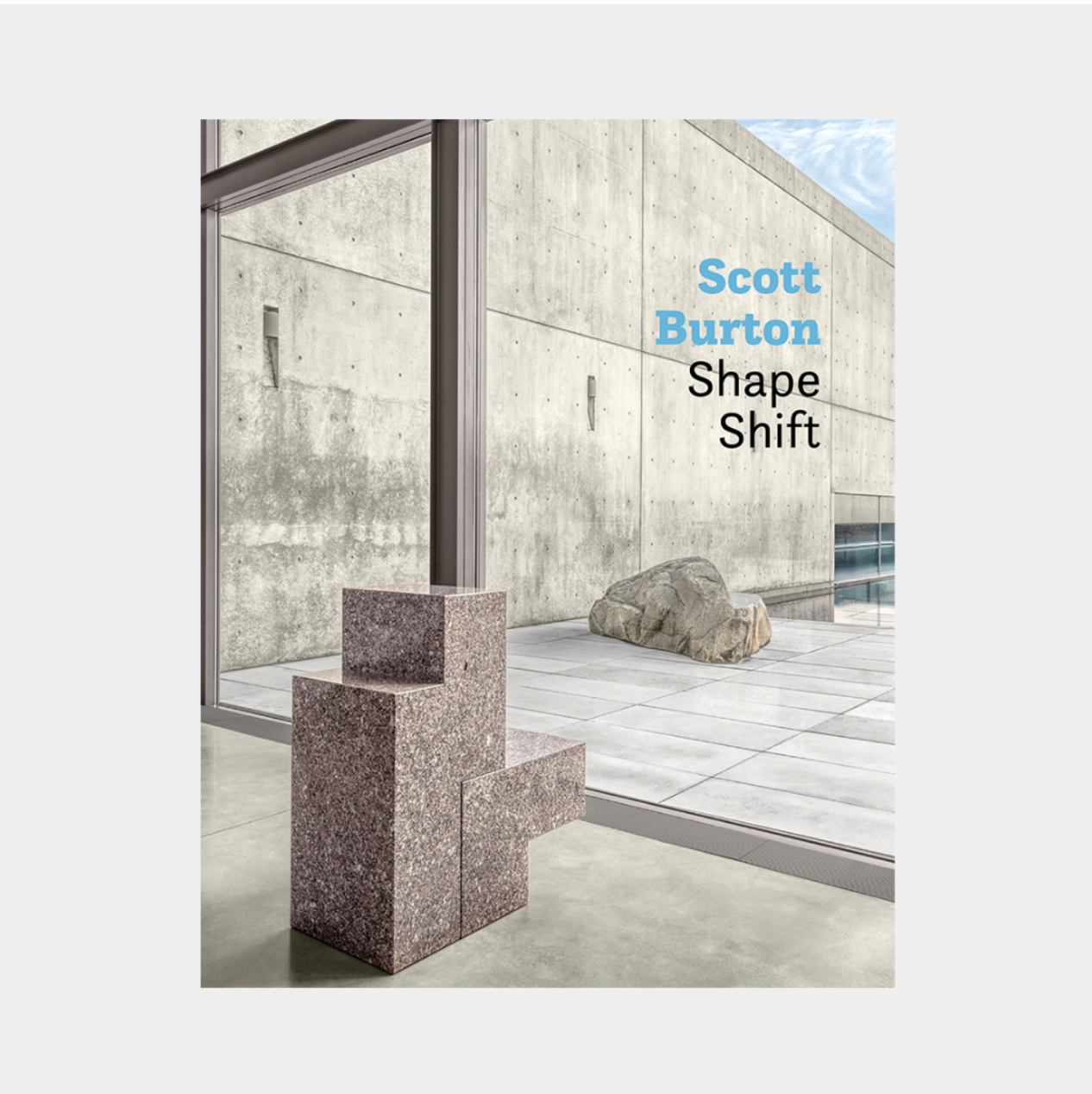
Installation view of Scott Burton: Shape Shift at the Pulitzer Arts Foundation, September 6, 2024–February 2, 2025. © 2024 Estate of Scott Burton/ Artists Rights Society (ARS), photograph by Alise O’Brien Photography, © Pulitzer Arts Foundation and Alise O’Brien Photography. Image courtesy of the Pulitzer Arts Foundation.
REVIEW
A Reading of Scott Burton as “Shape Shifter”: Part 1 – The Postminimal Moment
By Jess Wilcox and Heather Alexis Smith
Hardback ($50.00)
Yale University Press
By David Sundry
Scott Burton: Shape Shift - an exhibition originating at the Pulitzer Arts Foundation in St. Louis and now on display at Wrightwood 659 in Chicago is an engaging and much needed career spanning retrospective that is, and was, beautifully installed at two different Tadao Ando museums. Ando is a much-acclaimed Japanese architect known for his austere and precise minimalist volumes rendered in exquisitely realized concrete and Burton’s restrained expertly fabricated sculptures both enhance and complement Ando’s spaces. Burton, who died from AIDS-related complications in 1989, was in the midst of developing a body of publicly installed sculpture/furniture throughout the 1980s and his work is largely and only associated with this decade. Shape Shift broadens the basis of Burton’s work by presenting the full breadth of his activities as art critic and editor, as performance artist and as sculptor. This fascinating back story provides the foundations for his artistic practice and a new “reading” or basis with which to review his later demotic art.
In the mid-1960s, when Scott Burton began the first phase of what turned out to be his multi-disciplinary career, as editor and art critic for ARTnews, the reaction against the formal criticism of Clement Greenberg, a leading critic of Abstract Expressionism, was in full swing. Starting in the 1940s, Greenberg argued that the essence of Modernism, of modernist practice, evolved from the enlightenment self-critical tendencies of Kant. As Kant refashioned 18th century philosophy to reestablish the basis of reason, ethics and judgement, so Greenberg used Kant’s logic to criticize the individual cultural disciplines of painting, sculpture and theater to more fully establish them on their own terms. He advocated that these disciplines, secure in their limited but established foundations would provide a bulwark against the rapid onslaught of modern culture.
By the mid-1960s an unintended or literal reading of Greenberg’s concentration on the reductive material and pictorial elements of a work of art, the medium’s irrefutable conditions, and a focus on the argument of what constitutes a work of art, predicted a condition of “objecthood” wherein the pre-conceived aspects or inner necessity of the medium maps onto the logic of its realization or style or, in other words, the logic of the style establishes the limits of the style. Also, this object condition of the work emphasized its position in space, but, more importantly, that (this object) is conceived as a “position”, a realization in words, an argument or declaration that the verbal condition is the basis of the work.
Donald Judd, an art critic, sculptor and theorist who originated many of concepts of what came to be known as the minimalist movement, criticized Greenberg’s definition of the basis of painting in two important ways. One, the compositional elements within the painting or framed support were relational and two, the space in and around the marks and color on that support made it impossible to escape pictorial illusion. Judd argued that the part-to-part or relational approach to the elements within the frame prevented one from apprehending the work as a “definite whole.” Judd asserted that the unity of a work depended on its ability to present itself (to be read) as an entity, as “one thing” with very few parts, and that these parts must be subordinate to the overall shape to achieve unity. Further, the interior compositional parts must be plain and of such nature that it is self-evident that they belonged to a picture conceived as a rectangle and subject to the limits of a rectangle. Painting in a rectangular format (or any shaped format) emerges as an exercise in proposing shapes and surfaces that “plausibly” occur in those formats and in finding solutions to those basic problems. Thus painting, strictly conceived, is reduced to a presentation of acceptable solutions in order to achieve a unitary-type form: whole, single, indivisible. However, the severe limitation of the problems that such a conception of painting could successfully address severely restricted the potential problems it could solve. A general response to this intractable position was to abandon working on a single plane in favor of three dimensions. Further, this indivisible wholeness invited another reading of the framed support or the unitary form as a single shape in which “the shape is the object.”
When this condition is achieved, the emergent objectness or objecthood could not be resisted or suspended and the presence of the object compels a spatial circumstance that includes the viewer. And it is this spatial conclusion or confrontation that Michael Fried, in Art and Objecthood (1967), proposed as a reversal of a modernist reading wherein the meaning of a work is located within the work. If the meaning of a work shifts to an encounter of a work, Fried believed this created a new genre of theater. The introduction of a shared space and a shared time – a public mode – would defeat or negate the modern self-critical tendency to provide a basis for its cultural forms. The focus shifted out to the presence of the object, its demand on the viewer to be the subject, to be aware and to take it, the object, into account.
By the late 1960s, an increasing number of artists and critics, including Scott Burton, were advocating for the development of new practice modes challenging the stable, self-referential conception of current minimalist sculpture. In reaction to the parent style, Postminimalism, a term coined by Robert Pincus-Witten, emerges as a shift in sensibility and begins the process of opening out or loosening the self-evident and prescriptive visual and sculptural priorities of minimalism. As Greenberg used Kantian logic to critique modern western cultural practices to provide a ground for the practices, so Postminimal artists and critics used another Kantian precept to critique Greenberg’s analysis – that all human activity is apprehended in both space and in time and, these works, unlike previous abstraction, do not try to defeat or deny their existence in time. In retrospect, this time and process-based reaction argued against any secure definition or secure maintenance of a cultural activity. The dialectical nature of Modernism (thesis, antithesis, synthesis) for all purposes resists any static conception and the inevitable mannerist reaction or reversal of values leads to a successive and permanent revolution of style. It is these historical forces that defeat Greenberg’s attempt to provide the arguments for more resilient disciplines.
It is in this emerging Postminimal moment with work defined by materiality and form and a direct engagement of the viewer in real space and real time, and with its monolithic construction of the viewer as universal and non-differentiated that Scott Burton emerges as art critic, as editor and very soon as performance artist.
This is the first of a four-part series on the work of Scott Burton as presented at the Pulitzer and Wrightwood 659. In Part 2: Sculpture by Other Means – Burton’s careful critique of Minimalism and, importantly, his critique of the homogenous construction of the viewer will be discussed. Burton argued for Minimalist regularity and serialism but against a neutrality that suppressed the viewer’s individual response. It is these alternate engagements that opened up conditions for particularity and difference.
Part 3 will discuss the evolution of Burton’s sculpture/furniture from initial conception to public installations.
Part 4 will incorporate Burton’s public work within a wider architectural context.
David Sundry is a Chicago-based architect, architecture editor of Bridge Chicago NFP, and co-director of SITE/less architecture and performance gallery.
Like what you’re reading? Consider donating a few dollars to our writer’s fund and help us keep publishing every Monday.
