
REVIEW: Kayla E, “Precious Rubbish”
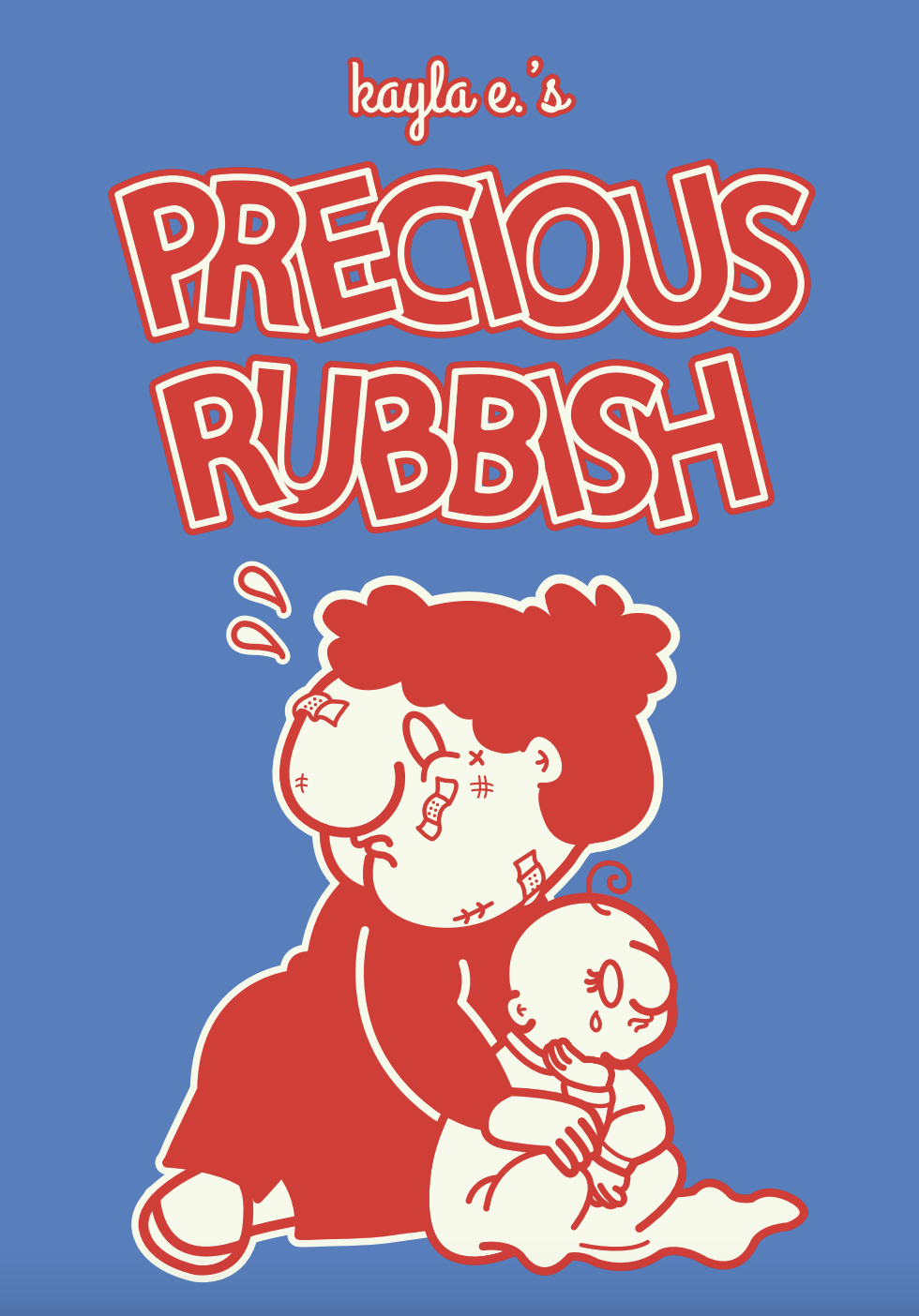
Cover, Precious Rubbish by Kayla E. Image Courtesy Fantagraphics.
REVIEW
Precious Rubbish
By Kayla E
Hardback ($29.99)
Fantagraphics
By Sage Dunlap
As the prologue to her graphic novel, novelist Kayla E provides a required reading for anyone seeking to understand her story: a crayon scribbled, notebook bound rendition of “The Three Little Pigs!” scribed by herself, or rather, her younger self, “L’il Kayla.” Just as the farmyard tale was made popular in America as an effort to translate depression-era morale to young audiences, E introduces her midcentury-inspired graphic novel with the fable, using a children’s fairytale to set the tone for the story of her traumatic childhood.
In her graphic novel Precious Rubbish, E blends satire with the story of her upbringing, each panel constructing a fractured narrative. With a visual language inspired by pop art and midcentury cartoons, E confronts the harsh truths of her abusive childhood from an adult understanding. In doing so, she exhibits the healing power of art.
Just like her “L’il” cartoon counterpart, E grew up in South Texas and split time between the homes of her Mexican father and white mother. Her biracial identity puts strain on her self image at a young age. Her grandmother on her dad’s side is sure to tell her she “ain’t really a Mexican, darlin!” Through recipe pages for fried okra, tortillas and charro beans, E shares that her choice to be vegan further strained her relationship with food and her Mexican identity, something that made her "intrinsically confused about who she was.” On top of that, L’il Kayla is forced to confront adult matters at a young age: the naked children on her dad’s laptop, her younger brother’s incestuous advances, and why her mom won’t talk to her for weeks at a time.
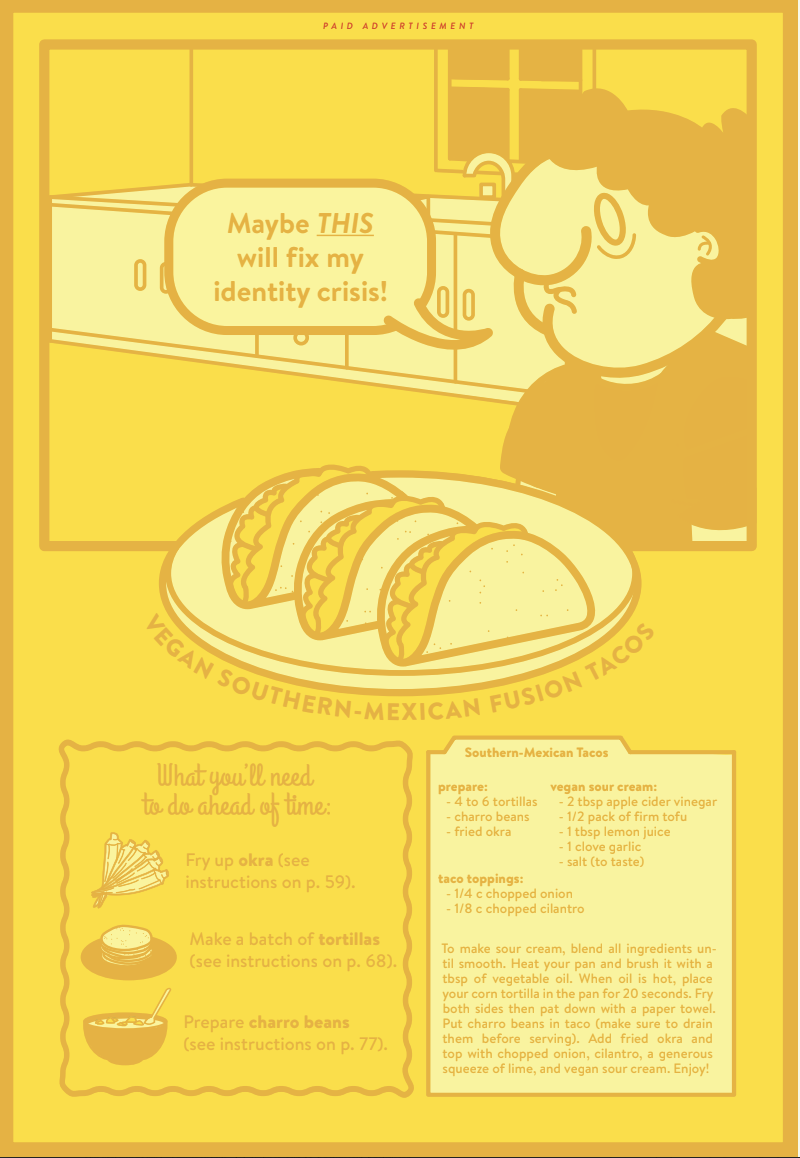
Image Courtesy Fantagraphics.
Though colorful and playful, the comic is bleak. Through pop art and satirical advertisements, E reckons with her childhood trauma with an inventive take on the comic form. Her story moves beyond the four-tone panels, giving added context and retrospective insight through magazine ads, coupons, recipes, and children’s drawing activities. Cut-out dolls inspired by the Archie comics and paid advertising squares for the likes of ‘Tite-N-Rite’ tell an added story about Kayla’s struggles with her body image. Gameboard centerfolds show the setbacks that Kayla faced as she grew up and started to understand the abuse she was suffering.
By experimenting with the comic book’s traditional form, E explores the nonlinear growth that comes with finding identity amidst a traumatic upbringing. Rather than recalling her childhood in chronological sequence, she incorporates satire and collage to share how the abuse seeped into many parts of her development. For example, she displays how her bicultural identity impacted her relationship with food, which hindered her body image, which was made further complicated by intrafamilial sexual abuse. Through a mix of visual influences, helmed by her Southern religious upbringing and clear reverence for vintage comics, E uses the cartoonish appeal of the comic book form to her advantage, showcasing the nonlinear path of healing in the style of a midcentury-magazine-meets-childrens-activity-booklet.
As told by interjections from older Kayla, the story of E’s upbringing is fractured by many lapses in memory and blurred lines crossed over time. Within the graphic novel, she fuses those lapses with a candid dialogue between her past and present selves. In floating text bubbles per classic comic style, E, with her grown up wisdom, clears up some of the confusion her L’il self felt: her parents always knew about her brother’s abuse, and her mother was obsessed with maintaining complete control over her. Though the comic focuses on the perspective of L’il Kayla, older Kayla's presence is still palpable. It is through this blend of the past and present where the reader is forced to reckon with the pain of coming to terms with the things that you experienced as a child that you shouldn’t have had to understand at the time.
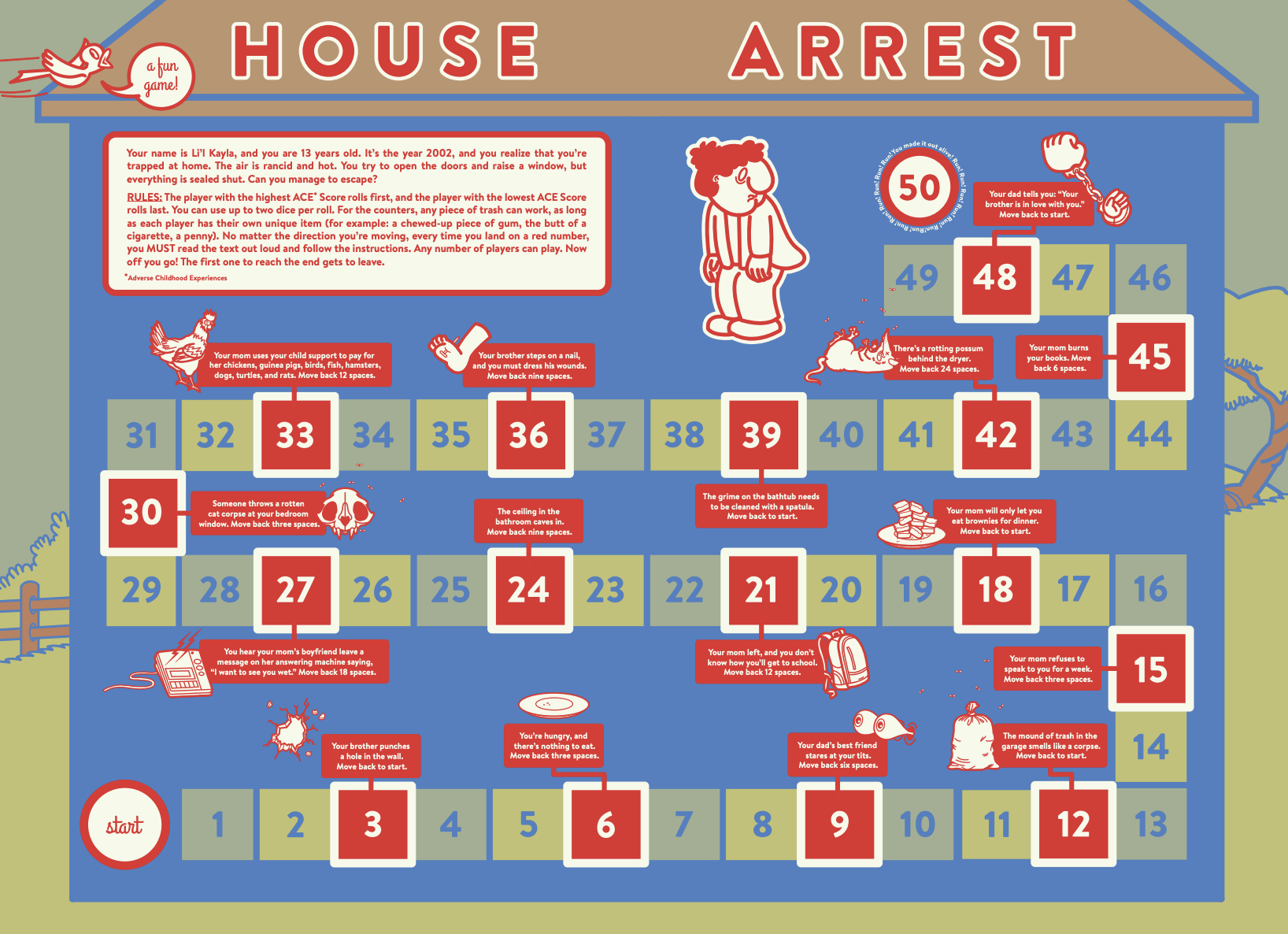
Image Courtesy Fantagraphics.
The book ends on a straightforward note, contrasting the primary hues that flash on every page. E writes a message to herself, and other survivors of childhood abuse, plainly in black and white ink: “Please remember that they never loved you.” The End! This sentence departs from the satirical tone that drove most of the story, closing the book with an earnest reminder of a lesson she learned along the way. It’s a cathartic declaration of newfound self worth, and a testament to the healing power of art.
In the style of a children’s magazine, E manages to tell her story as if she’s sharing it with a young audience. In doing so, she finds connection with her younger self. The novel bears a reminder that trauma can feel like a solo fight, but art can bring healing through representation and shared experience. The impact of E’s story is evident in the reach of this book. In April, E took her comic on a tour to cities across the U.S. sharing her art and approach to finding humor in healing.
While many factors can be attributed to the power of this story, from its playful illustration style to its poignant use of satire, E’s innovative take on the form of a classic comic book makes Precious Rubbish an essential addition to the graphic novel genre. Taking her own spin on midcentury novels and allusions to classic children's storytelling, E candidly shares her childhood trauma and healing process, leaning into past and present in both narrative and visual language. Cartoons and graphic novels have been used to share big ideas with kids for centuries, and through L’il Kayla, E extends a hand and some wisdom to her younger self.
Sage Dunlap is a writer based in Chicago, Illinois.
Like what you’re reading? Consider donating a few dollars to our writer’s fund and help us keep publishing every Monday.
