

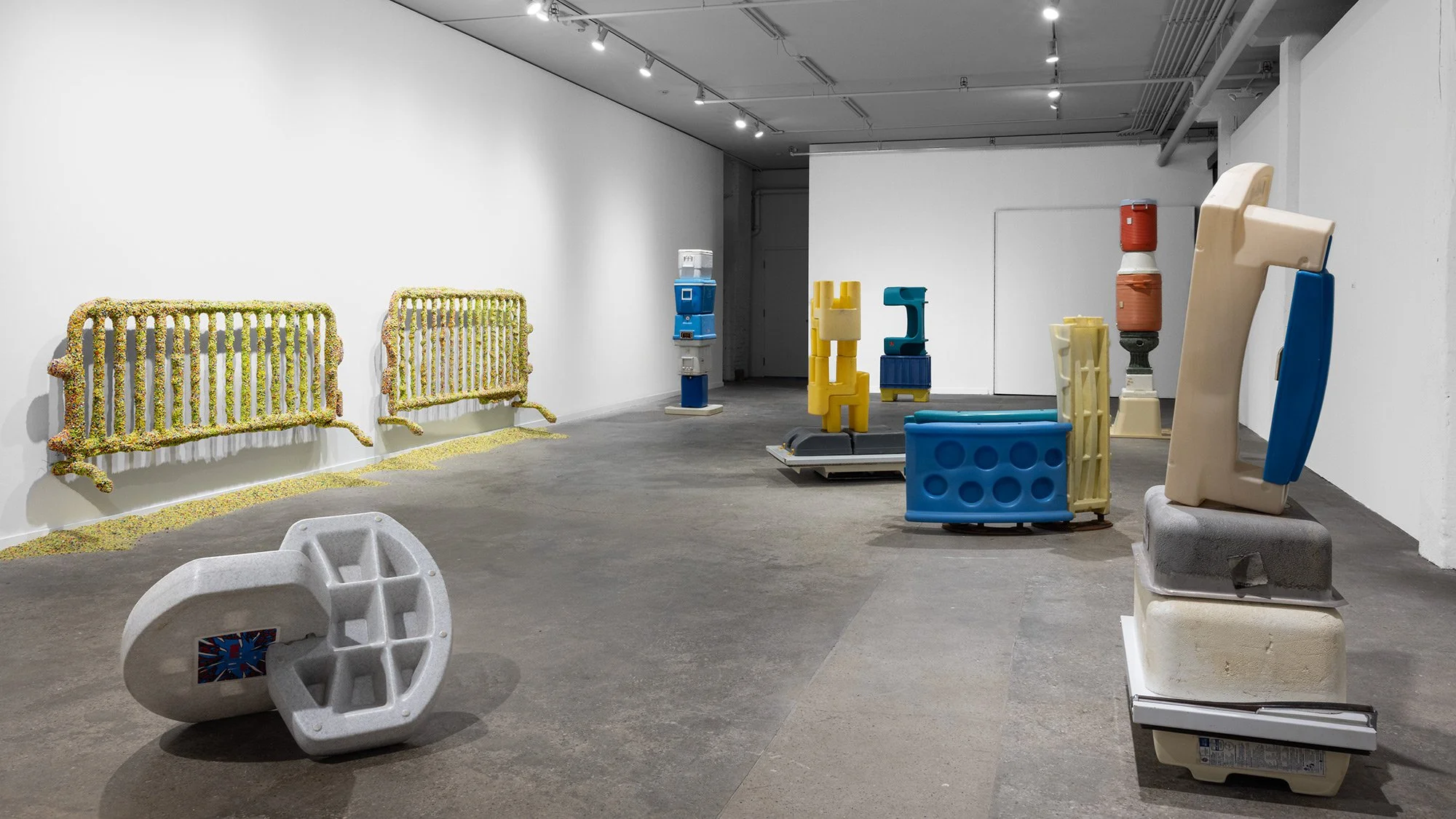
Figure 1. Installation view of Everlasting Plastics at SPACES, Cleveland, Ohio (September 26, 2025-January 17, 2026). Image courtesy of SPACES, Cleveland.
REVIEW:
Everlasting Plastics
SPACES
2900 Detroit Ave.
Cleveland, OH 44113
Sept 26. 2025- Jan, 17, 2026
By Anneliese Hardman
“How can we live without plastics? But, also how can we live without plastics?”1 Inverse questions like these continue to reverberate throughout conversations about climate change, including in environmental humanities and Anthropocene centered art exhibitions. In addition to these questions, SPACES’ current exhibition Everlasting Plastics considers the complexities of human relations with plastics and the ways in which these materials both shape and erode contemporary ecologies, economies, and the built environment. Not highlighted in the opening label, but also thematically present in the exhibition are indigenized worldviews of materiality and land and art making practices of salvage.
As an exhibition highlighting salvage, it is noteworthy that the exhibition itself is an example of an expanded lifecycle.2 Curated by Tizziana Baldenebro, SPACES’ curator of special projects, Lauren Leving, curator-at-large at the Museum of Contemporary Art Cleveland, and assistant curator Paula Volpato, this show is an adaption of the original installation of Everlasting Plastics, originally displayed at the US Pavillion at the 18th Venice Biennale of Architecture in 2023. Originally created for one purpose, it is now on tour of the United States. In its second location of its US tour, Everlasting Plastics at SPACES makes accessible artworks by Xavi L. Aguirre, Simon Anton, Ang Li, Norman Teague, and Lauren Yeager. Exhibition labels, written in English and Italian, and works by each artist sparks discussion surrounding the history of plastic production, unseen human dependency on plastics, and the futures of plastics.
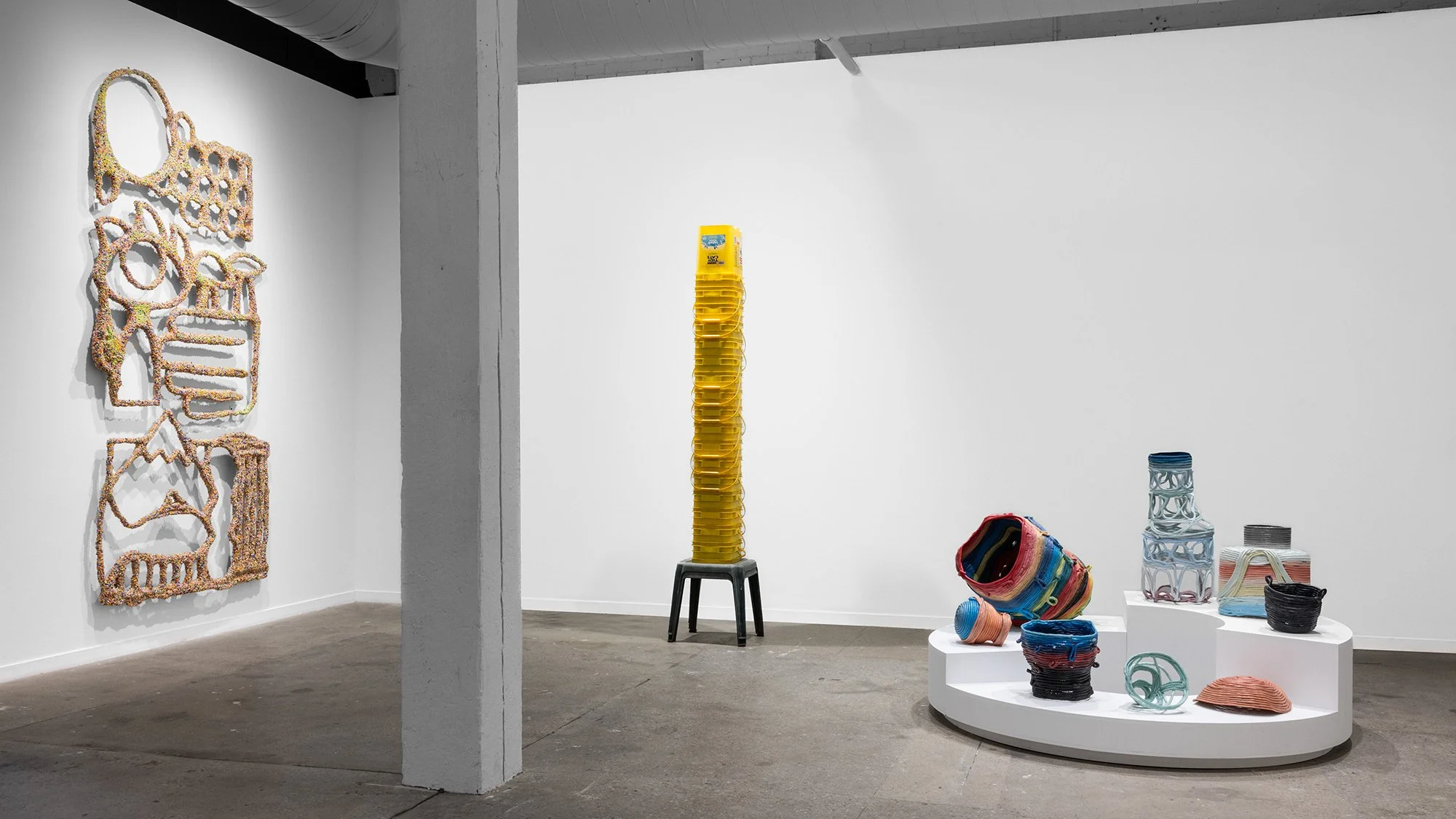
Figure 2. Installation view of Everlasting Plastics at SPACES, Cleveland, Ohio (September 26, 2025-January 17, 2026). Image courtesy of SPACES, Cleveland.
Entering SPACES, the visitor hears a rumble of machinery emitting from a later room in the exhibition and is immediately confronted by two freestanding totems created from recycled plastics, a host of brightly colored baskets, and a massive and multicolored sculpture hanging on the wall. These works respectively by Cleveland native, Lauren Yeager, Detroit based designer Simon Anton, and University of Illinois Chicago professor, Norman Teague, immediately instigates exploration of the toxicity and potentiality of plastics in everyday life. Yeager’s totems constructed from discarded trash are collected from around Cleveland and consists of stacked plastic green, red, and white Coleman coolers, and Tidy Cat litter box containers. On the far wall, Anton’s monumental sculptural hanging is made from steel, nichrome, and toy factory waste. Recognizable shapes include a mountain and river foregrounding an abstract representation of a hand holding mushrooms with a sun and clouds floating overhead. Similarly, Teague’s smaller yet still colorful and eye-catching baskets from his Re+Prise series are created from extruded recycled plastic. The backstories of each artwork highlights the often discarded nature of plastics, yet also their potentiality as an art making materiality.
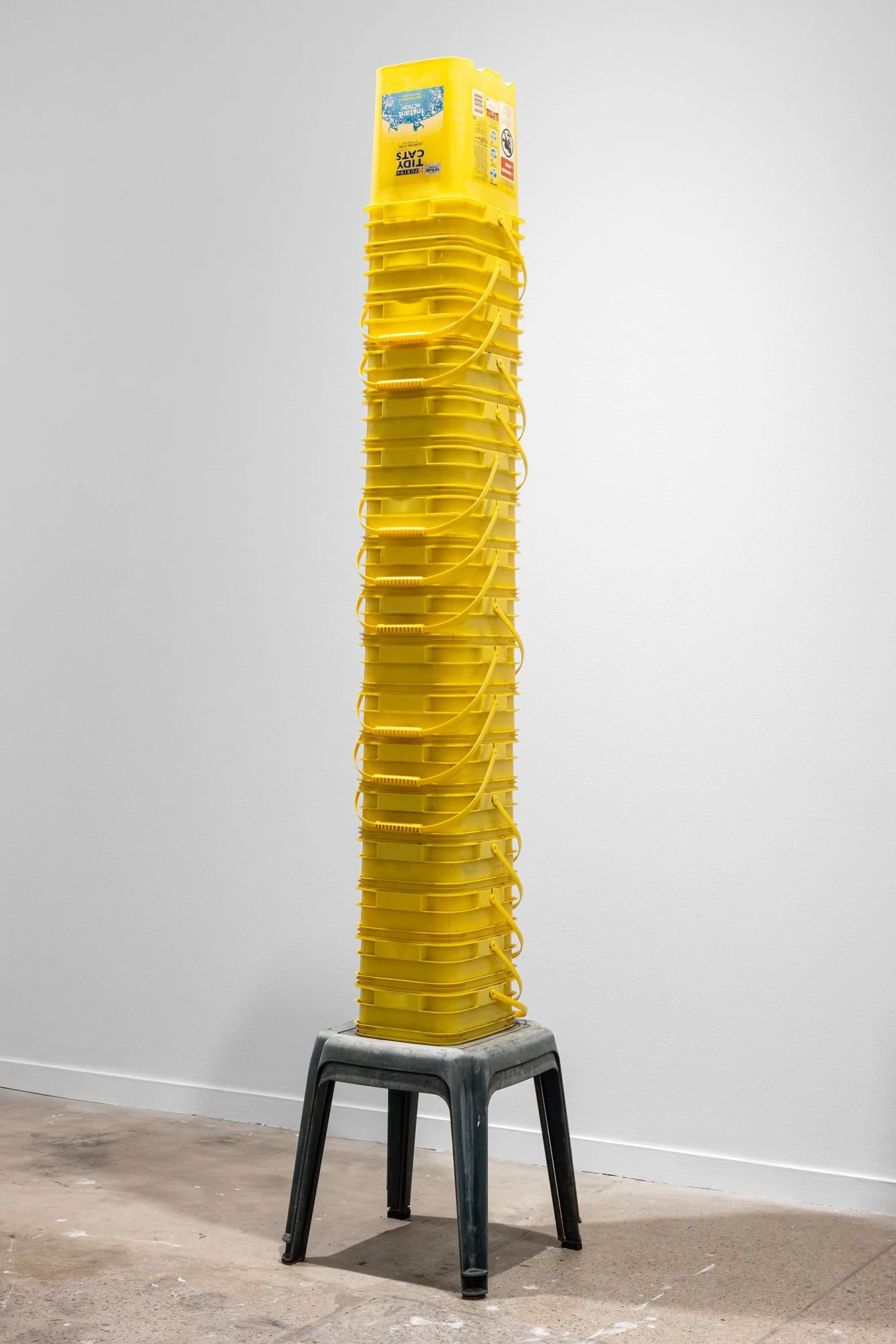
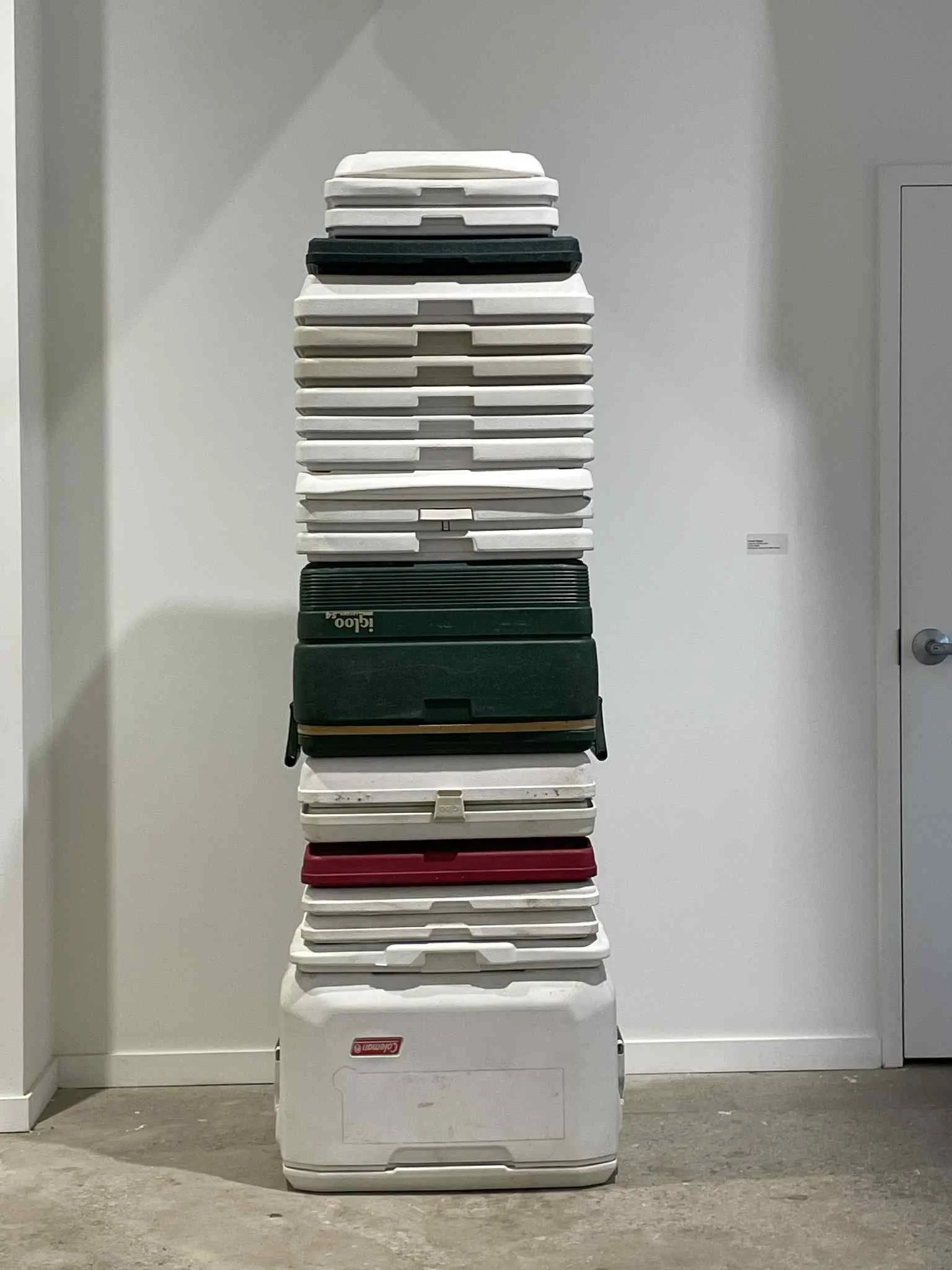
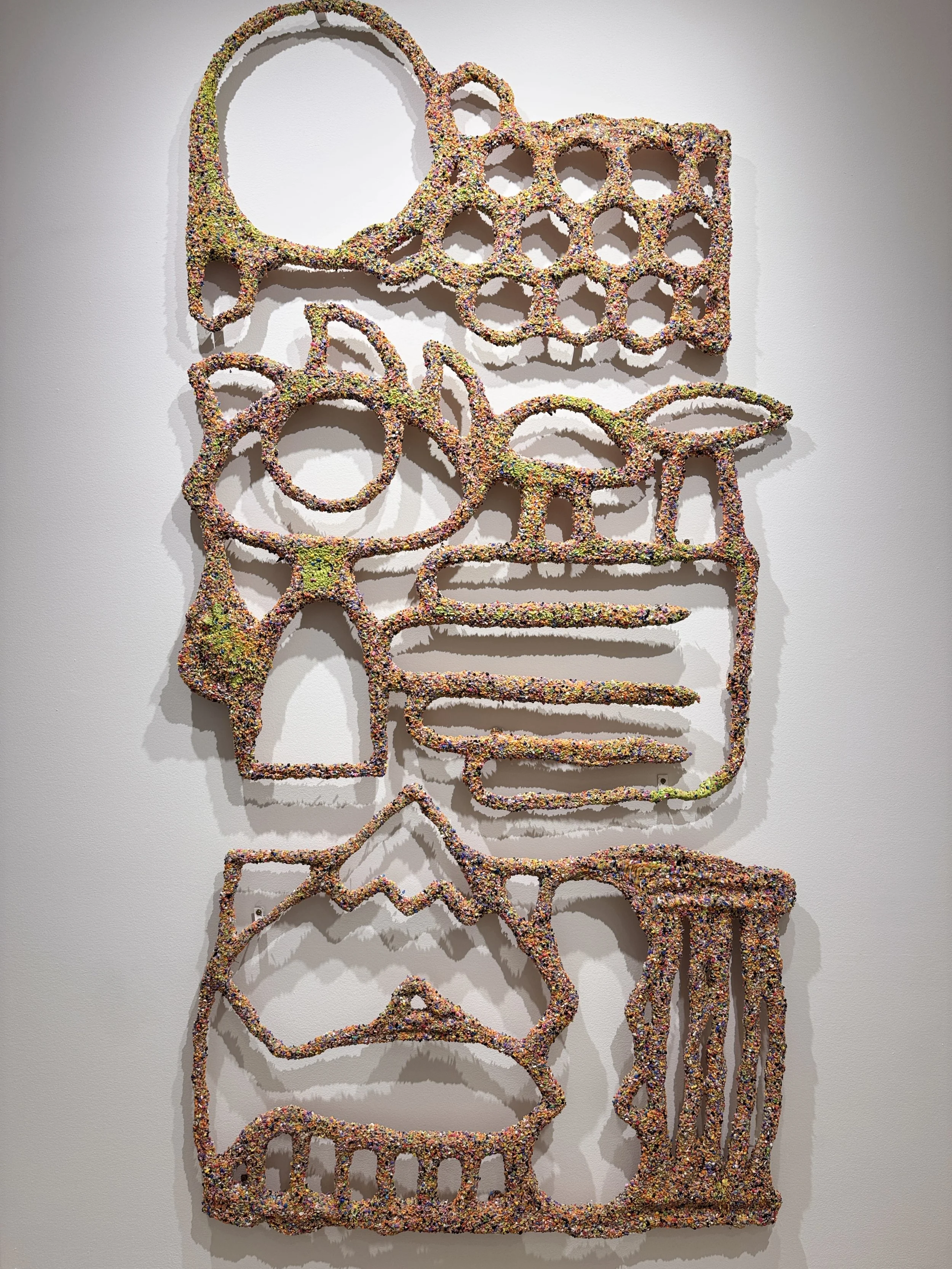
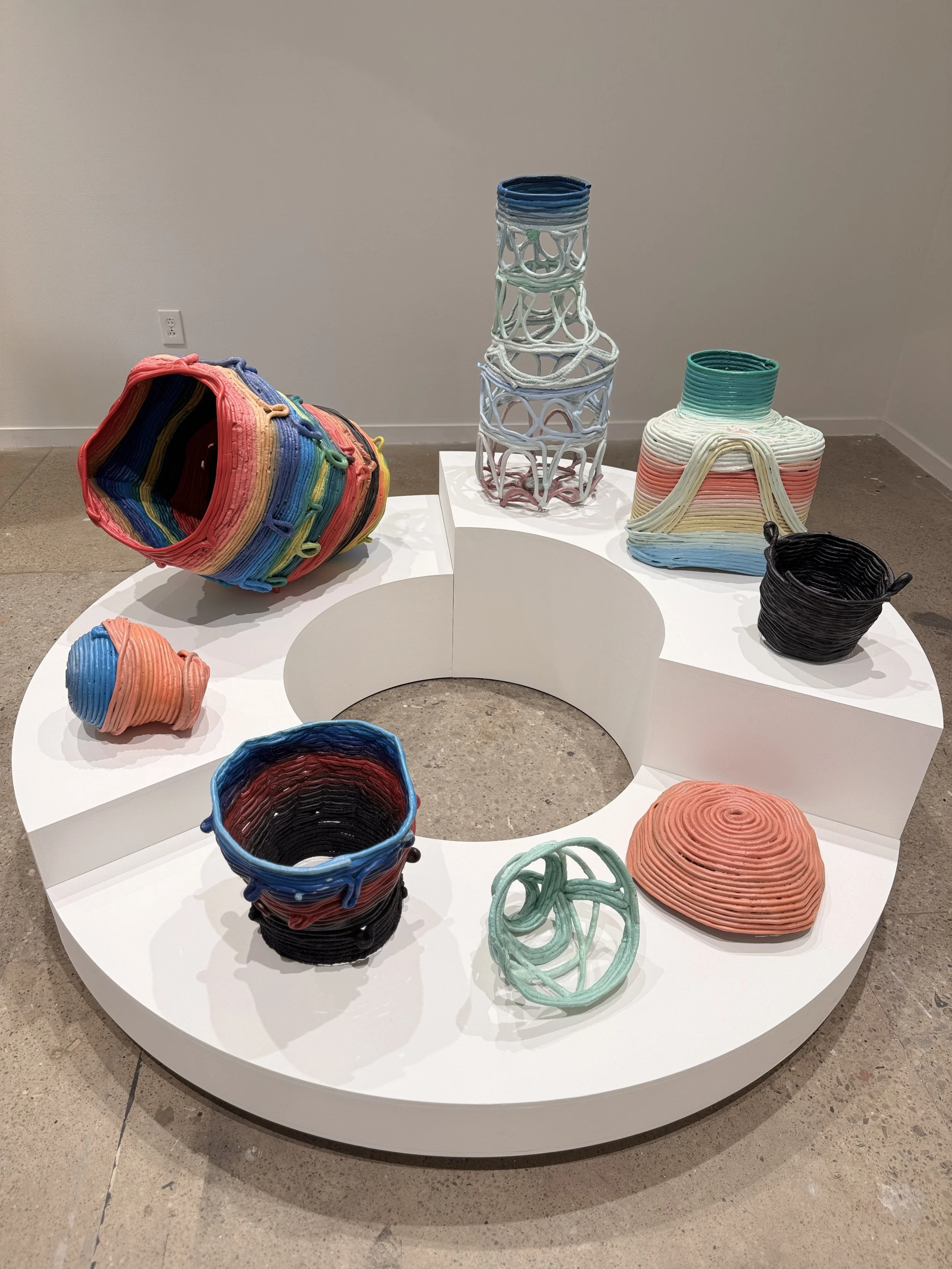
Figure 3 (left). Lauren Yeager, Longevity Monolith, 2023. Found objects. Photo courtesy of SPACES. Figure 4 (middle left). Lauren Yeager, Longevity Obelisk, 2023. Found objects. Photo by Anneliese Hardman. Figure 5 (middle right). Simon Anton, Face: Modern Tales for Plastic Proliferation 2023. Steel, nichrome, and toy factory waste plastic. Photo courtesy of SPACES. Figure 6 (right). Norman Teague. Selections from Re+Prise, 2023. Extruded recycled plastic. Photo courtesy of SPACES.
Further considerations of plastics’ materiality, longevity, and externality shape the rest of the gallery rooms which feature an assemblage of the artists previously mentioned but organized based on concept. For example, the second room focuses more closely on Teague’s new materialism framework of (re)using extruded plastics to create his baskets. Not only do these baskets bridge old and new ways of artmaking, but also merge Indigenized thought processes relating to land and hints at a materialism that is dynamic, vital, and capable of agency.3 The baskets draw on Bolga and Agaseke weaving techniques and also critique Western extractivist practices of mining resources from the Global South and then later returning to dump refuse on exploited lands. His Re+Prise objects displayed both as wall hangings and on reflective pedestals ask the viewer to consider their conflicting messages—aesthetically pleasing artworks, toxic color choices, and lack of usefulness as baskets due to their profusion of holes.
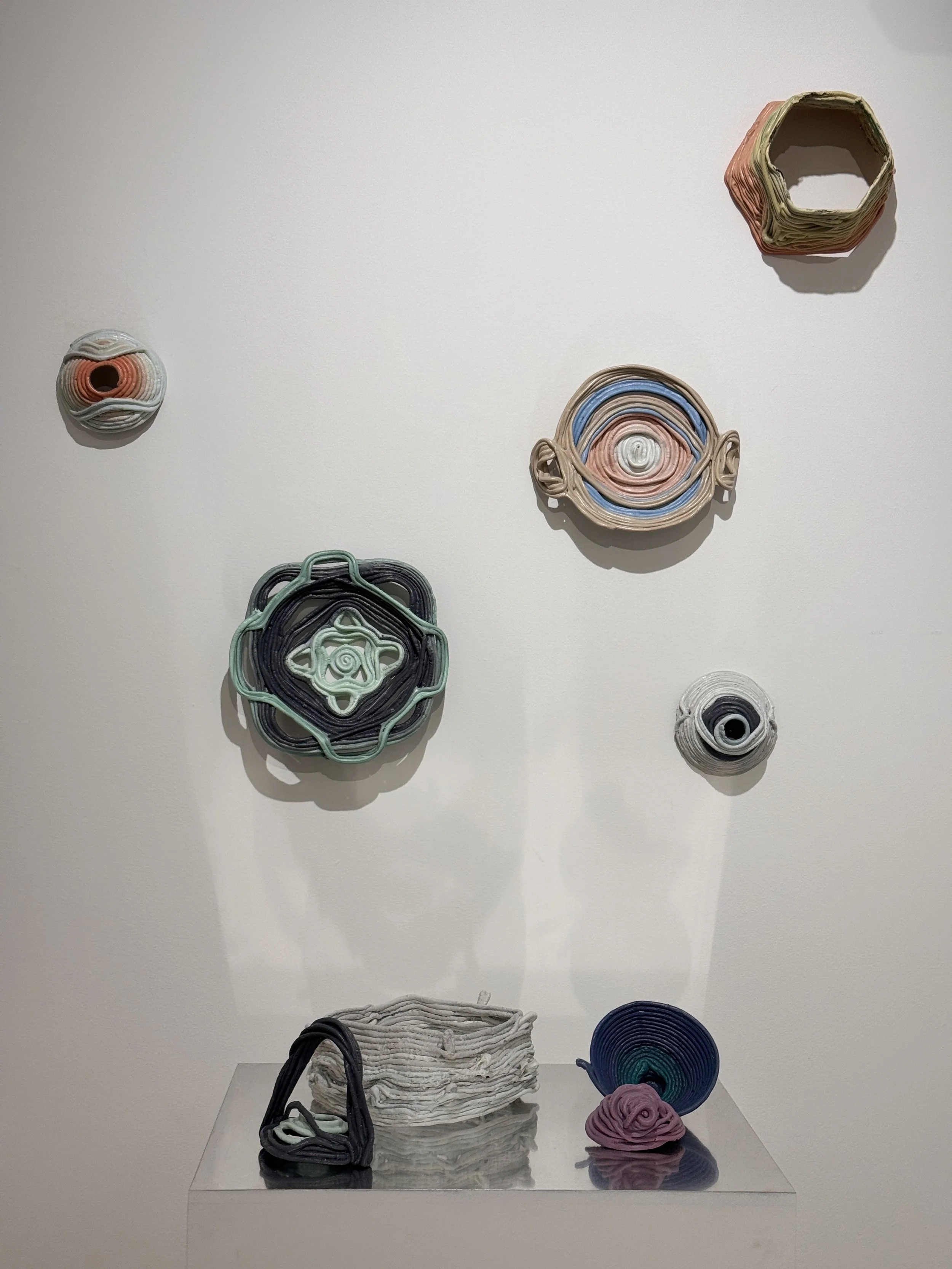
Figure 7. Norman Teague. Selections from Re+Prise, 2023. Extruded recycled plastic. Photo courtesy of SPACES.
The third gallery also considers longevity and salvage as an artistic practice. Yeager’s sculptural assemblages transform trash into relics of personal history and pieces of ready-made art that have restored value.4 Her Longevity Pedestal (2023) combines stacked green plastic bins on top of rock materials. Its construction questions the longevity of which materiality will last the longest—the earth materials, the plastics, the consumer memory, or the purpose of the objects? Based on the placement of the objects, featuring the plastic objects balancing on and dominating the rocks, Yeager implies that the plastics will outlast natural resources and consumer memory will outlast both.
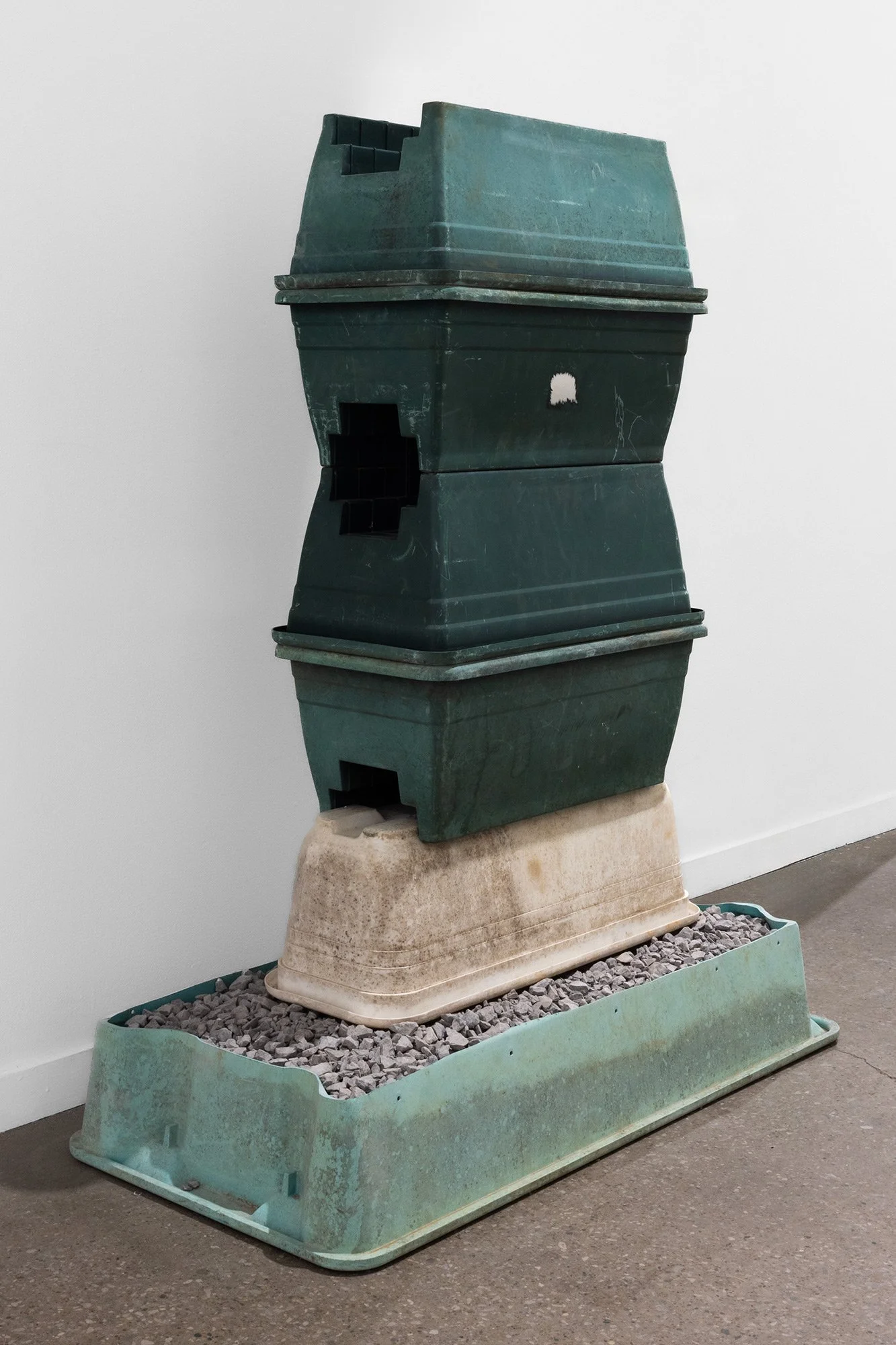
Figure 8. Lauren Yeager, Longevity Pedestal, 2023. Found objects. Photo courtesy of SPACES.
An exception to exhibiting all five artists together in the same room occurs in one of the first gallery rooms and the last exhibition room, featuring only artworks by Xavi L. Aguirre and Ang Li. In the last room, Aguirre invokes complicated tactile relationships between architectural environments and human behavior. Straddling two gallery spaces, metal constructions surround viewers as they walk through what is described as plastic proofing materials like polypropylene which is used to coat baking containers. Viewers feel at unease when they walk past large metallic sculptures that seem imposing. This intentional feeling is encouraged to suggest plastics as both harmful to environments yet embedded in everyday life, including food preparation.
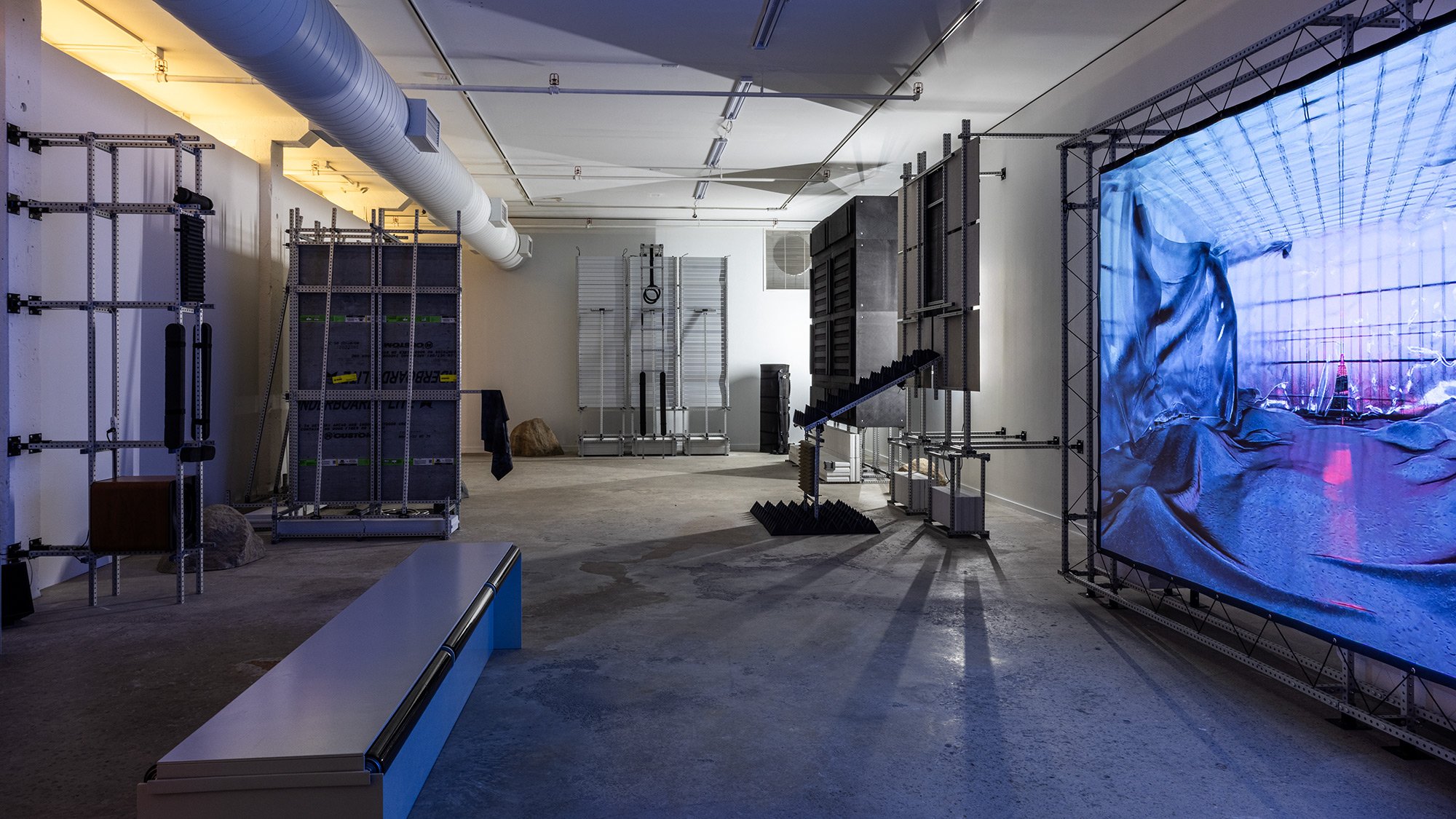
Figure 9. Xavi L. Aguirre, Untitled, 2023. Mixed materials, installation. Photo courtesy of SPACES.
In the first room, which attaches to the gift shop space (and is easily missable unless one knows it’s there), Li explores the relationship between mass and volume by displaying a metal cage full of expanded polystyrene (EPS) which is typically used in homes and supply chains for packaging. Diverted from waste systems, the EPS in this work stun viewers with its massive size, presence, and slow decomposition rate. The cage and EPS are both presented as white and everpresent in a world, visible just through the large gallery windows. Evocation of the outside world contextualizes the Midwest, including Cleveland, as a place complicit with petrochemical manufacturing of consumer goods. Everlasting Plastics reminds viewers of the ongoing fracking in the Marcellus Shales of Ohio and the currently suspended ethane cracking plant to be opened in Belmont County, OH.
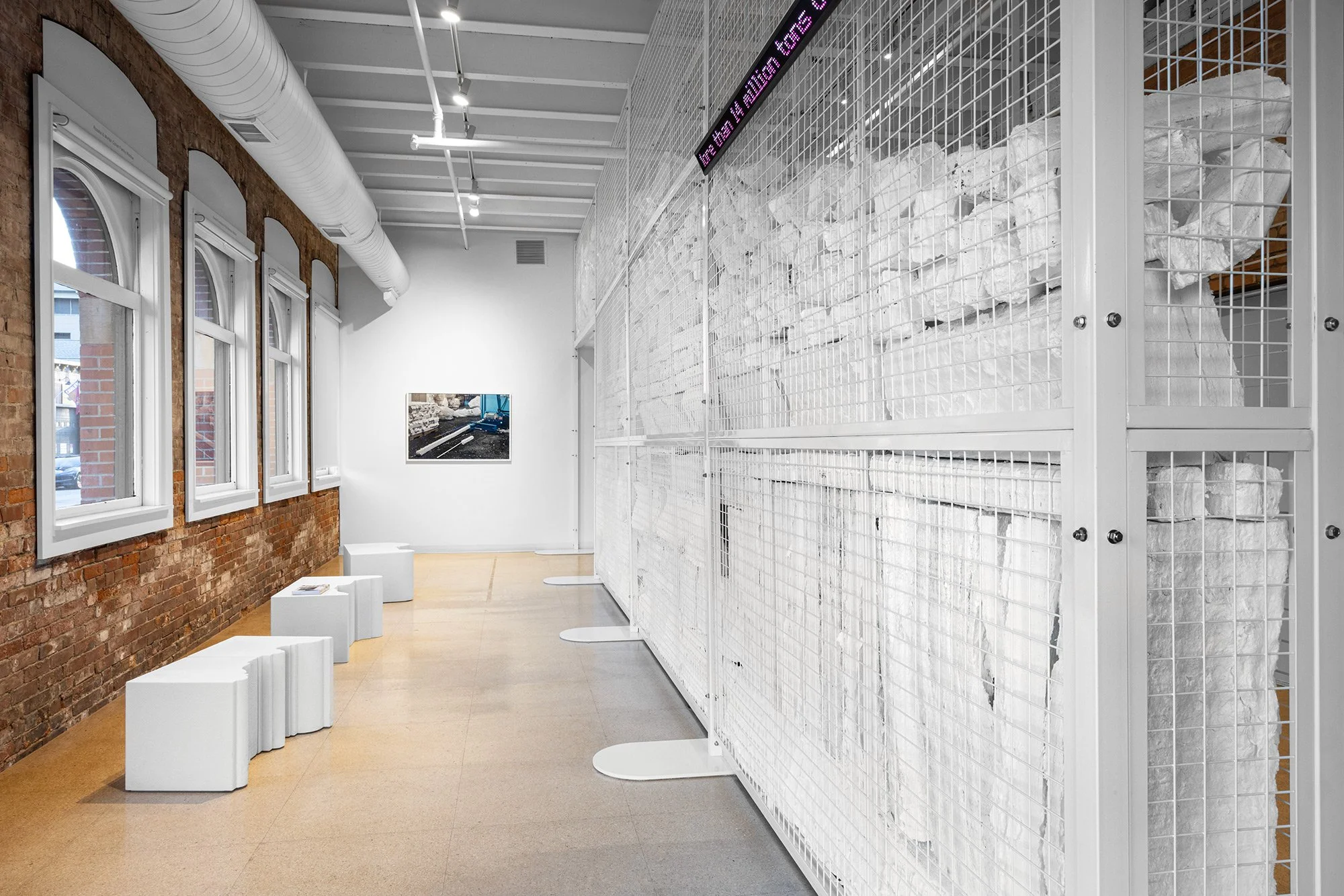
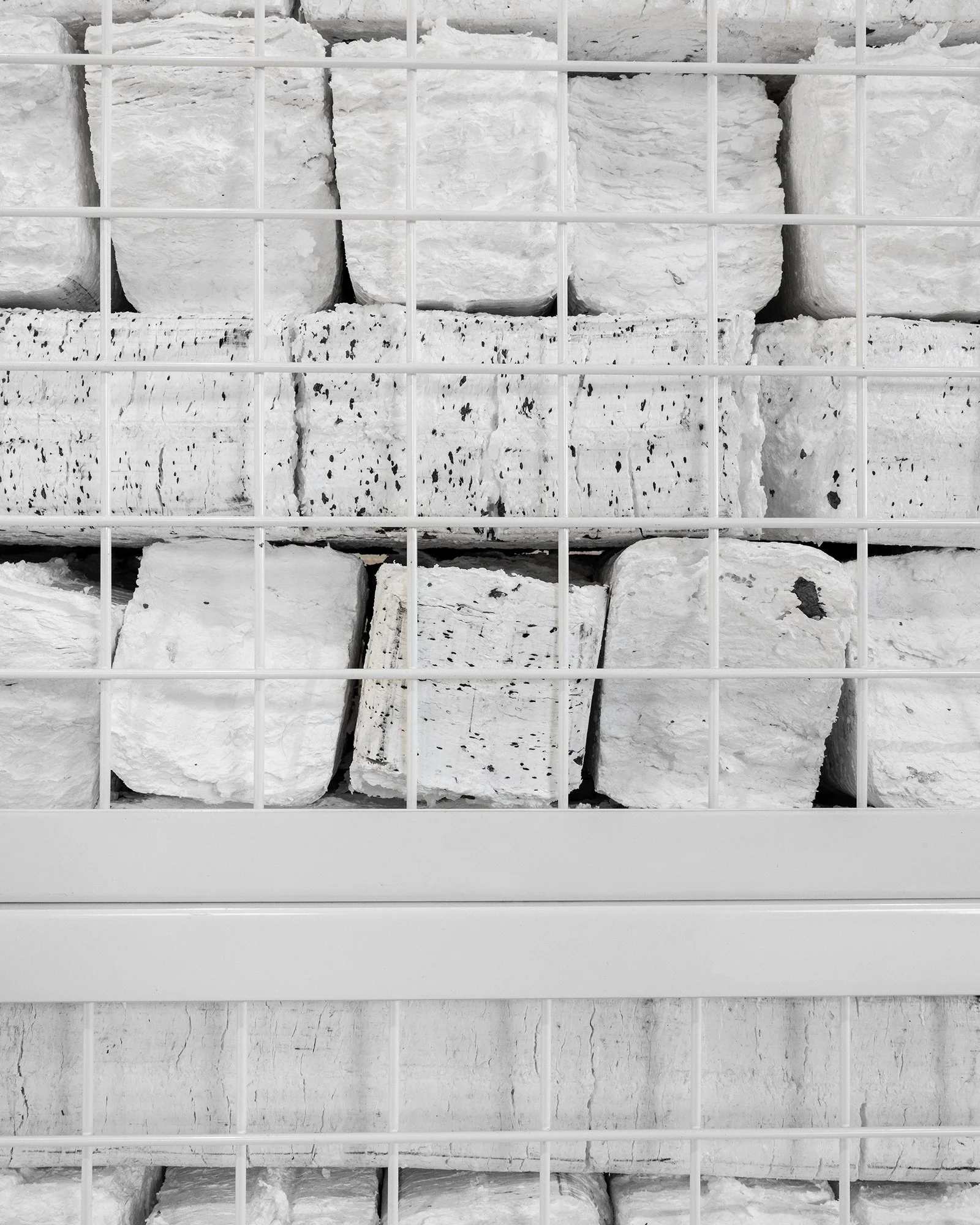
Figure 10. Ang Li, Untitled, 2023. Compressed polystyrene. Photo courtesy of SPACES. Figure 11. Ang Li, closeup of Untitled. Compressed polystyrene. Photo courtesy of SPACES.
In an installation space mostly free of benches or other places for resting, both of these rooms feature site-specific installations with places to rest, read the exhibition catalogue, and talk with friends. Places of rest, like these contribute to the sociocultural aspect of an exhibition which is discussed by Falk and Dierking as space in an exhibition where visitors can engage with one another, and through conversation, cement concepts learned.5 Engagements of this type, alongside opportunities for additional reading allows for choice learning or the chance for visitors who want to learn more, to engage further, and layered text, or tiered labels which communicate essential, less important, and tertiary information. Ways of improving the gallery space could be to bring these elements found in the first and last room into the rest of the space. This would foster greater close looking and examination of the artworks.
______________
FOOTNOTES
1 Everlasting Plastics. Edited by Tzziana Baldenebro, Lauren Leving, Joanna Joseph, and Isabelle Kirkham-Lewit, (New York: Columbia Books on Architecture and the City, 2024), back cover.
2 Anna Tsing, The Mushroom at the End of the World: On the Possibility of Late Capitalist Ruins, (Princeton University Press, 2015), 128.
3 Diana Coole and Samantha Frost (eds), “Introducing the New Materialism,” from New Materialisms: Ontology, Agency, and Politics, (Durham, NC: Duke University Press, 2010), 7.
4 Wall text for Longevity, by Lauren Yeager, SPACES, Sept 26. 2025- Jan, 17, 2026, Cleveland, OH.
5 John H. Falk and Lynn D. Dierking, Learning from Museums: Visitor Experiences and the Making of Meaning, (New York: Altamira Press, 2000), 38.
______________
Anneliese Hardman is a curator, lecturer, and museum enthusiast specializing in Southeast Asian art histories. Currently, she is pursuing her PhD in Art History at the University of Illinois Chicago with a focus on contemporary Cambodian art. Her dissertation project explores art that reflects relational changes of Southeast Asian environments and culture. You can find her other publications on Art & Market, Athanor, and Fwd: Museum Journal.
Like what you’re reading? Consider donating a few dollars to our writer’s fund and help us keep publishing every Monday.
