
Cover, Fail Better by Hal Foster. Image Courtesy Duke University Press.
REVIEW
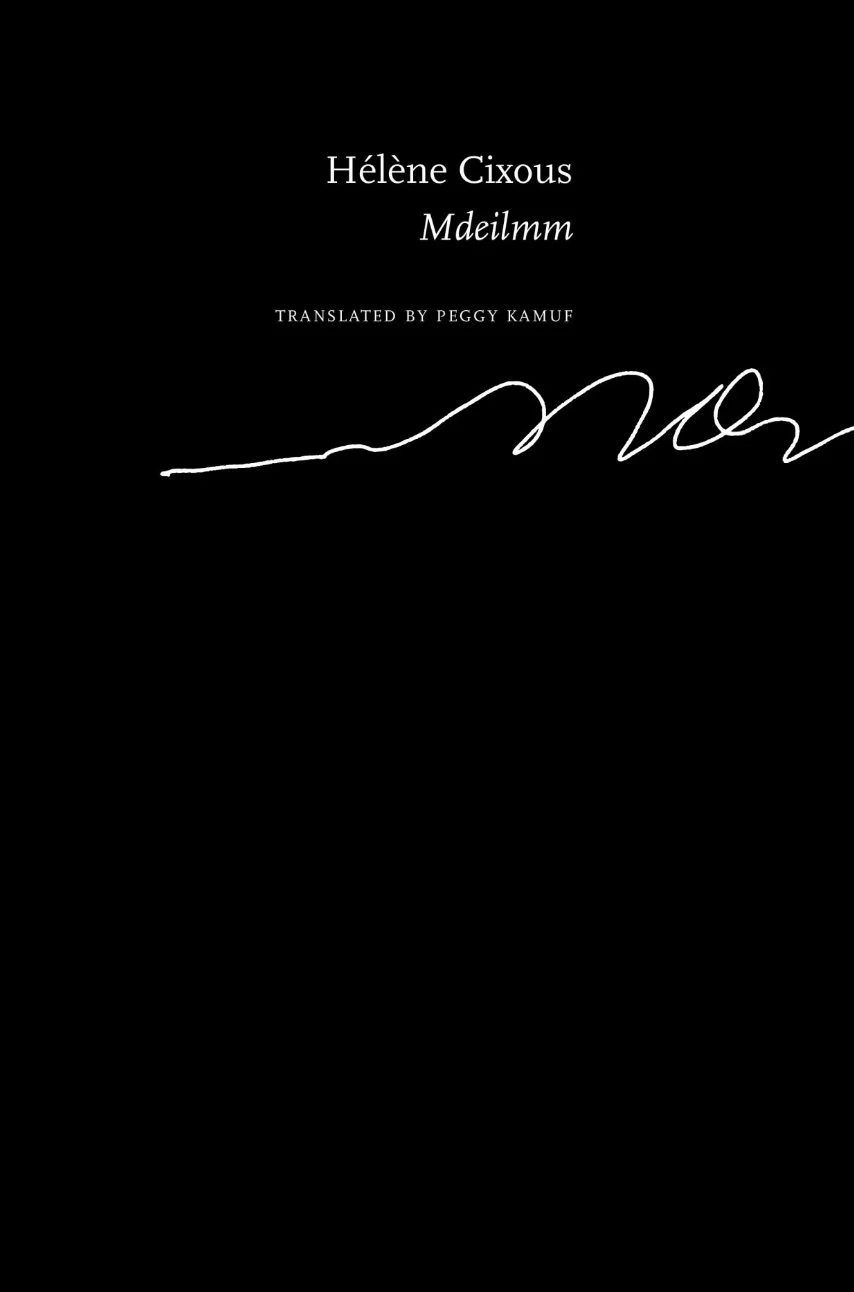
Mdeilmm: Mole Speech (2024)
By Hélène Cixous
Translated by Peggy Kamuf Hardcover ($25)
University of Chicago Press
By Mána Taylor
I was unsure whether the narrator was alive or not. Early on, she professes “Maman, I committed a murder.” She is speaking to us from a non-place, but her son is there. So is Kafka’s The Idiot, who presents himself as a character. Mdeilmm: Mole Speech (2024) by Hélène Cixous and translated by Peggy Kamuf is a striking reflection on life, death, and language. Referencing many texts, including Victor Hugo’s The Last Day of a Condemned Man, it weaves in segments from literature and life to form a portrait of a person searching for herself.
“I am writing this in human time it is not I who am dead, the soul accepts to occupy my body without being asked to do so, because from my study all my senses give onto the universe. I do not command. I state.” The book flows from segment to segment, weaving in her personal family history and scans of old documents, unclear what purpose they reveal in the context of the narrator’s identity, but we accept them as readers. They are beautiful to look at. It feels as though she is offering clues as we search, alongside her, for clarity. The book is heavily poetic, it often felt like pushing through thick fog to see a landscape.
Hélène Cixous and her narrator frequently break the fourth wall, speaking from the place of writing. “I should call this book: Mdeilmm. This idea enchants me. It is just and noble. I end by giving into it and propose it to my editor.” The title Mdeilmm stems from this word that emerges out of thin air and becomes an attachment to the narrator in the second half of the book. It relates to our impression that she is playing with death, conversing between realms, and perhaps even dreaming. Perhaps she is in a heavenly realm, conversing to the dead at a large roundtable. From an interview in November Mag, I discovered that Cixous had children young; when she was in her twenties. In her latest book previous to this one Well-kept Ruins, we learn her mother has passed away. It tints Mdeilmm: Mole Speech with this imagery of Cixous being in the middle, in the middle of her parents and her children. “To be born is not to be, it is to make the acquaintance of infinite fragility.”
The word itself “Mdeilmm” was reported to have been uttered by the spirit of Shakespeare when called upon during a séance procured by Victor Hugo. So the story goes in the book, like a family myth that gets passed down generation to generation. “One could compare Mdeilmm to a meteorite, Mdeilmm has crossed one of my supranatural nights, like a little shining star in my darkness.” The word shapes Cixous’ argument for language, for random occurrences of speech that bring emotion even if they are not “real” words. She holds onto it for life, for sustenance, bridging two worlds together. By speaking to us across literature, she is able to procure infinite stories and use language as an artform. Often not using punctuation or spinning sentence structures, Hélène Cixous has the ability to make us think for centuries.
Mána Taylor is XXX
Like what you’re reading? Consider donating a few dollars to our writer’s fund and help us keep publishing every Monday.
