Books Feature
Online Magazine Features
Video Feature
Featured Event
Featured from the Store
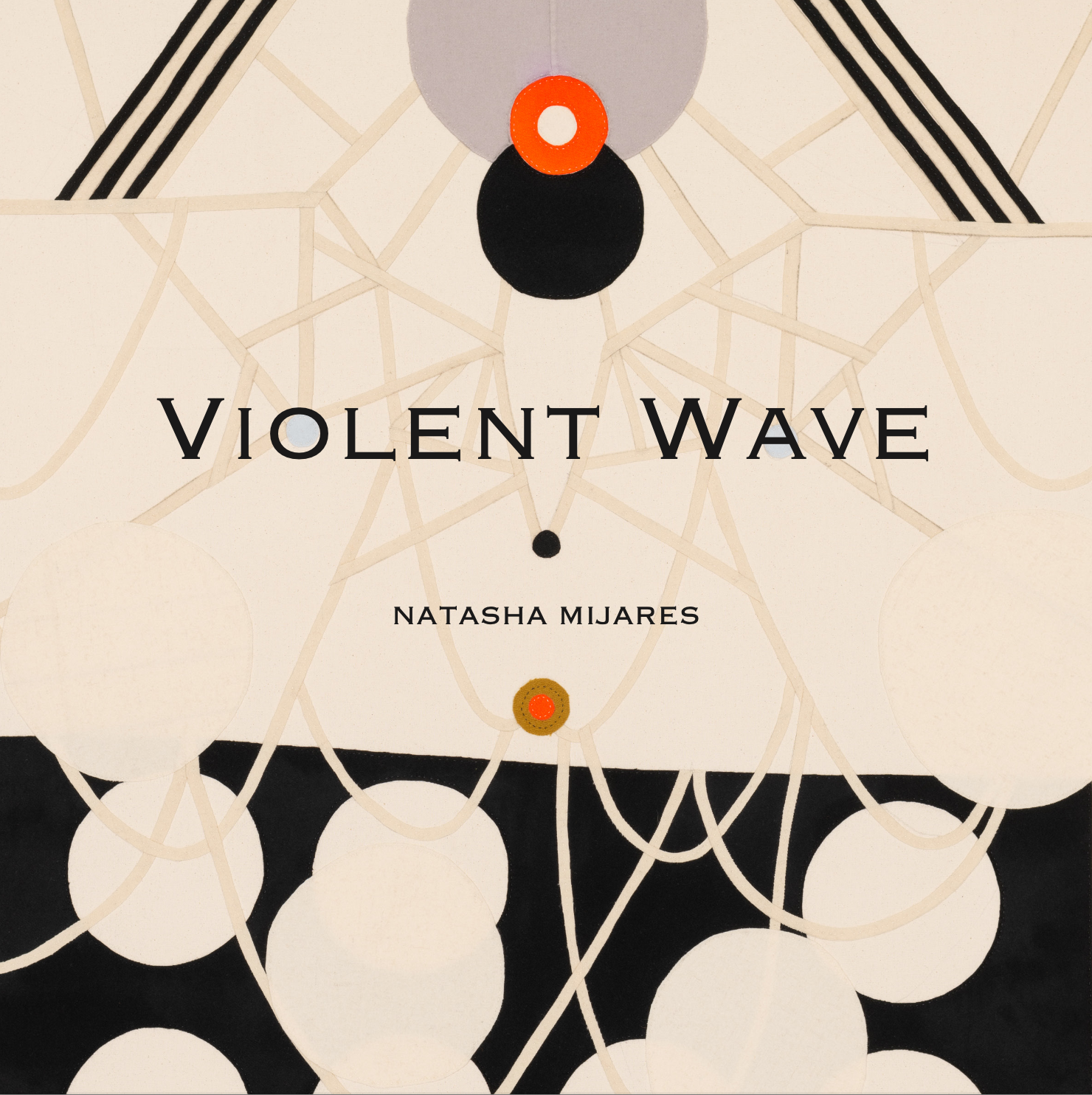
The torrential inputs of sensations, forms of matter, literary references, and ecologies of being that feed Mijares’ practice have come pouring out in a violent wave. As a poet, Mijares’ skill of holding a sparse page with potency is captivating. Mijares uses mimesis to move through worlds and push readers into ripples of quiet overwhelm. Her work reaches towards a tangle of words caught in the throat, conjured up by waves of experiential inputs ranging from earthworms to the interstate. This collection is a celebration of interrelationships delicately crafted on the page.
Charl Landvreugd’s Dutch Afro Becomings: Hybrid Being in Black Art and Culture uses (auto)ethnography and other historical methods to embed us in the history of his world as a Afro-Surinamese Dutch cisgender, queer, male, artist, curator, and researcher.
In Dutch Afro Becomings, Charl Landvreugd seeks to clarify and render the Dutch Afro subject by (re)defining Dutch Afro ontology. To do so, Landvreugd must wrestle with the vast shadow cast by Black American, Black British, and Caribbean discourses that provide important comparative studies for his goals to unburden, free Dutch Afro Art, but also leave Dutch Afro ontology and the Dutch Afro subject and artist under erasure.
Landvreugd asserts that the Dutch Afro subject is not yet Black, but is in a state nascent to Blackness. According to him, the Dutch Afro subject is, in fact, becoming Black. Due to distinct geopolitical, cultural, and historical constraints–and the potentialities in the Dutch Afro subject’s cultural, aesthetic, and political response to these constraints–the Dutch Afro subject is both becoming Black and refusing Blackness. Specifically, they are refusing Blackness as opposition to their cultural nativity to the Netherlands. Under the Netherlands’ specific cultural, linguistic, and legal frameworks, Landvreugd rewrites narratives, often normalized in the United States (US) racial state, that one’s refusal to become Black is, in fact, antiblack. This simultaneous nascence and self-awareness makes the Dutch Afro artists’ aesthetic production, intellectual processes, and need for resources most paramount. In the process of charting his, his forebearers’, and his contemporaries’ becoming, Landvreugd deftly showcases that this burgeoning, fertile ontological ground might both bear great fruit for the Dutch Afro subject, artist, and the Netherlands and provide a necessary structural-intellectual rearticulation within international discourses on Blackness, Black Art, and Black ontology.
Gal’s daddy—he was Old Morgan, and Gal was Young Morgan because she was his only child, his and Momma’s, there weren’t any sons—called them the white horse. Rapids, he meant. He’d grown up needful but by a river and he would say that riding the white horse was all he needed. What did he mean by that? Gal didn’t know. But when he came upon a river, any river, it was like coming home, he said. Time was a river, he said that too. He taught her to fish.

She hasn’t fished in years, not since the time of Old Morgan’s passing. Daddy. The oncologist said it was cancer got him but what did she know? Gal knew better, it was his devastated heart. He’d loved Gal’s momma but Momma loved whiskey more than any human. She outlived Daddy and he died knowing exactly where the bottle had taken her. She had been a dancer when they met. She got puffy all right.
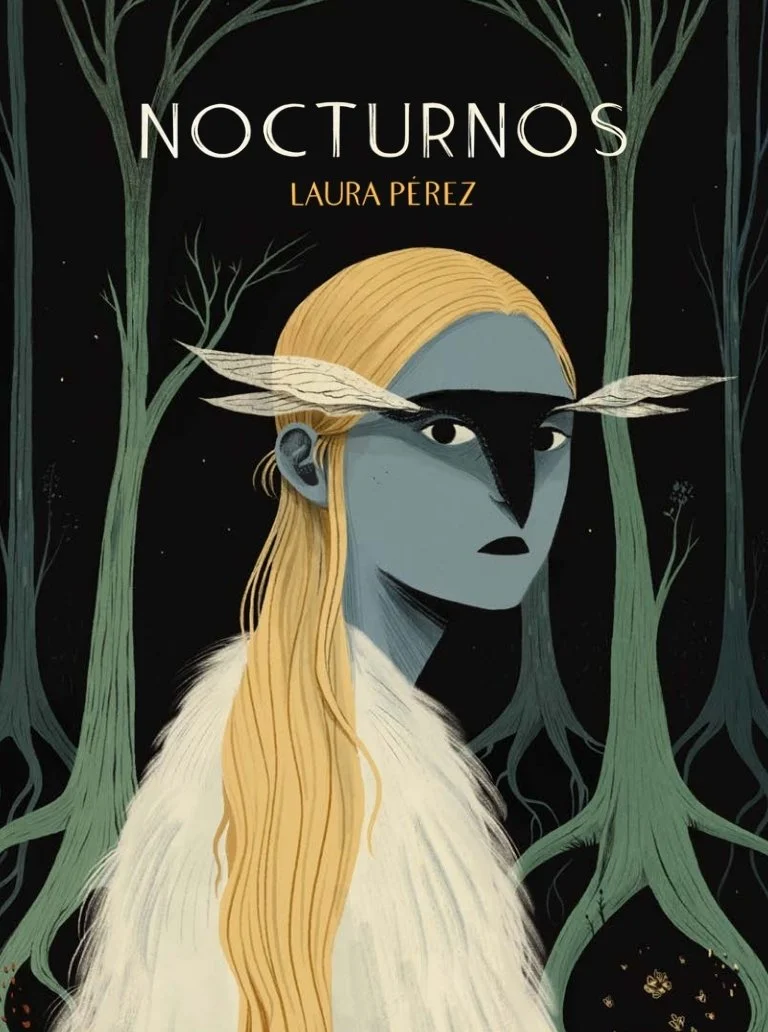
The day is divided into two. There is the dark, and there is the light. When the sun is up, the world gets busy. People work, walk, talk, eat, create – live in the light. But when the sun sinks, the world shapeshifts into a different place. Sometimes it’s quiet with lulling televisions, dreams and sleep. Other times, it’s loud and lively, thanks to drink, dance and throbbing music.
Laura Perez's Nocturnos is an ode to the night. Translated by Andrea Rosenberg, Nocturnos shares vignettes of people, places, and things amidst the darkness.
Drift is a meditative experiment in video forms that loosely sketches three layered narratives across its three segmented portions. At one level, a narrative of the image – push and pull between content and form, at odds yet ever mutually reliant. This tension turns more dynamic, fragmented, almost explosive, before ending in total collapse as distinctions dissolve between the two forces. On another level, a personal history with the ocean – the childhood beach is dazzling and alluring yet mysterious, held at some abstract distance. Time drives us forward, drifting further from the water, in a waking dream equal parts glimmering excitement and hollow dread. That dread follows in a return to the beach yet is washed over by a newfound warmth as the boundary between humanity and nature dissolves. At the third and final level, a broad narrative of life and extinction – first in the primordial sea a drama of potential; the capacity for something to arise from random noise. Then, in the dynamism of the nighttime highway, the sleek beauty and grim terror of human works: serenity careens towards doom, and the rising tides of a more violent ocean that, in engulfment, offers comfort, reassurance, and even possibility. The end is a rejoining, and perhaps a beginning.
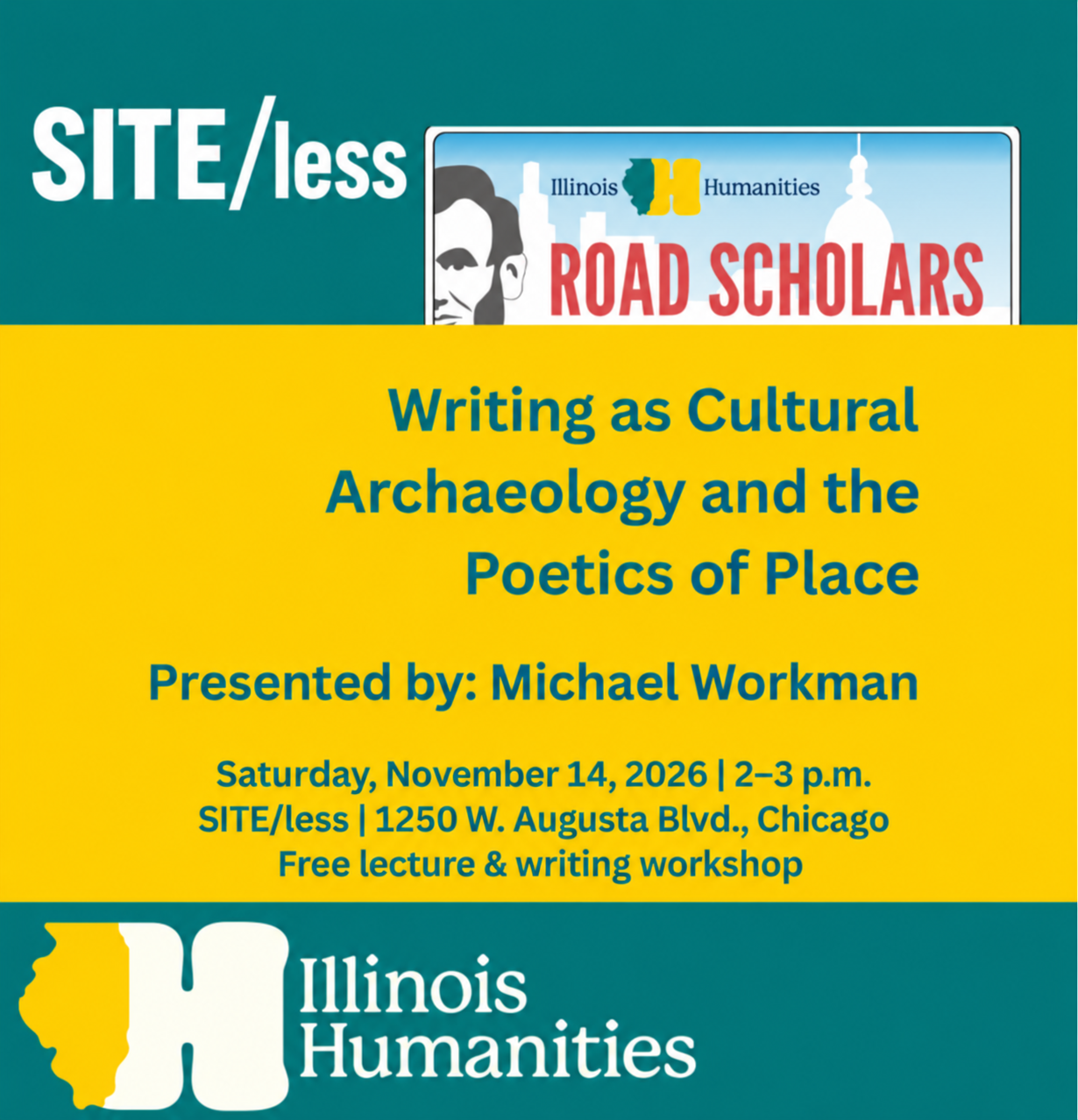
A free lecture and writing workshop at SITE/less, presented through the Illinois Humanities Road Scholars Speakers Bureau
Join Bridge founder and Editor-in-Chief Michael Workman at SITE/less for a lecture and participatory writing workshop exploring language, place, and cultural memory.
Date: Saturday, November 14, 2026
Time: 2–3 p.m.
Location: SITE/less
Address: 1250 W. Augusta Blvd., Chicago, IL 60642
Admission: Free and open to the public
RSVP for the lecture and writing workshop
How can writing uncover the histories, memories, and relationships embedded in the places we inhabit?
Drawing on their background in experimental poetics and an interdisciplinary practice spanning language, movement, and performance, Workman approaches writing as a form of cultural archaeology: an excavation of the layered relationships between language, identity, and place. With reference to artists and writers including Theresa Hak Kyung Cha, Johanna Drucker, and Charles Reznikoff, the program explores how writing, history, and landscape intersect to shape cultural memory.
Participants are invited to consider their surroundings as a living archive of stories, gestures, and voices that inform community life. As an experimental architecture, movement, and research center, SITE/less offers a distinctive setting for exploring how the spaces we move through shape our perceptions, memories, and relationships.
Combining a short lecture, readings, guided writing exercises, and reflective discussion, the program introduces “poetic fieldwork”—an approach that connects close observation, movement, and writing.
Participants will respond to prompts drawing on their surroundings and personal memories of place, considering how geography shapes emotion and thought. Through individual writing and group dialogue, attendees will develop short fragments of writing and explore new ways of perceiving familiar environments. The approximately one-hour program includes time for voluntary sharing and questions.
No prior writing or performance experience is required. Please bring a notebook and pen and arrive a few minutes early to settle in. Sharing your writing is optional.
Michael Workman is a Chicago-based artist, writer, and sociocultural critic, and the founder and Editor-in-Chief of Bridge, the nonprofit publishing and cultural organization established in 1999. Their work has appeared in the Chicago Tribune, Guardian US, Newcity, and WBEZ Chicago Public Radio, among other outlets.
Their writing and performance practice explores the intersections of language, movement, and place. Their publications include Propositional Attitudes (Golden Spike Press) and Perfect Worlds: Artistic Forms & Social Imaginaries (StepSister Press), launched with performances at the Museum of Contemporary Art Chicago. Their performance work includes Active Investigation at the Neubauer Collegium in 2023.
Workman was the 2025 Joan and Peter Hood Artist-in-Residence at Allerton Park and is a 2026–27 Illinois Humanities Road Scholar.
Register using our Google Form
SITE/less is located at Augusta Boulevard and Willard Court, east of the Kennedy Expressway. Public transit options include the CTA Blue Line Chicago station, the #66 Chicago Avenue bus, and the #56 Milwaukee Avenue bus.
For venue questions, entrance and parking information, or to discuss accessibility accommodations, contact SITE/less at 773-489-5069 or info@siteless.org. Workshop activities can be adapted for mobility or sensory needs; please contact the venue in advance to discuss arrangements.
Venue information and directions
Presented at SITE/less through the Illinois Humanities Road Scholars Speakers Bureau.

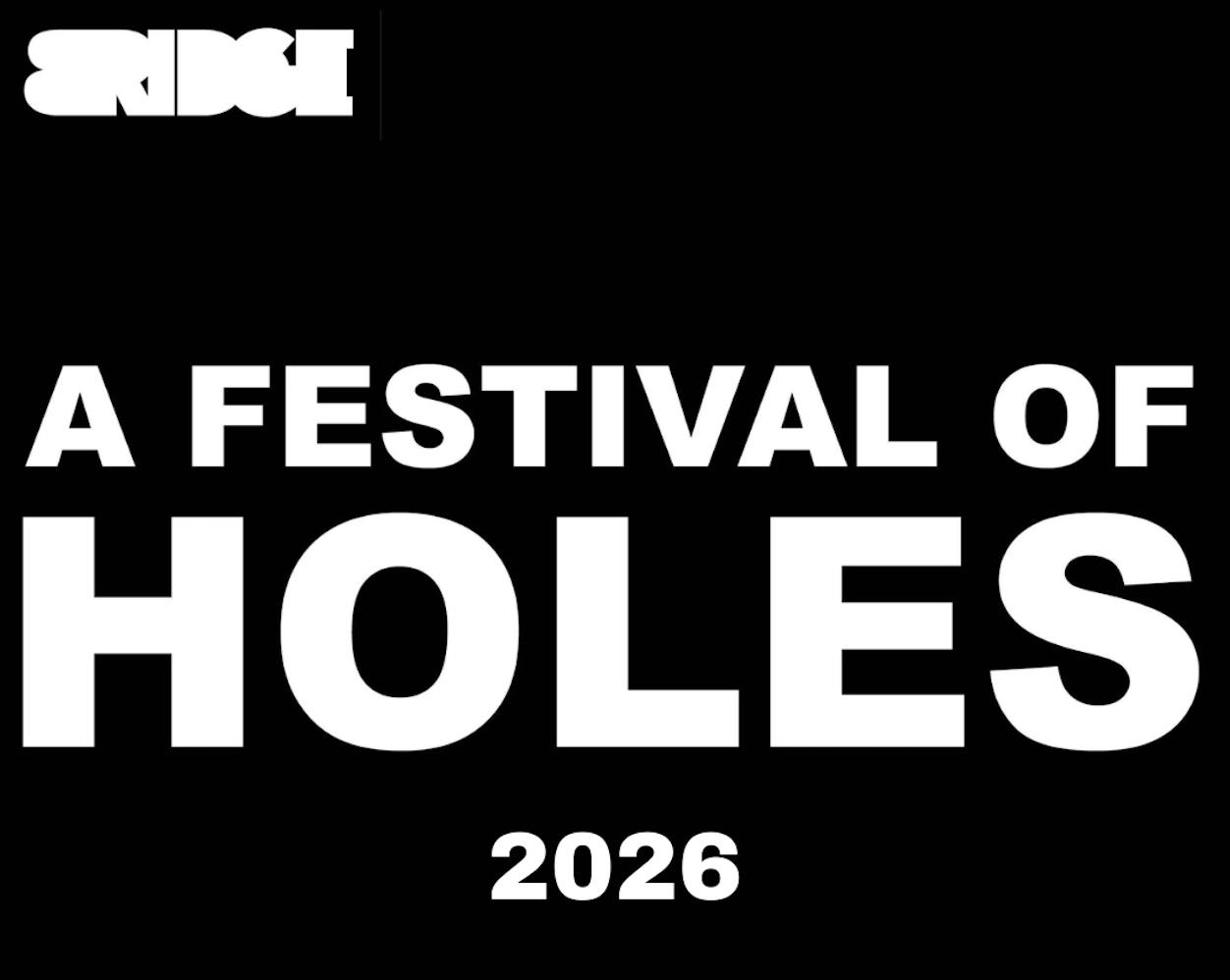
Mark your calendars! A Festival of Holes returns to SITE/less Chicago October 30 and 31, 2026!
BRIDGE is proud to announce that we are a recent recipient of a National Endowment for the Arts award! This grant will support future Artists United outreach efforts.
Bridge Video Announces Weekly Fall 2026 Lineup of Featured Films; Programs Begin October 2nd
Bridge Video today announces its Fall 2026 Feature Film lineup of new licensed film and video beginning October 2, 2026. Each week on Friday during the Fall 2026 season, Bridge Video will showcase a new film and video title most of which are available for viewing online exclusively through Bridge Video. Limited Engagement films are also added as relevant. All fairly provided work will be available for viewing anytime through subscription to Bridge Video for $25/every six months or $2.50 per month.
With few exceptions, film and video works selected for the third annual Festival of Holes at SITE/less Chicago will not be premiered on Bridge Video until after the festival closes. The final lineup of selections for the second annual Fest will also be announced separately.
Please note this list is subject to change.
AVAILABLE NOW:
Bridge Magazine Issue 20
SECTIONS & EDITORS
Publisher, Editor-in-Chief & Poetry Editor Michael Workman
Architecture David Sundry
Couture Kristin Mariani
Dance & Performance Art Michelle Kranicke
Philosophy Mark Tschaepe
Visual Art Xiao daCunhna
COVER ARTWORK: Rashid Johnson, Soul Painting “Six Souls” (detail), 2024. Oil on linen; 96 × 108 ×1 11/16 in. (243.8 × 274.3 × 2.7 cm). Modern Art Museum of Fort Worth. © Rashid Johnson. Photo: Stephanie Powell.
CONTENTS
Letter from the Editor — Michael Workman
Interview: Rashid Johnson — A Poem for Deep Thinkers — Michael Workman
Review: Willem de Kooning: Drawings — David Sundry
Book Review: Leon Battista Alberti in Exile by Peter Weller — Michael Workman
Book Review: Kerry James Marshall: The Histories — Olivia Baczkowski
Interview: Eric Reynolds on the Launch of Takumigraphics — Michael Workman
Book Review: Lovers of the Empire, Volume 1 — Alexandra Azout
Festival of Holes 2026 — Official Program Guide