
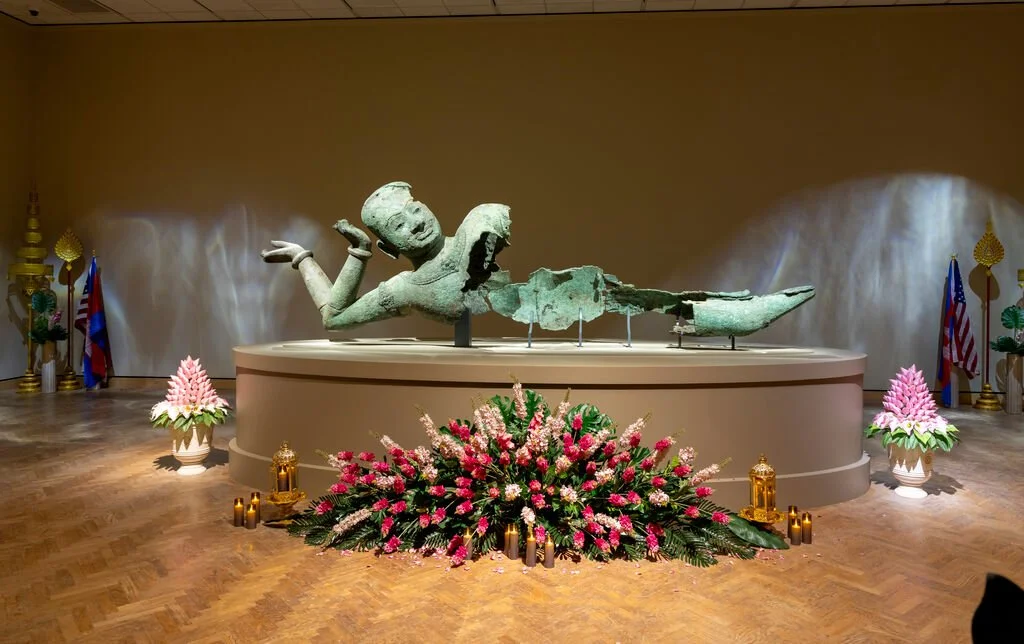
Vishnu of Mebon at the Minneapolis Institute of Art. Image courtesy of the Minneapolis Institute of Art.
REVIEW
Vishnu’s Cosmic Ocean
National Museum of Asian Art
1050 Independency Ave. SW, Washington, DC, 20013
March 7 to September 7, 2026
And Royal Bronzes: Cambodian Art of the Divine Minneapolis Institute of Art
2400 Third Avenue South, Minneapolis, Minnesota 55404
October 25, 2025 to January 18, 2026
Review by Anneliese Hardman
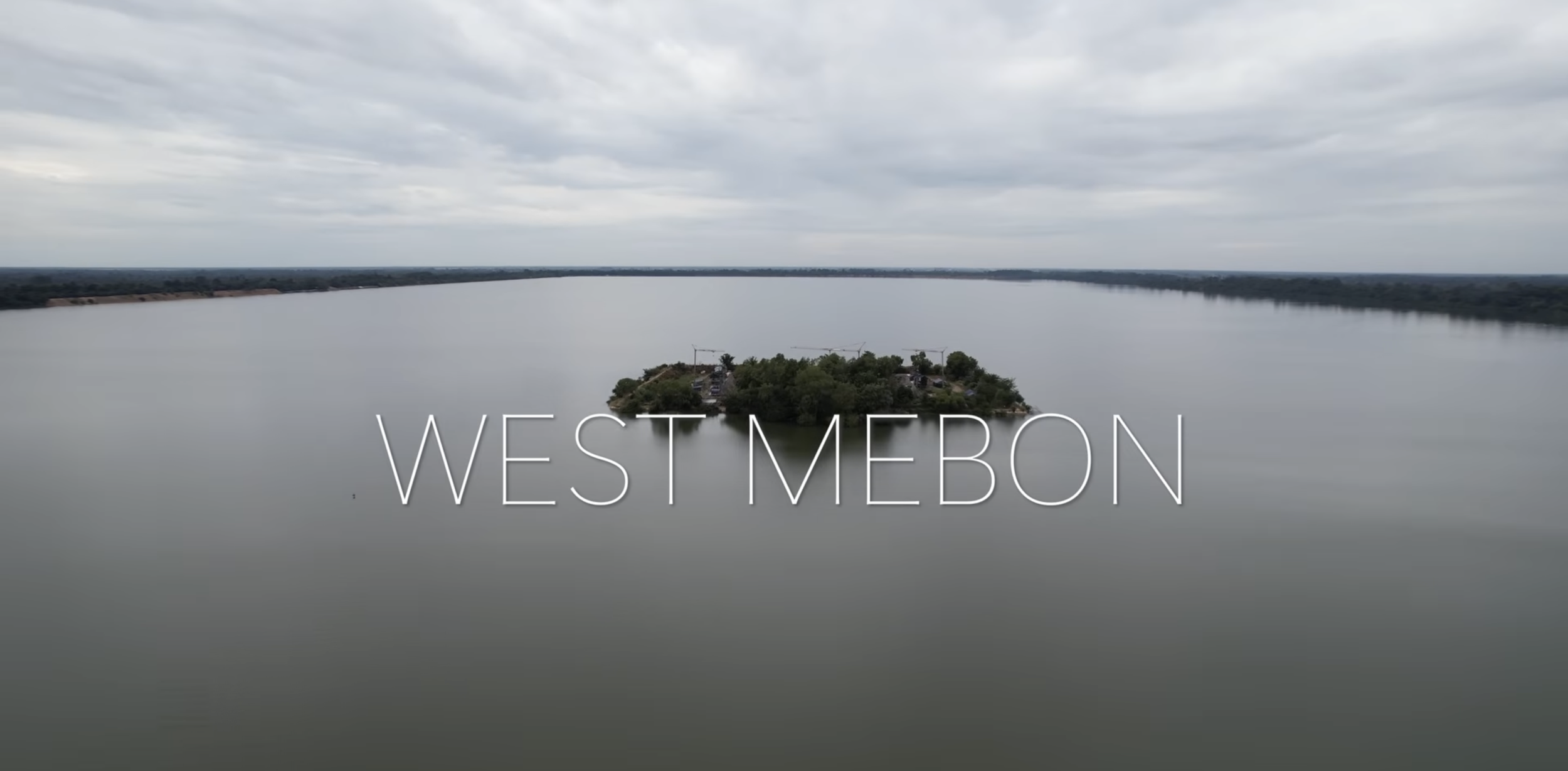
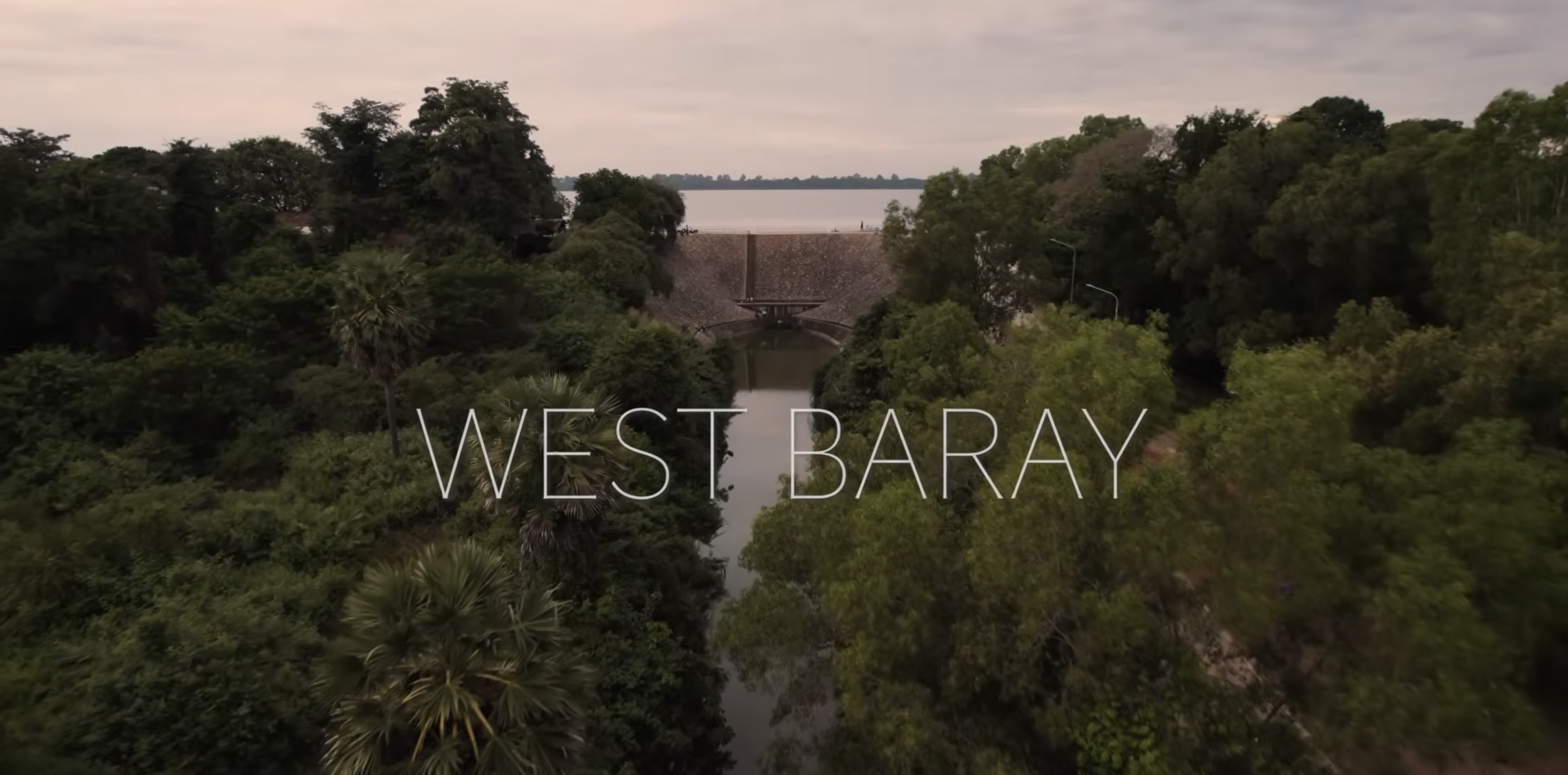
Figure 2 (Top). Screenshot from Awkun, 2026, at 8:00, courtesy of the National Museum of Asian Art.
Figure 3 (Bottom). Screenshot from Awkun, 2026, at 1:41, courtesy of the National Museum of Asian Art.
Overlooking the West Baray waterbody located just outside of Angkor Archeological Complex, one is just able to make out the faint towers of the Island of West Mebon. Because of the magnitude of the lake that this island resides in, one might think that it has always been there. However, West Mebon, along with the entire Baray, dates to the 9th century preindustrial city of Angkor. The waterbody itself is a vast reservoir which to this day is the largest hand cut reservoir on earth 1. Functionally, it supported irrigation for surrounding Angkor communities. Spiritually, it was also an important religious site once serving as the home to one of the most famous Vishnu’s in Cambodia—the Vishnu of Mebon.
Historically housed at the National Museum of Cambodia, in 2024 it left the country for a technical study in Paris at the Musee Guimet and then went onto Nantes where the Arc’Antoque Laboratory undertook conservation 2. Since undergoing conservation, the Vishnu has also been displayed at the Minneapolis Institute of Art in Minneapolis, Minnesota and the National Museum of Asian Art in Washington D.C. The rest of this article will provide an in-depth review of NMAA’s recent exhibition Vishnu’s Cosmic Ocean by comparing it to how MIA presented Vishnu in their Royal Bronzes: Cambodian Art of the Divine exhibition (on view from October 25, 2025 to January 18, 2026). At times, notes from the event, “Art After Dark: Vishnu’s Cosmic Ocean” hosted at NMAA on July 17, 2026 will be referenced to reflect on the Vishnu of Mebon’s significance. By comparing these two exhibitions, past, current, and ongoing local and global relevance of the Vishnu of Mebon is better understood.
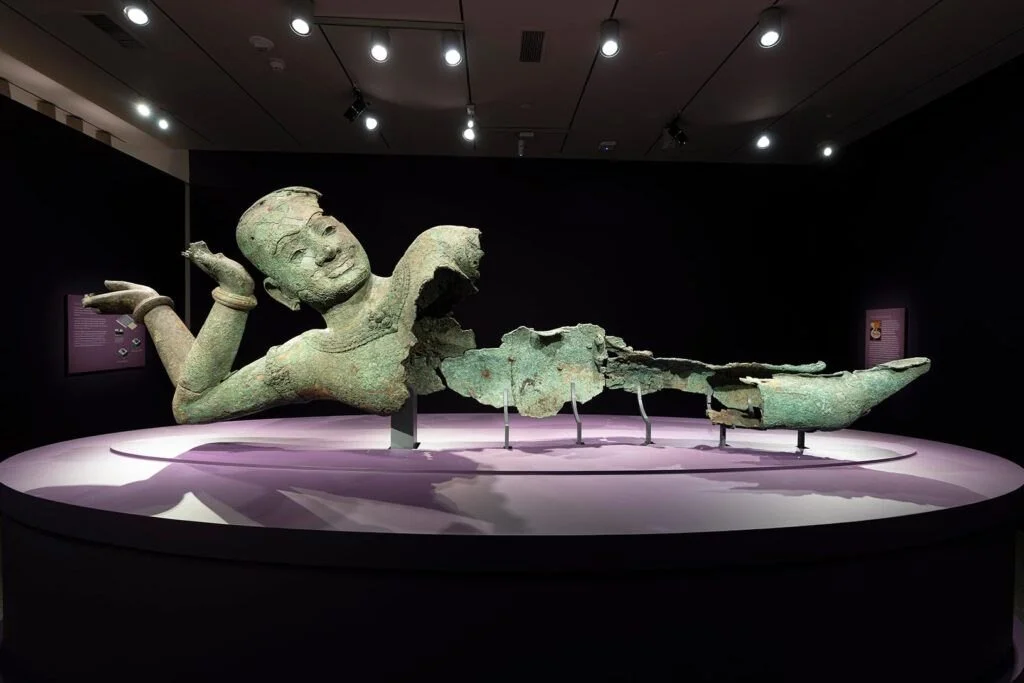
Figure 4. Vishnu of Mebon, from Vishnu’s Cosmic Ocean at the National Museum of Asian Art, Washington DC, (March 7-September 7, 2026). Image courtesy of the National Museum of Asian Art.
***
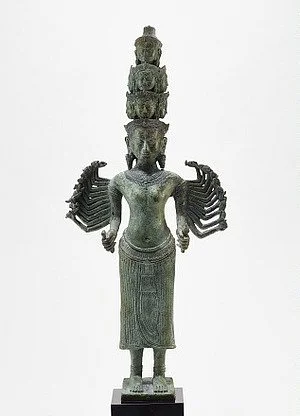
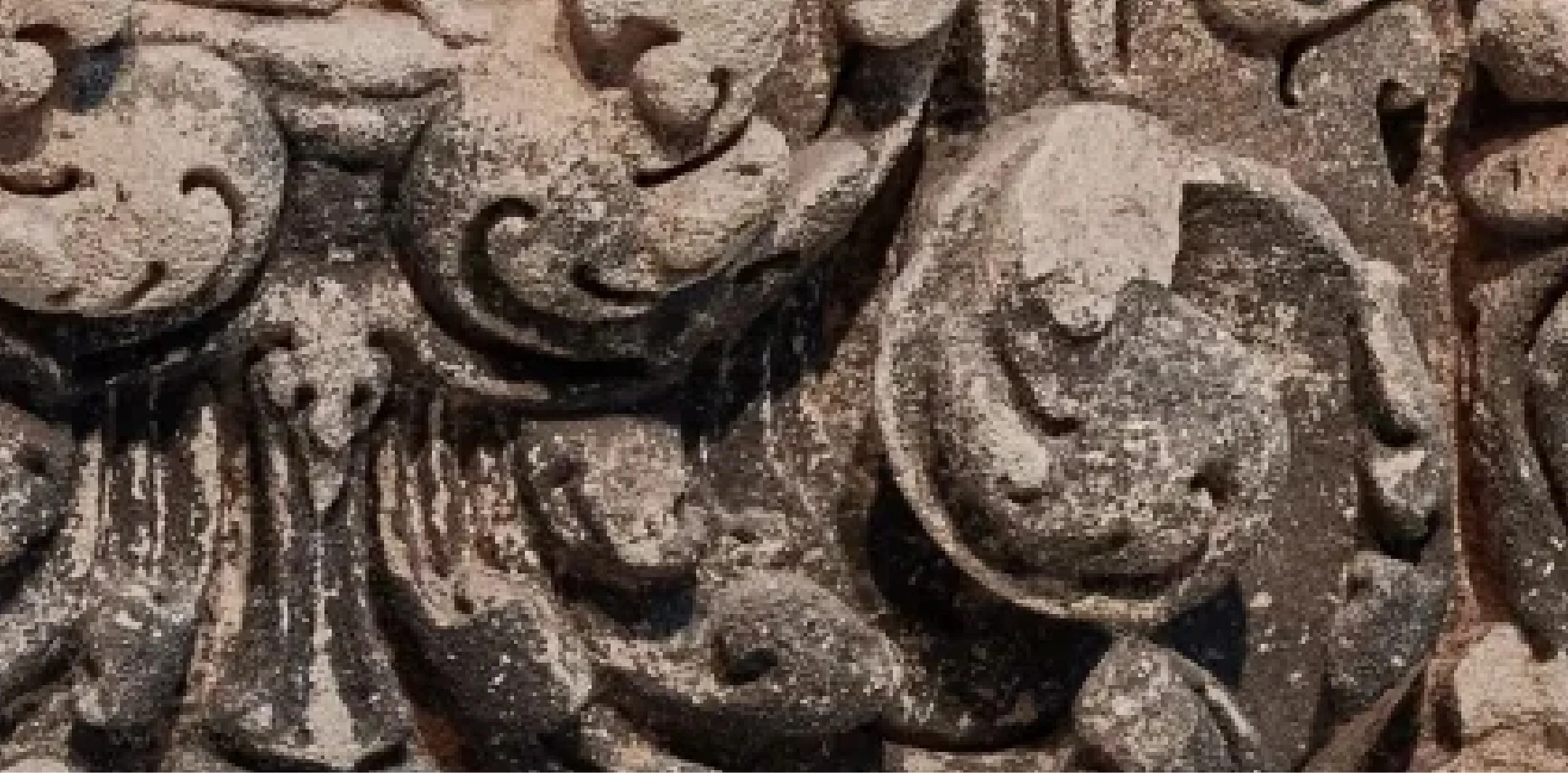
Figure 5(Left). Prajnaparamita, “The Perfection of Wisdom,” 1200. Copper alloy, National Museum of Asian Art, Gallery 22a. Image courtesy of the National Museum of Asian Art.
Figure 6 (Right). Lintel, 1100. Sandstone, National Museum of Asian Art, Gallery 22a. Image courtesy of the National Museum of Asian Art.
Vishnu’s Cosmic Ocean marks a long-term collaboration between the National Museum of Cambodia and NMAA which hosted Vishnu for the first time in 1997. This earlier exhibition, Sculpture of Angkor and Ancient Cambodia: Millenium of Glory toured four museums and signified Cambodia’s emergence from decades of political turmoil 3. During 2005 to 2006, conservators from NMAA traveled to Phnom Penh to establish a metal conservation lab at the National Museum of Cambodia 4. This earlier partnership sets the groundwork for the recent conservation efforts and exhibitions.
Technically a one-room exhibition, Vishnu’s Cosmic Ocean draws effectively on other gallery rooms to scaffold information for visitors and visually prepare them for the exhibition. First, visitors are introduced to Angkor period Cambodian arts and the geographic area of Southeast Asia through the surrounding galleries of Vishnu’s Cosmic Ocean. On permanent display are two objects dating to a slightly later period than the Vishnu. They are a small-scale copper alloy sculpture of Prajnaparamita, “The Perfection of Wisdom” (fig. 5) displayed alongside a sandstone lintel also dating to 12th century Cambodia (fig. 6) 5. From their prospective labels, one learns that the lintel would have been placed over the doorway of a Khmer temple, and the sculpture of Prajnaparamita would have been found within one of the Buddhist temples. The lintel references the Mahabharata or Indian epics that would have been in read with conjunction to the Puranas where the story of the reclining Vishnu first comes from. In contrast, Prajnaparamita signals the transition of Hinduism to Buddhism as the national religion of the Angkor Empire 6. Despite both objects being from later periods than the reclining Vishnu, the statues familiarize museum visitors to the visual language of Cambodian religious sculpture that is later apparent in Vishnu’s Cosmic Ocean.
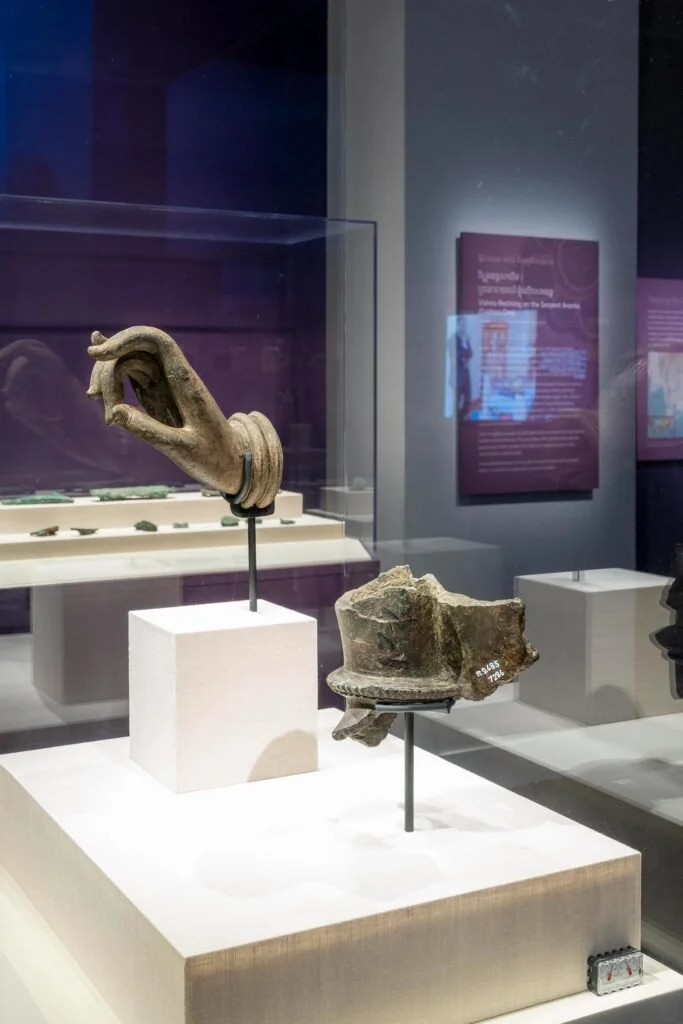
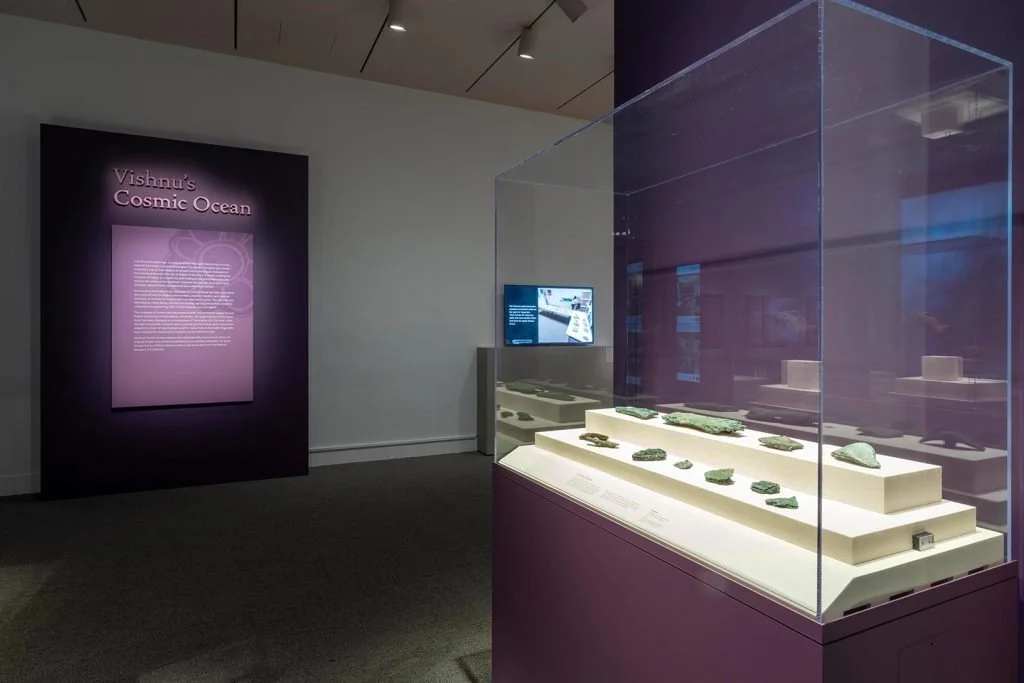
Figures 7 (Left) and 8 (Right). “Fragments from the Vishnu of Mebon,” from Vishnu’s Cosmic Ocean at the National Museum of Asian Art, Washington DC, (March 7-September 7, 2026). Images courtesy of the National Museum of Asian Art.
Following this preliminary room of Cambodian objects, visitors then enter through one of two entrances to Vishnu’s Cosmic Ocean. Unlike other exhibition rooms, Vishnu’s Cosmic Ocean was painted in purples and pinks, indicative of colors found in the lotus and Cambodian silks and textiles 7. The unique exhibition colors cognitively mark for visitors a shift in object types, time period, and knowledge than previous rooms. Careful attention was also taken with the placement of objects, labels, and exhibition materials included in Vishnu’s Cosmic Ocean. For example, regardless of the entrance that visitors came through, they are immediately introduced to the Vishnu of Mebon which is placed in the center of the exhibition. The sculpture’s position emphasizes its importance as the central focus of the exhibition. Surrounding the Vishnu are not yet attached fragments of the Vishnu, additional information about the Vishnu, and the broader history of Hinduism in Cambodia, including the India based origin story of Vishnu’s cosmic ocean story (fig. 7 and 8). Supplemental materials along with the additional Angkor era materials also on loan from the National Museum of Cambodia provides enough extra context for visitors to deeply understand the exhibition and artworks.
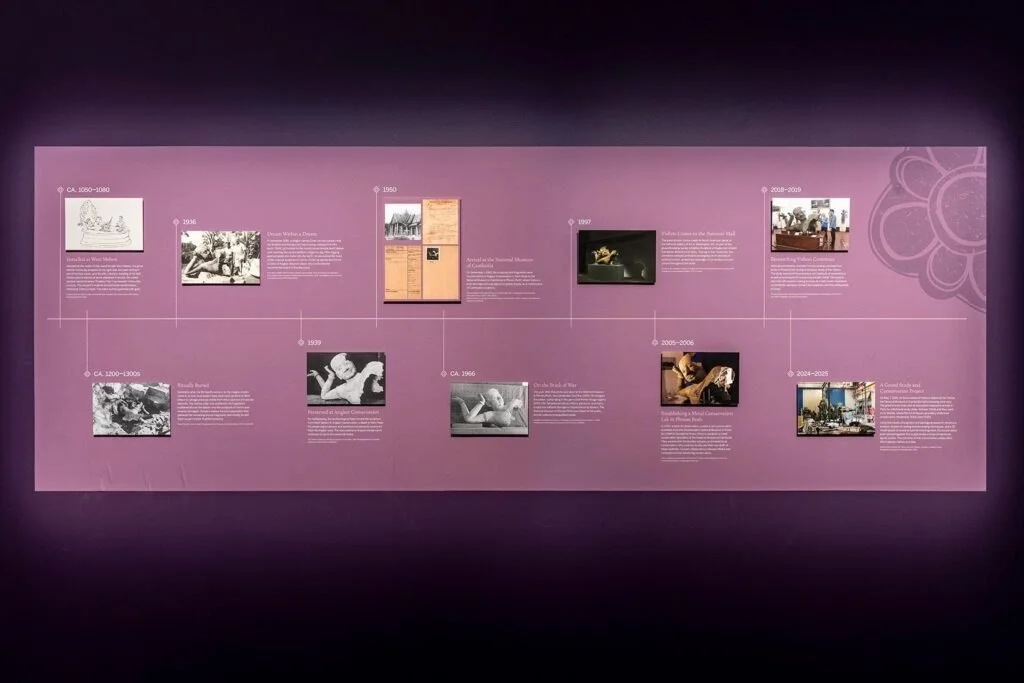
Figure 9. “Timeline of the Vishnu of Mebon,” from Vishnu’s Cosmic Ocean at the National Museum of Asian Art, Washington DC, (March 7-September 7, 2026). Image courtesy of the National Museum of Asian Art.
Especially helpful for contextualizing the significance and background of the Vishnu is an expansive timeline of the Vishnu of Mebon’s creation, burial, excavation, and conservation history (fig. 9). Originally installed at the island temple of Mebon between 1050 and 1080, Vishnu would have originally been displayed as propped on his right side resting with his wife Lakshmi kneeling at his feet. Beneath both Lakshmi and Vishnu lay the snake, Anata, “The Endless One” almost as a couch 8. Because Anata was not recovered with the Vishnu, he instead rests of an oval pedestal meant to mimic the same shape and size that Anata would have been 9. At the end of the Angkor empire in the 13th century, it is thought that to protect the colossal Vishnu from looters it was ritually buried as part of traditional Buddhist practice 10. Later in 1936, the Vishnu was rediscovered by local villager Chhit Lat and French Curator of Angkor, Maurice Glaize 11. Originally installed at the National Museum of Cambodia in 1950, just Vishnu’s bust was put on display, where it also was forgotten about during the war period in Cambodia 12. By reading through the extraordinary history of the Vishnu, it is both understood as a one-of-a kind Angkor era artwork and testament to the recent histories of French colonialism and the Khmer Rouge. Throughout its lifespan, the Vishnu has taken on different significances as evidence of ‘the glorious past,’ languishing object of a rejected history under the Khmer Rouge, and piece of diplomatic conservation following the war period.
Figure 10. Screenshot from Awkun, 2026, at 11:23, courtesy of the National Museum of Asian Art.
Directly to the right of the Vishnu of Mebon is a continuously playing video work titled, Awkun, (អវគណ) by contemporary Cambodian documentary artist, praCh Ly which provides insights into the Vishnu of Mebon’s current significance in Cambodia (fig. 10) 13. While the rest of the exhibition largely centers the Vishnu as an object of global interest and cultural heritage, Ly’s work reminds viewers of ongoing regional importance of the Vishnu which for so many years has been separated from Cambodia and specifically local people who were the original caretakers and rediscoverers of the sculpture.
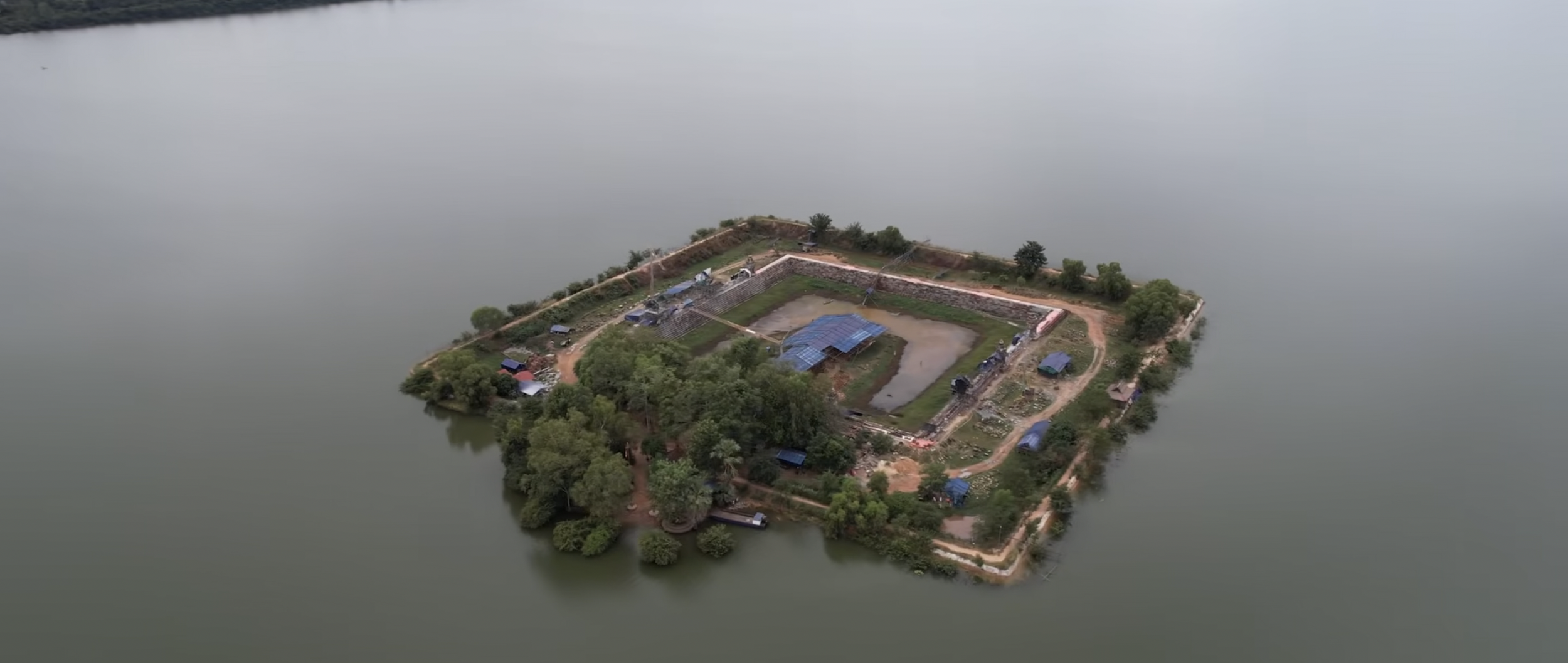
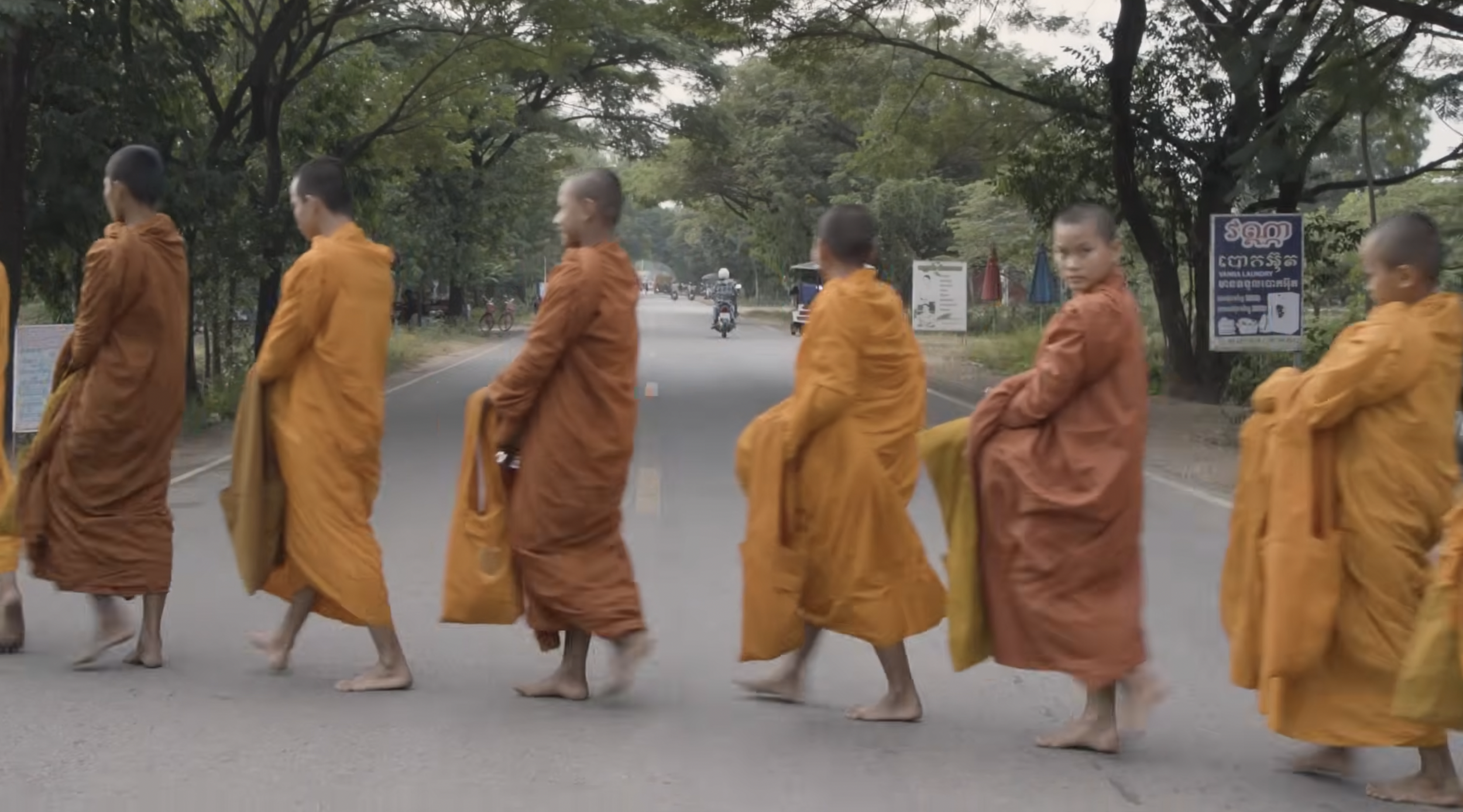
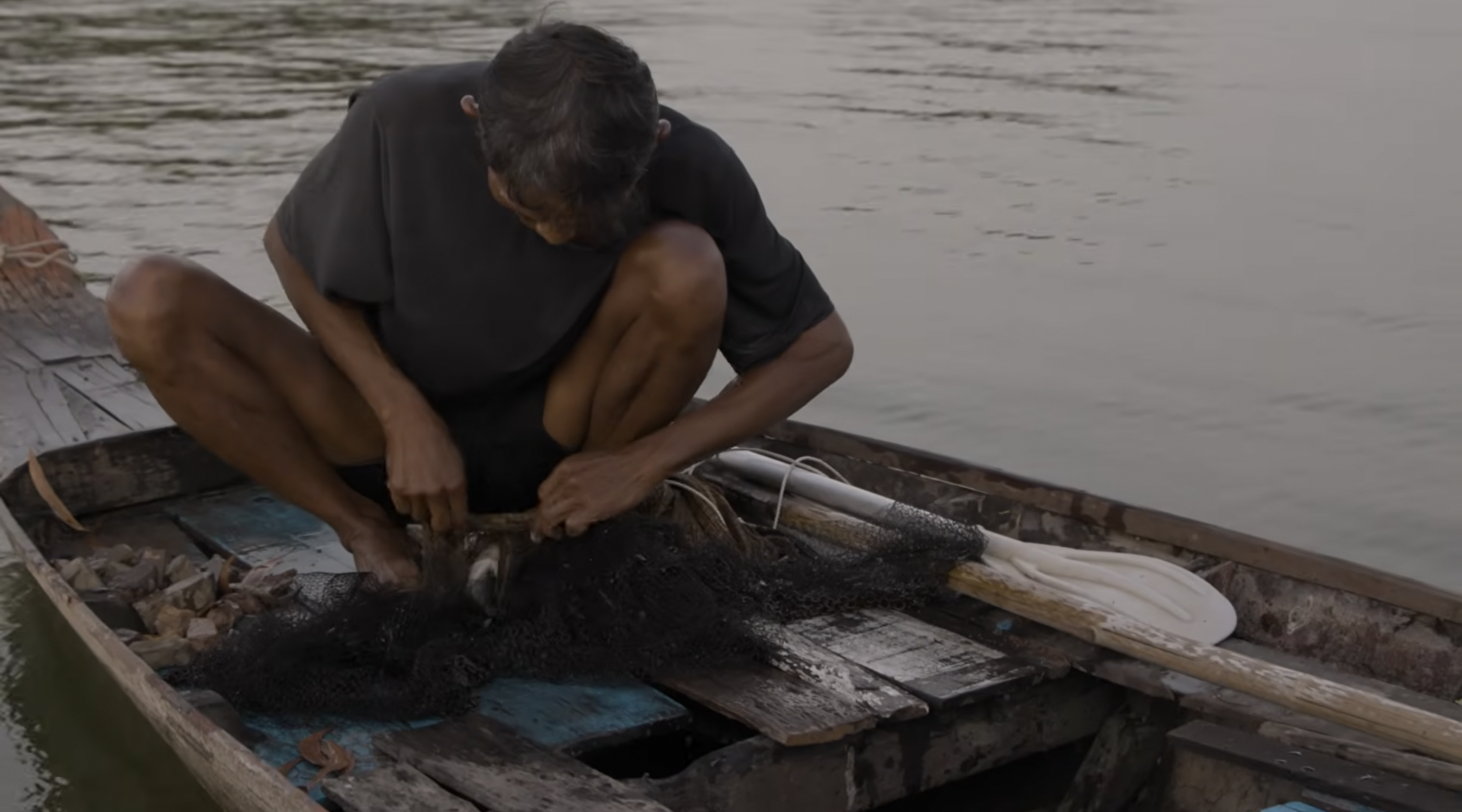
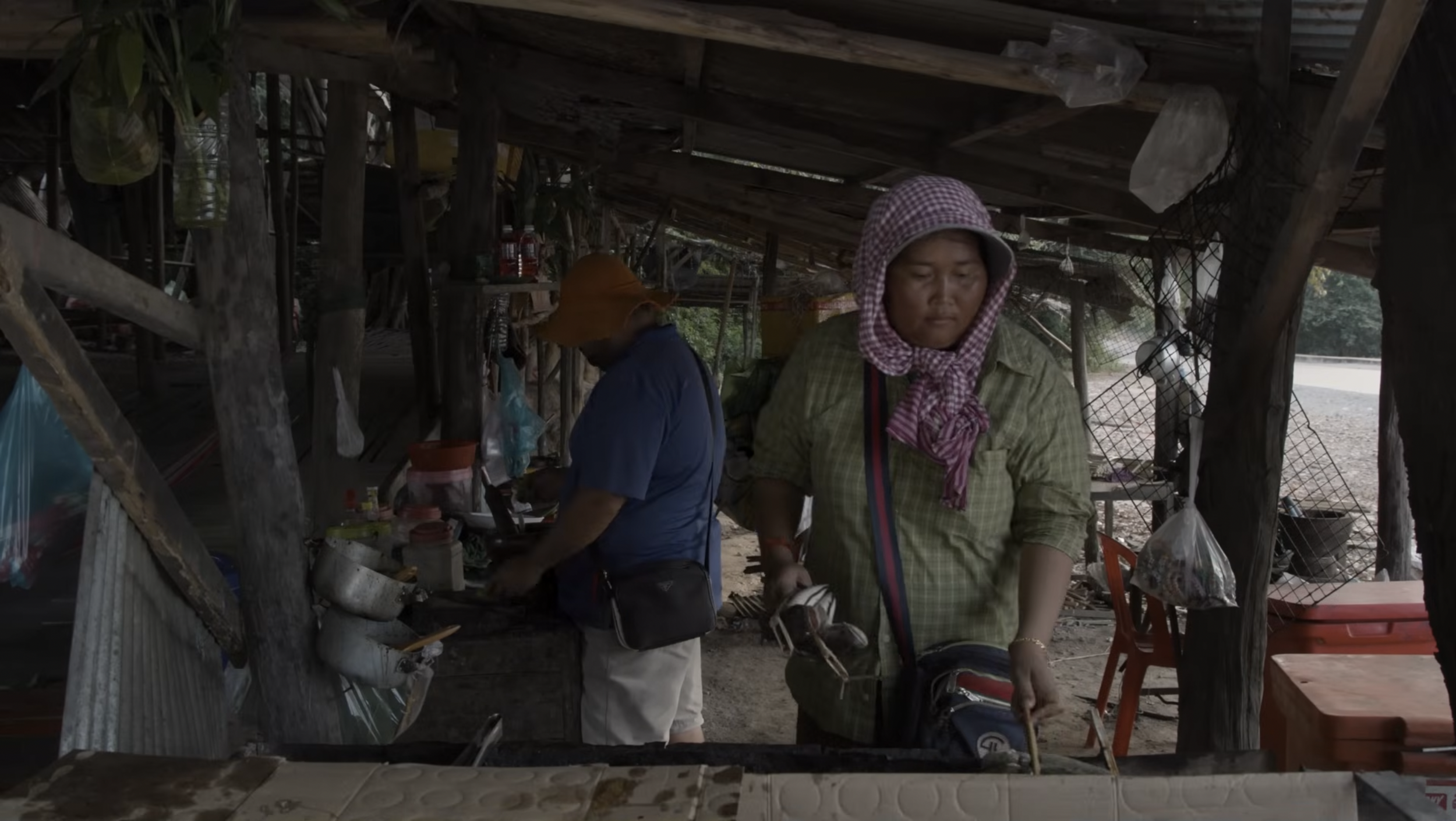
Figure 11 (Top Left). Screenshot from Awkun, 2026, at 10:13, courtesy of the National Museum of Asian Art.
Figure 12 (Top Right). Screenshot from Awkun, 2026, at 4:37, courtesy of the National Museum of Asian Art.
Figure 13 (Bottom Left). Screenshot from Awkun, 2026, at 3:58, courtesy of the National Museum of Asian Art.
Figure 14 (Bottom Right). Screenshot from Awkun, 2026, at 4:08, courtesy of the National Museum of Asian Art.
To center Vishnu within a local context in Awkun, the West Mebon complex is visually introduced to viewers in relation to the larger Angkor Archeological site and city of Siem Reap (fig. 11). A local boatman (fig. 13) on the West Baray is recorded fishing, then a female shop owner buying and preparing the fish (fig. 14), and a group of young Buddhist monks collecting alms. Several shots captured by an overhead camera give views of a group of young monks with Angkor Wat in the background, as well as the Island of West Mebon. No tourists nor nonlocal people are captured in this film, but instead the young monks become the focus of the 12-minute film (fig. 12). They are recorded swimming in the West Baray, resting in hammocks, and finally taking a boat across the reservoir to the Island of West Mebon. Upon arriving, the monks first light incense to the local spirits of the island and then read the informational panels, largely written in English about the island (fig. 15). Awkun presented in contrast to the rest of Vishnu’s Cosmic Ocean highlights local livelihoods and access to the island compared to those of international scholars who have largely run archeological research on the island and continue to write and interpret the island’s history.
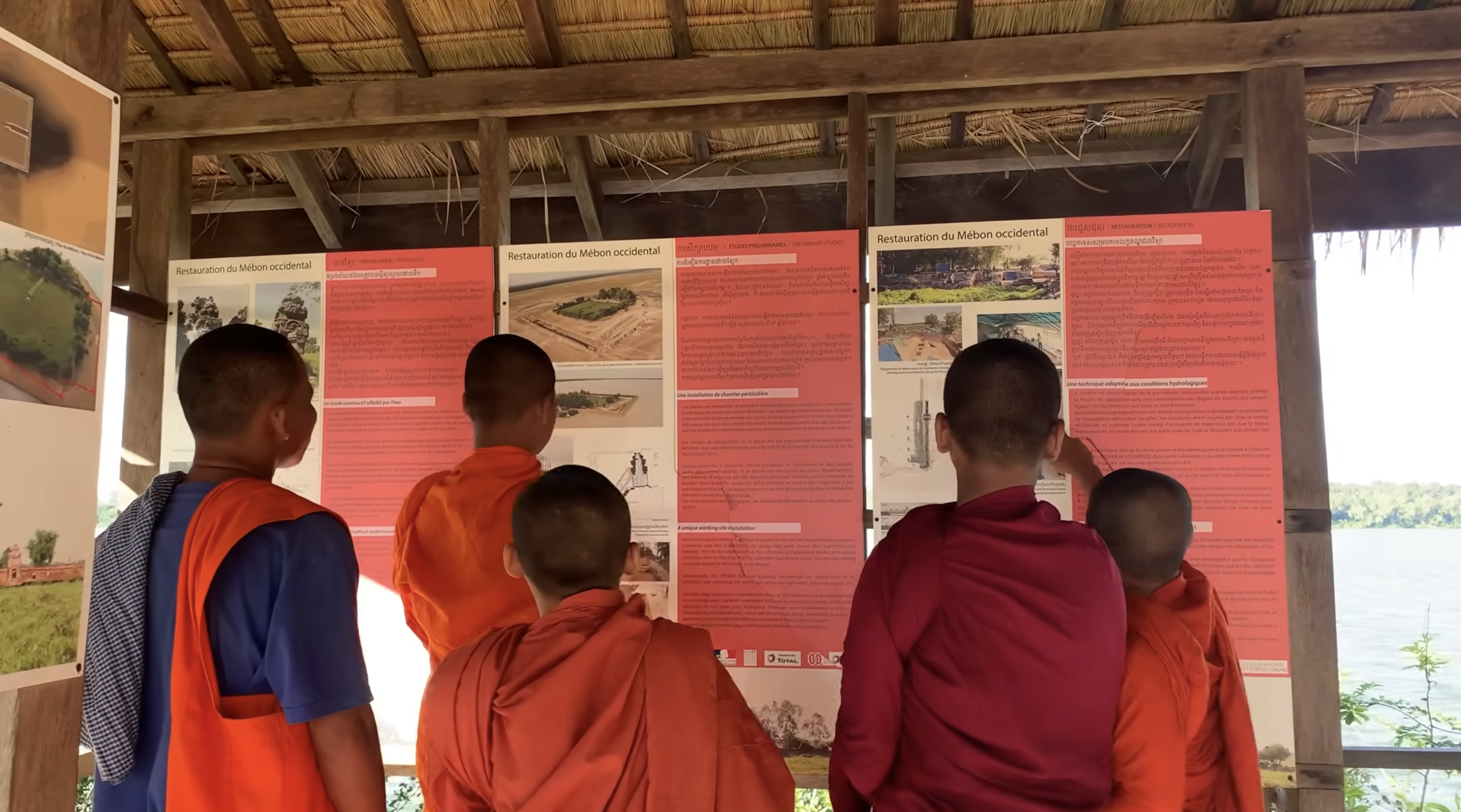
Figure 15. Screenshot from Awkun, 2026, at 9:05, courtesy of the National Museum of Asian Art.
Who gets access to sites of significance when they become places of global interest? Who writes these histories and what histories are left out? These are just two questions brought up by viewing Ly’s artwork in conversation with the rest of the exhibition. Displayed in a Western museum setting, one of the biggest points of experiential discrepancy is how visitors interact with the sacred Vishnu. The first action the Buddhist monks in Awkun take when entering the sacred site of Mebon is to honor the spirits of the island and that of the Vishnu (fig. 16). When visitors come to NMAA, they do not know to recognize the Vishnu as a sacred object nor to greet it with incense. To partially reconcile this tradition, when the Vishnu arrived at NMAA, it was blessed by local Venerable monks 14. Despite this, one cannot help but wonder if the Vishnu does not belong back in Cambodia amongst the local people who honor and recognize it as sacred instead of among those who just view it as a great work of art or historical marker.
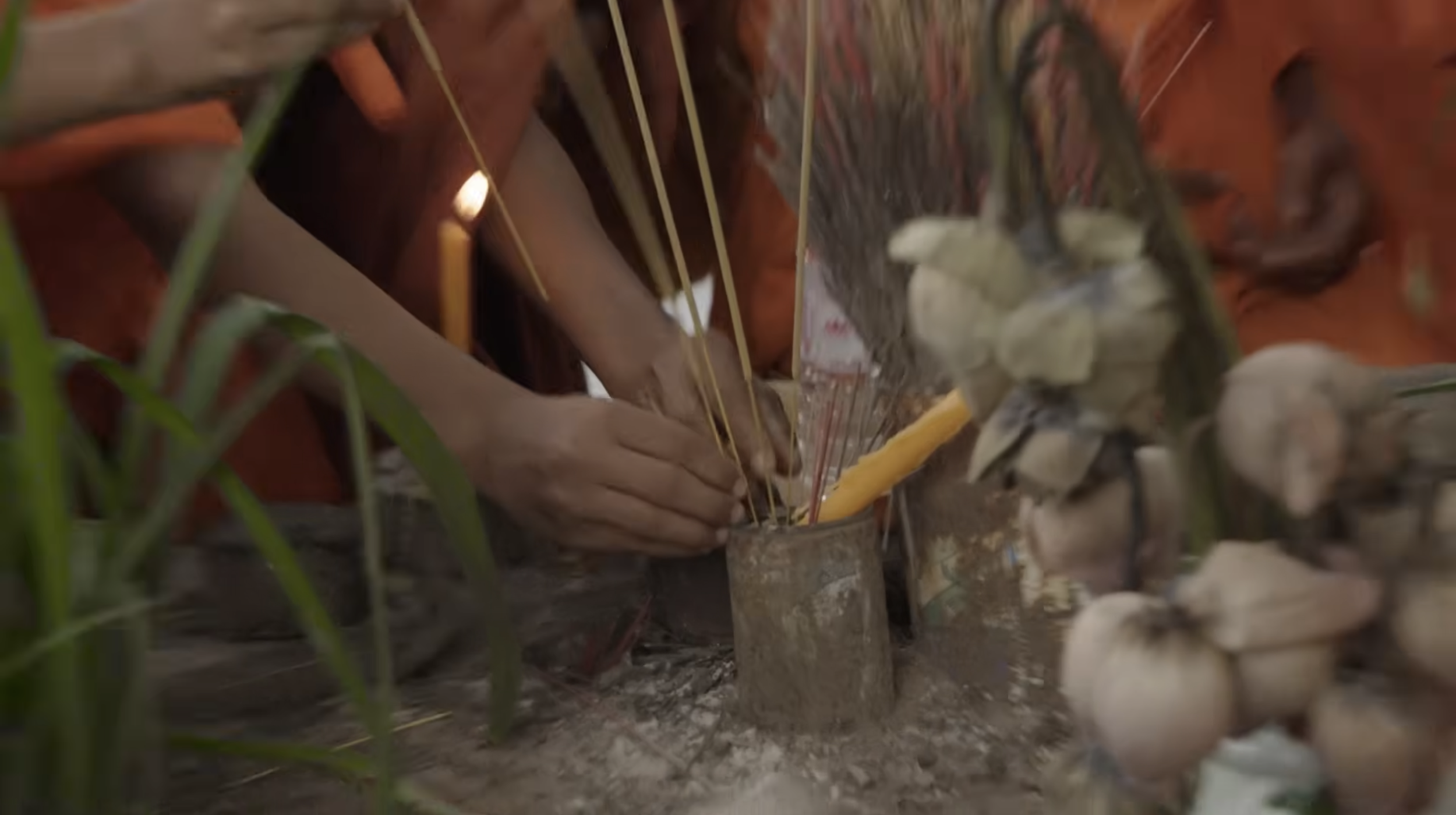
Figure 16. Screenshot from Awkun, 2026, at 8:40, courtesy of the National Museum of Asian Art.
Discussed by the exhibition as an archeological wonder—which it is—Mebon is also a place of rich personal history to many local people. One man, Sopheap told Ly that he swam to the island during the Khmer Rouge and sought refuge there for the entirety of the three years and eight-month takeover 15. Left out of museum interpretations about the Island of Mebon in favor of focusing on the greatness of the Angkor style building are these personal stories of how the Island and Vishnu of Mebon has protected Cambodians for generations. If these stories were told in the museum setting alongside the sculpture of Vishnu, viewers would be made aware of not just the famous past of Vishnu but also its deeply personal relevance to Cambodians today.
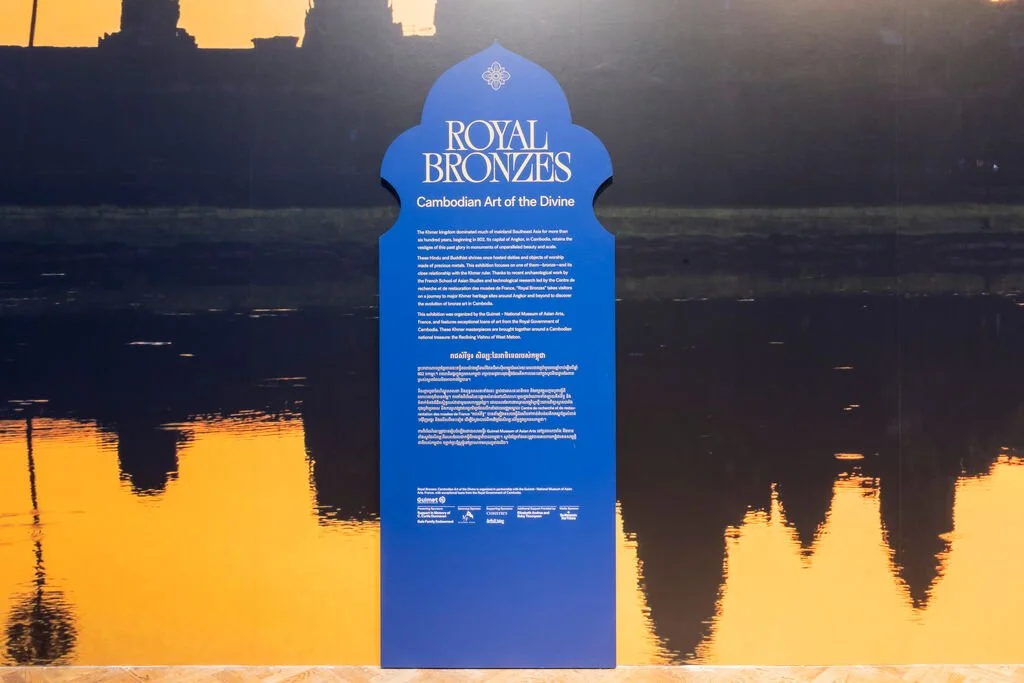
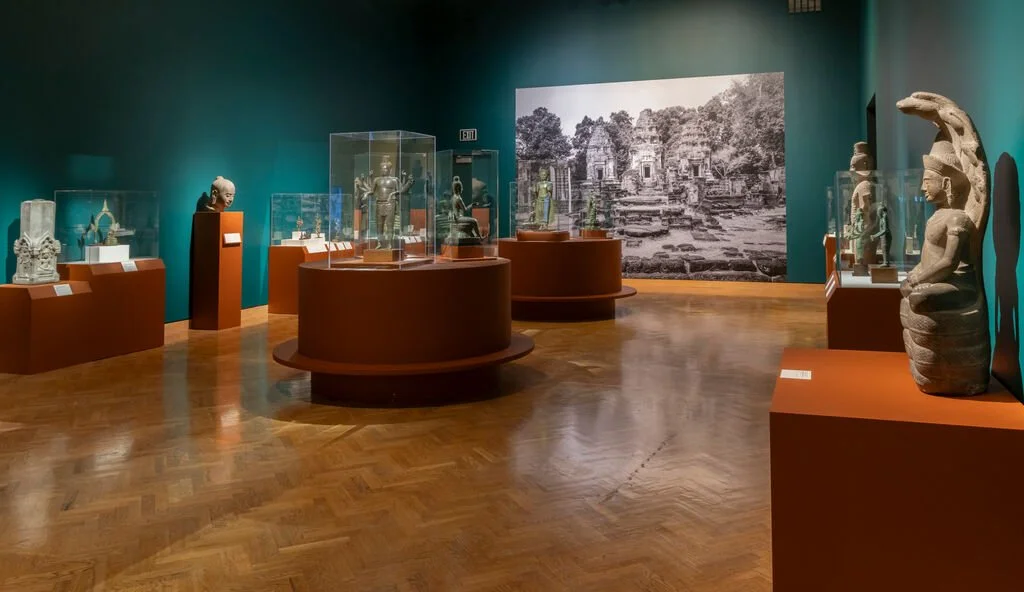
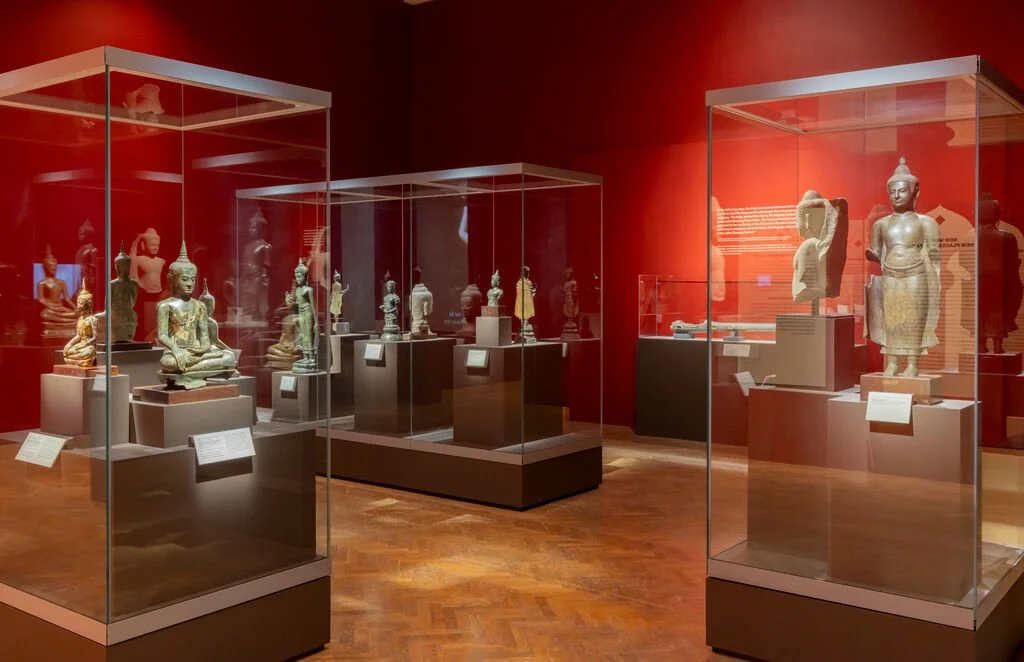
Figure 17 (Top). Installation view of Royal Bronzes: Cambodian Art of the Divine at the Minneapolis Institute of Art, Minneapolis, Minnesota (October 25, 2025-January 18, 2026). Image courtesy of the Minneapolis Institute of Art.
Figure 18 (Center). Installation view of Royal Bronzes: Cambodian Art of the Divine at the Minneapolis Institute of Art, Minneapolis, Minnesota (October 25, 2025-January 18, 2026). Image courtesy of the Minneapolis Institute of Art.
Figure 19 (Bottom). Installation views of Royal Bronzes: Cambodian Art of the Divine at the Minneapolis Institute of Art, Minneapolis, Minnesota (October 25, 2025-January 18, 2026). Image courtesy of the Minneapolis Institute of Art.
***
The Vishnu of Mebon also was publicly on display at the Minneapolis Institute of Art during the Royal Bronzes: Cambodian Art of the Divine exhibition on view from October 25, 2025 until January 18, 2026 (fig. 17) 16. This exhibition was much larger in scale than NMAA’s Vishnu’s Cosmic Ocean, including over 200 objects—126 which were on loan from the National Museum of Cambodia 17. Five main gallery rooms titled, “The Origins of Copper Metallurgy,” Casting for the King,” Honoring the Gods,” “The World, New Places, New Faith,” and “The West Mebon Vishnu: A Rebirth” chronologically recounted the larger history of bronze metallurgy and artistry dating from the fourth century to post-Angkor 18. By walking through the exhibition via the designated visitor pathway created, visitors came into contact with lost wax casting models, objects from the Royal Foundry, and architectural adornments (figs. 18 and 19). This wide variety of objects showcased the diversity of bronze objects made before and during the same time as the Vishnu of Mebon.
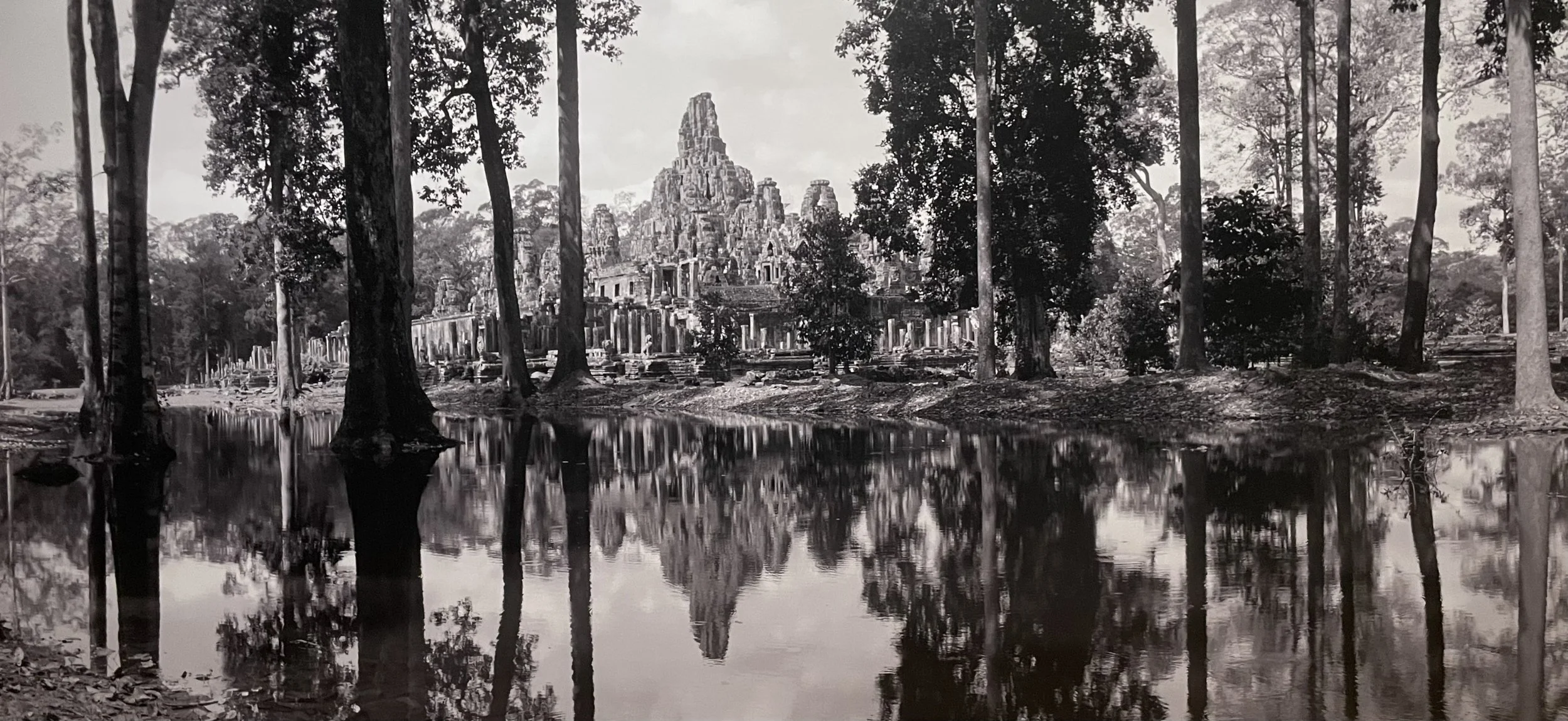
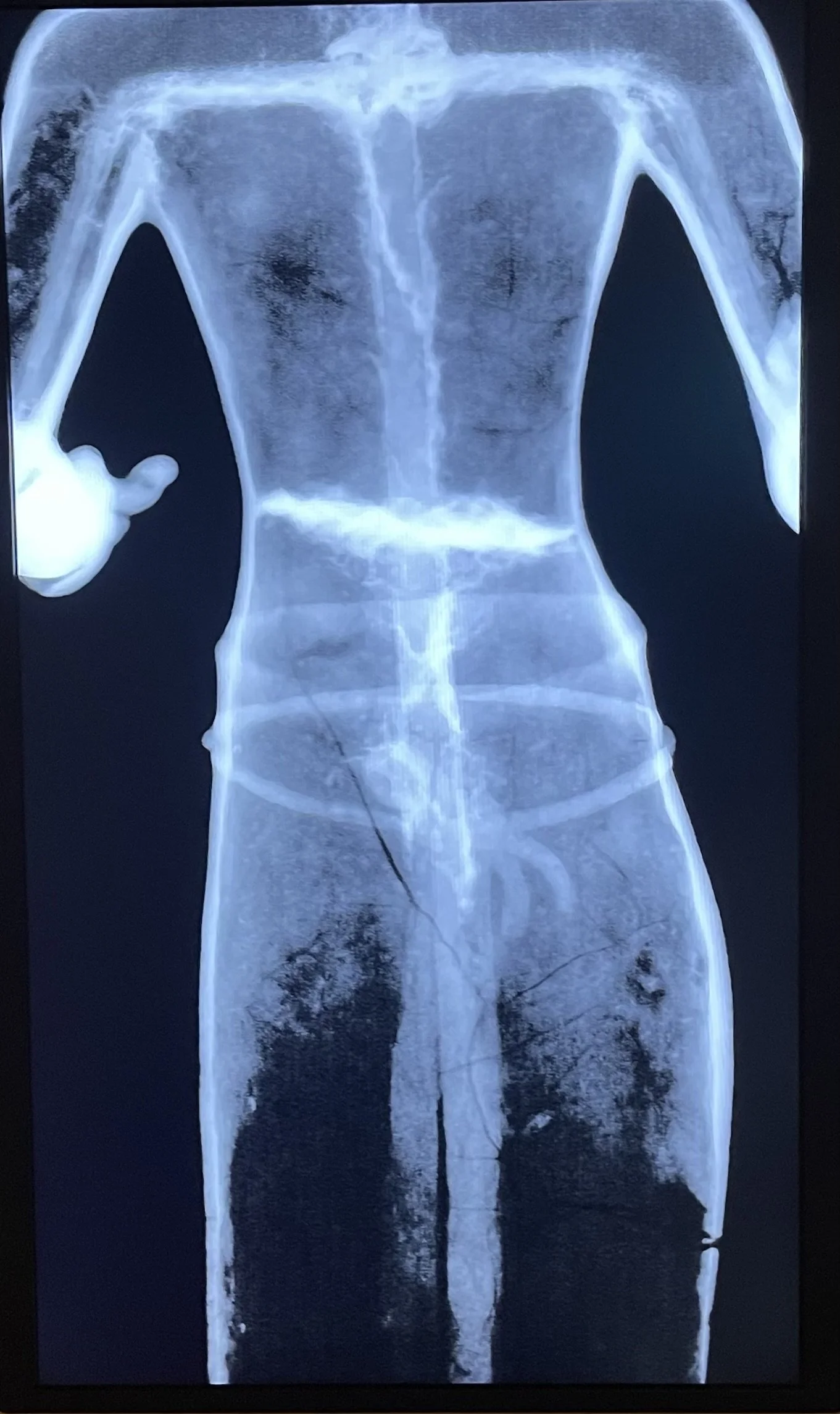
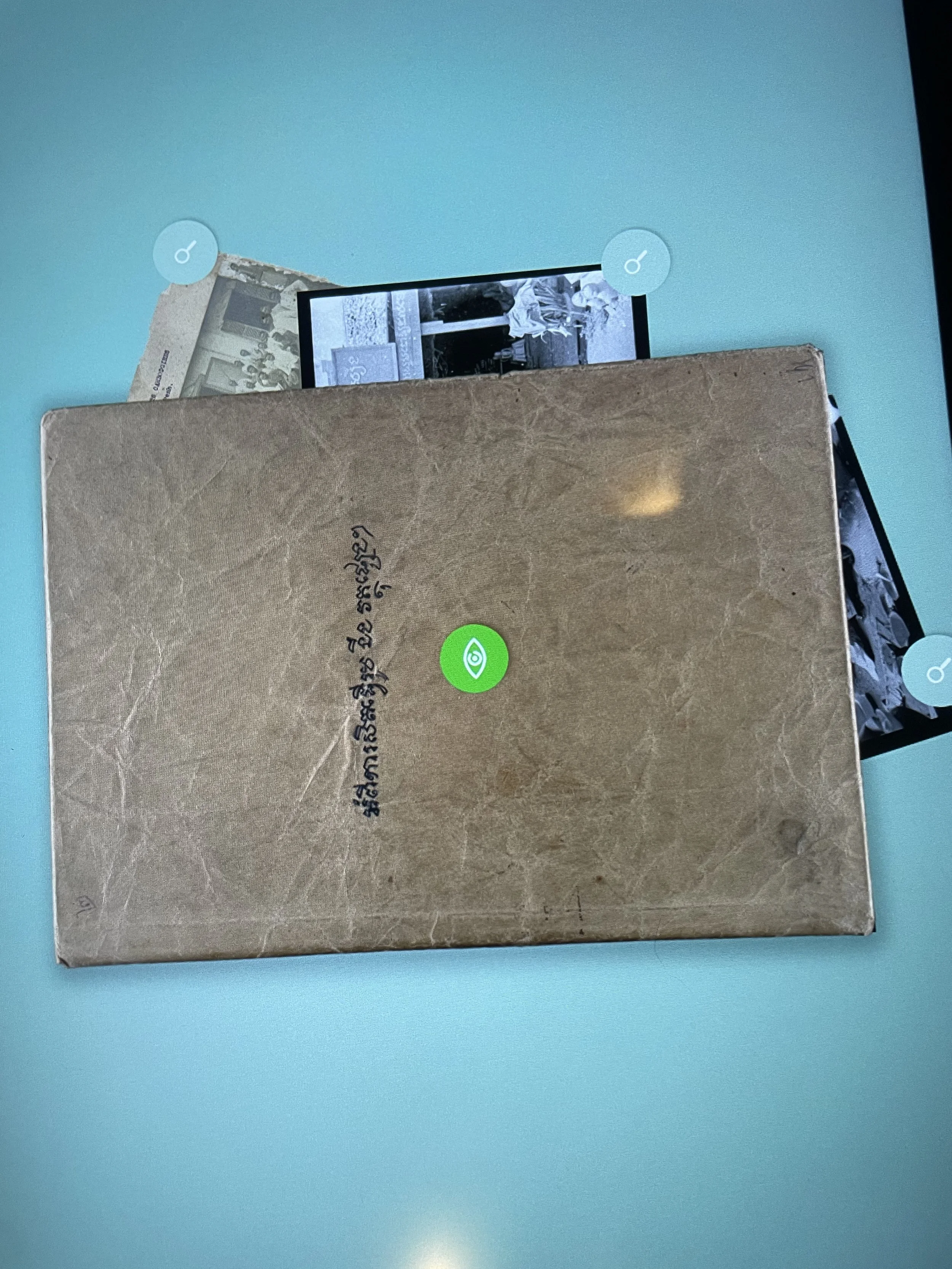
Figure 20 (Top). Jaroslav Poncar, Bayon Temple, 1997. Photograph. Photo by author.
Figure 21 (Bottom Left). Thierry Borei and Elsa Lambert, X-Ray of the Bodhisattva Maitreya, 2024. Paris Center for Research and Restoration of the Museums of France. Photo by author.
Figure 22 (Bottom Right). Ieng Soeung, Technical Treaty, 1902-1972. French School of Asian Studies (EFEO), 19x27 cm. 119 pgs.
Not only diverse in the types of objects that were presented were also the ways that the objects were presented for maximum visitor interaction. For example, large scale black and white images of Angkor temples by Jaroslav Poncar were displayed throughout the exhibition rooms (fig. 20). Presenting these photographs of temples next to exhibition objects contextualized where many of them would have been originally located. X-ray scans of objects were frequently displayed next to exhibition objects for the purpose of revealing interiorly how the objects were constructed. One such object scan of the bodhisattva Maitreya reveals how inner armature that runs through the body and arms shows evenness of bronze casting and help viewers to more deeply understand the casting process (fig. 21) 19. Other tech-based interactives that also helped to facilitate viewer understanding of objects included a digitized copy of a technical treaty on casting published during the French Protectorate and a video showing modern day craftsmen casting an object (fig. 22). These various interactives scattered throughout the exhibition presented numerous ways for visitors to engage more deeply about casted bronze Cambodian objects in the ancient and present context. The ability to flip through a digital treatise or watch video footage also allowed moments for choice learning for visitors who wanted to learn more about the exhibition objects or processes for making them.
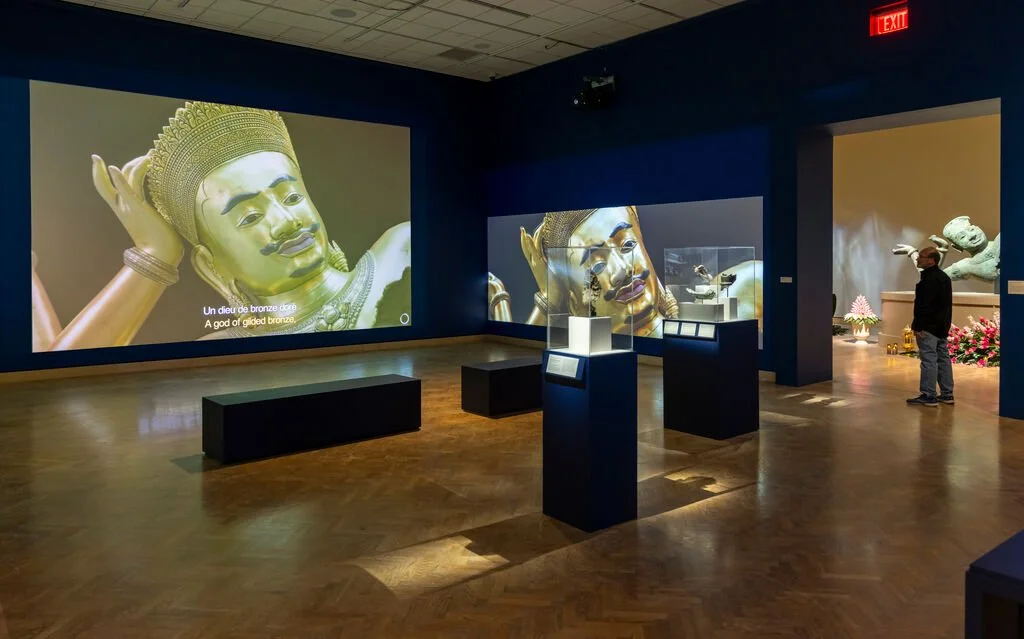
Figure 24. The Awakening of Vishnu, 2025. Media Installation, 6:47 minutes. Image courtesy of the Minneapolis Institute of Art.
Like NMAA, MIA also had a special video made to pair with the Vishnu of Mebon sculpture. Unlike NMAA’s, MIA’s centered on the Awakening of Vishnu and the ancient Hindu mythology that defines the Vishnu of Mebon’s significance. Split across three screens, the story of the Churning of the Milk and Vishnu creating the universe was visually shown through carvings found on various Angkor temples. As the images play, a narrator also retells the stories of the carvings and the creation of the West Baray reservoir 20. The climax of the narration occurs with the introduction of the sculpture of the Vishnu of Mebon with closeup images of how the Vishnu would have once looked gilded in gold and painted (fig. 23). The narrative and visual inclusions prepare visitors for when they enter the culmination of the exhibition and experience the Cosmic Vishnu in person. After exploring the history of Cambodian bronze work and learning previously about the Cosmic Vishnu, visitors have an appropriate appreciation for the scale, grandeur and intricacy when they finally come face to face with the sculpture.
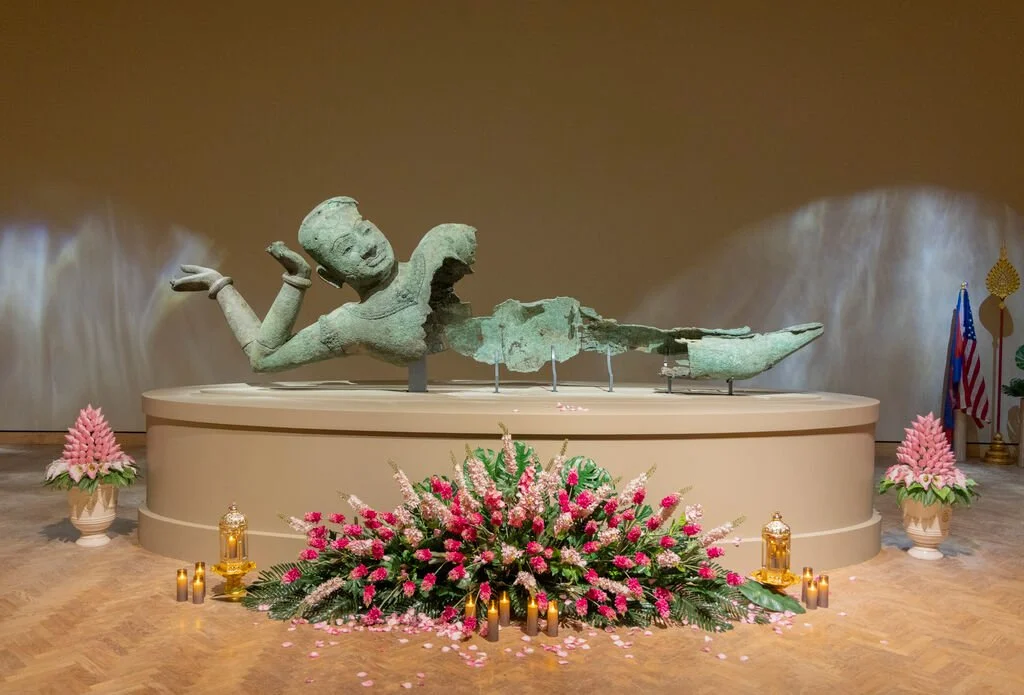
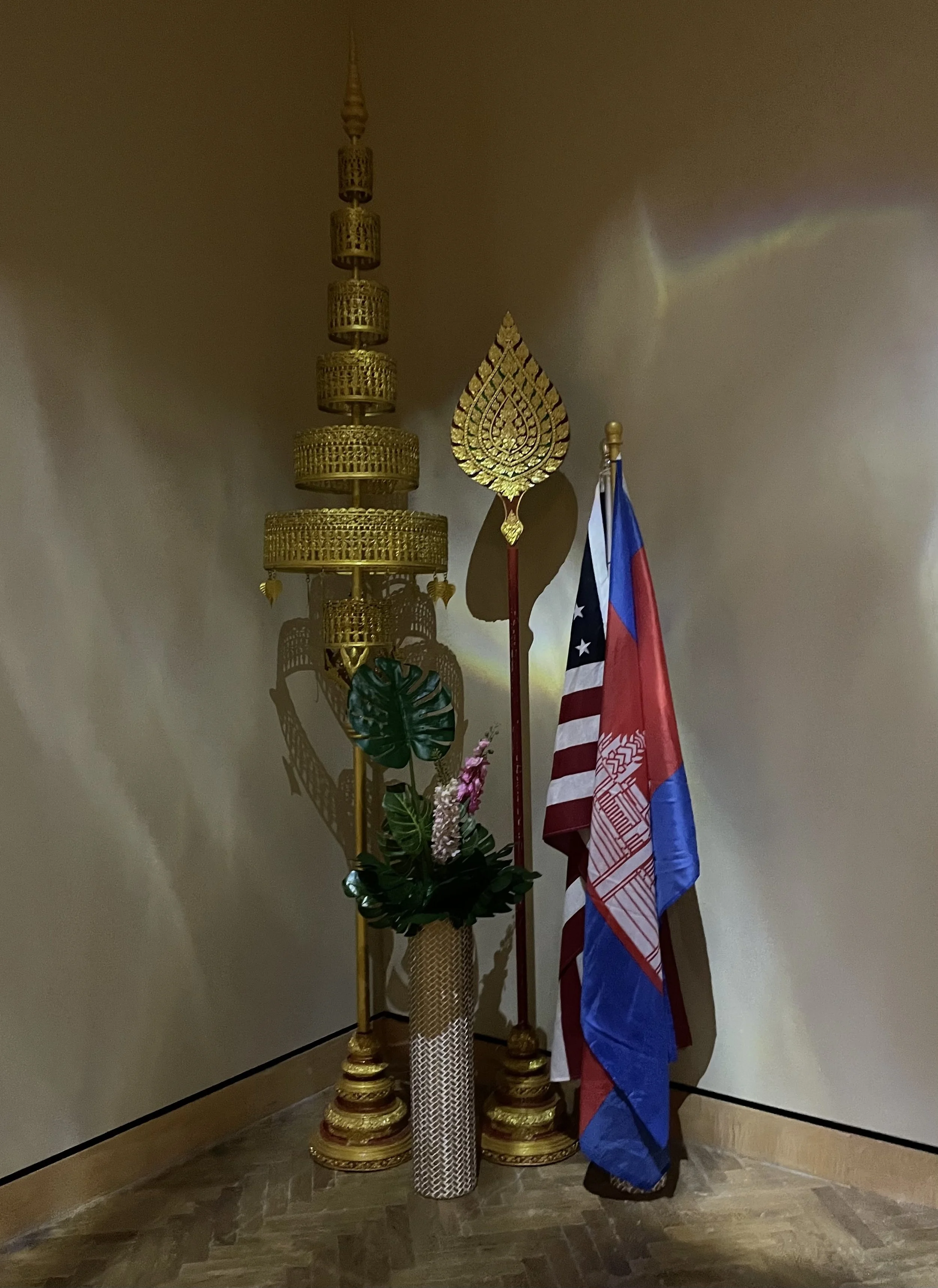
Figure 24 (Left). Installation view of Royal Bronzes: Cambodian Art of the Divine at the Minneapolis Institute of Art, Minneapolis, Minnesota (October 25, 2025-January 18, 2026). Photo courtesy MIA.
Figure 25 (Right). Installation view of Royal Bronzes: Cambodian Art of the Divine at the Minneapolis Institute of Art, Minneapolis, Minnesota (October 25, 2025-January 18, 2026). Photo by author.
How the Vishnu was displayed at MIA goes a step further than that of NMAA to visually contextualize Vishnu as an object of sacredness. Like NMAA, MIA invited Venerable monks to come and welcome the spirit of the Vishnu to the museum in a public ceremony. As remnants of this blessing ceremony, bouquets of lotus were placed around Vishnu’s display (fig. 24). From the front of the display was also a large display of ginger-like flowers interspersed with monstera leaves. The lotus are representative in Buddhism of enlightenment, impermanence and the meditative journey from worldly suffering to nirvana, while the leaves and ginger are likely meant as common plant decoration found in Southeast Asia. Pink references the Buddha himself and virtues of purity and active compassion, which are also reiterated by the lotus on display. Complementing the monstera and ginger-like flowers are a traditional gold Talipot fan and chattra (fig. 25). The Talipot fan is used during Buddhist ceremonies of blessings, while the chattra is symbolic of spiritual authority, divine protection, or reverence. The statue’s divinity is acknowledged and blessed by these objects being in the same exhibition room as the Vishnu.
***
It is a rare and unusual occurrence to view the same object twice in the same year in two different museum exhibitions. The collaboration between the Minneapolis Institute of Art, Musee Guimet, National Museum of Asian Art, and National Museum of Cambodia allowed for exactly this opportunity by presenting the Vishnu of Mebon within three different exhibition settings—but two focused upon within this exhibition review. Both NMAA and MIA provided a variety of ways for engaging with the Vishnu by including video installation, interactives, a range of objects, adequate seating for close looking, and exhibition and object labels. The attention to forms of engagement makes both exhibitions very effective for facilitating meaning making for visitors with Cambodian objects.
The types of meaning making in NMAA and MIA’s exhibition achieved different goals. Closely thinking about the different video installations paired with the Vishnu of Mebon for each exhibition underscores the contrasting takeaways. For example, MIA’s video recounts the Hindu story of Vishnu and his creation of the universe. This contextualization of Vishnu firmly places him in the past as the creator. In comparison, NMAA’s video installation by praCh Ly explores the Vishnu of Mebon as an object of modern importance, especially for local people. Following the lives of everyday people living in Siem Reap localizes how Vishnu is thought about within a Cambodian perspective. This can often be overlooked when an object is removed from its place of origin and placed within the Western museum context. The actual display of Vishnu within MIA did denote him as a sacred object in a way that does insert some Cambodian Buddhist perspective in the exhibition. While difficult to achieve in a single room exhibition, the NMAA’s display of Vishnu’s Cosmic Ocean could have benefitted from this same intentional sacralization of the Vishnu that MIA accomplished.
Minneapolis and the surrounding DC, Maryland, and Virginia areas each have populations of about 9,000 to 12,000 Cambodians. In consideration of diaspora communities, both exhibitions had labels and large exhibition information panels translated into Khmer as well as special events that the Cambodian populations were invited to. These initiatives increased the ability for diaspora communities to learn more about their ancestral arts and history. Although the temporary removal of the Vishnu of Mebon and the more permanent removal of Vishnu from the Island of Mebon makes the ability of local Cambodians to access their heritage more difficult, it does allow for diaspora Cambodians to also learn about their histories. Just as MIA and NMAA’s portrayal of Vishnu as an object of the past and present-future complement each other, the places where such an object like Vishnu is displayed should also take a complementary approach of balancing local, national, and global access of Cambodians to their heritage. Only by striking this balance can the issue of local populations often being left out of interpreting and accessing their cultural heritage and past be addressed.
Anneliese Hardman is a PhD Candidate in art history at the University of Illinois, Chicago studying Southeast Asian art histories, with a concentration on contemporary Cambodian art. Previously she taught at the School of the Art Institute of Chicago, where she contributed to the exhibitions, Carving Legacies (2025) at the National Cambodian Heritage Museum and Angkor Complex (2024) at the University of Michigan. Anneliese is currently a Visiting Scholar at George Washington University researching her dissertation titled, Ecological Engagements in Contemporary Cambodian Art. Her writing has appeared or is forthcoming in Athanor, Art & Market, Bridge, FWD Museums Journal, and Trans Asia Photography.
FOOTNOTES
1 Introductory label for Vishnu’s Cosmic Ocean at the National Museum of Asian Art, Washington DC, (March 7-September 7, 2026), para. 2.
2 “A Grand Study and Conservation Project,” exhibition label from Vishnu’s Cosmic Ocean at the National Museum of Asian Art, Washington DC, (March 7-September 7, 2026).
3 “Vishnu comes to the National Mall,” exhibition timeline label from Vishnu’s Cosmic Ocean at the National Museum of Asian Art, Washington DC, (March 7-September 7, 2026).
4 “Establishing a Metal Conservation Lab in Phnom Penh,” exhibition timeline label from Vishnu’s Cosmic Ocean at the National Museum of Asian Art, Washington DC, (March 7-September 7, 2026).
5 “Prajnaparamita, ‘The Perfection of Wisdom,’” object label, National Museum of Asian Art, gallery 22a, Washington DC. Note: This label is also viewable online at https://asia.si.edu/explore-art-culture/collections/search/edanmdm:fsg_S2015.26/.
6 “Lintel,” object label, National Museum of Asian Art, gallery 22a, Washington DC. Note: This label is also viewable online at https://asia.si.edu/explore-art-culture/collections/search/edanmdm:fsg_S1987.953/.
7 “Unique and Resplendent,” exhibition label from Vishnu’s Cosmic Ocean at the National Museum of Asian Art, Washington DC, (March 7-September 7, 2026), para. 3.
8 “Installed at West Mebon,” exhibition timeline label from Vishnu’s Cosmic Ocean at the National Museum of Asian Art, Washington DC, (March 7-September 7, 2026).
9 “Unique and Resplendent,” exhibition label from Vishnu’s Cosmic Ocean at the National Museum of Asian Art, Washington DC, (March 7-September 7, 2026), para. 3
10 “Ritually Buried,” exhibition timeline label from Vishnu’s Cosmic Ocean at the National Museum of Asian Art, Washington DC, (March 7-September 7, 2026).
11 “Dream within a Dream,” exhibition label from Vishnu’s Cosmic Ocean at the National Museum of Asian Art, Washington DC, (March 7-September 7, 2026).
12 “Arrival at National Museum of Cambodia” and “On the Brink of War,” exhibition label from Vishnu’s Cosmic Ocean at the National Museum of Asian Art, Washington DC, (March 7-September 7, 2026).
13 “Awkun, a Film by praCh Ly,” exhibition label from Vishnu’s Cosmic Ocean at the National Museum of Asian Art, Washington DC, (March 7-September 7, 2026), para. 3.
14 “Vishnu’s Cosmic Ocean Blessing Ceremony,” National Museum of Asian Art, March 2026, para. 1, https://asia.si.edu/whats-on/events/search/event:197160025.
15 praCh Ly, remarks during “Vishnu’s Cosmic Ocean, Asia After Dark Event,” panel discussion, National Museum of Asian Art, July 17, 2026.
16 Note: This show was an extra $20 for non-members compared to the NMAA’s exhibition which is free.
17 Royal Bronzes: Cambodian Art of the Divine, press release, Minneapolis Institute of Art, 2025, para. 2, https://new.artsmia.org/exhibition/royal-bronzes-cambodian-art-of-the-divine.
18 “Teachers Guide: Royal Bronzes: Cambodian Art of the Divine,” Minneapolis Institute of Art, 2025, para. 2, https://new.artsmia.org/programs/teachers-and-students/teacher-resources/teachers-guide-royal-bronzes.
19 “X-Ray of the Bodhisattva Maitreya,” object label, Royal Bronzes: Cambodian Art of the Divine at the Minneapolis Institute of Art, Minneapolis, Minnesota (October 25, 2025-January 18, 2026).
20 The Awakening of the Divine, media Installation from Royal Bronzes Cambodian Art of the Divine at the Minneapolis Institute of Art, Minneapolis, Minnesota, 6:47 minutes, (October 25, 2025-January 18, 2026). Note: The media installation is also viewable on Vinmeo, https://vimeo.com/1158890852?share=copy&fl=sv&fe=ci.
Like what you’re reading? Consider donating a few dollars to our writer’s fund and help us keep publishing every Monday.