What does it mean to be alive? To be dead? To exist in a state beyond?
An afterlife can be a refusal, it can be the archive’s inability to forget, the museum’s struggle to unmake itself, the artifact that resists its own display. An afterlife can be a haunting, a presence that insists, a structure that lingers past its collapse. An afterlife can be a release, an object freed from the logic that once defined it, a collection finding life in new hands, a museum breaking apart to make space for something unimagined.
This issue considers afterlives as sites of potential futures, of transformation, of uneasy continuities. What is the afterlife of a museum that has declared itself decolonized; does it free itself? How might it live against the notions that many histories cannot be undone? What does it mean for an archive to carry traces of what was never meant to be remembered? (What are the afterlives of looted objects: do they return, do they belong, do they remain displaced even when placed back?) What forms of autonomy emerge in ghostly persistence? How does something, once presumed dead, begin again?
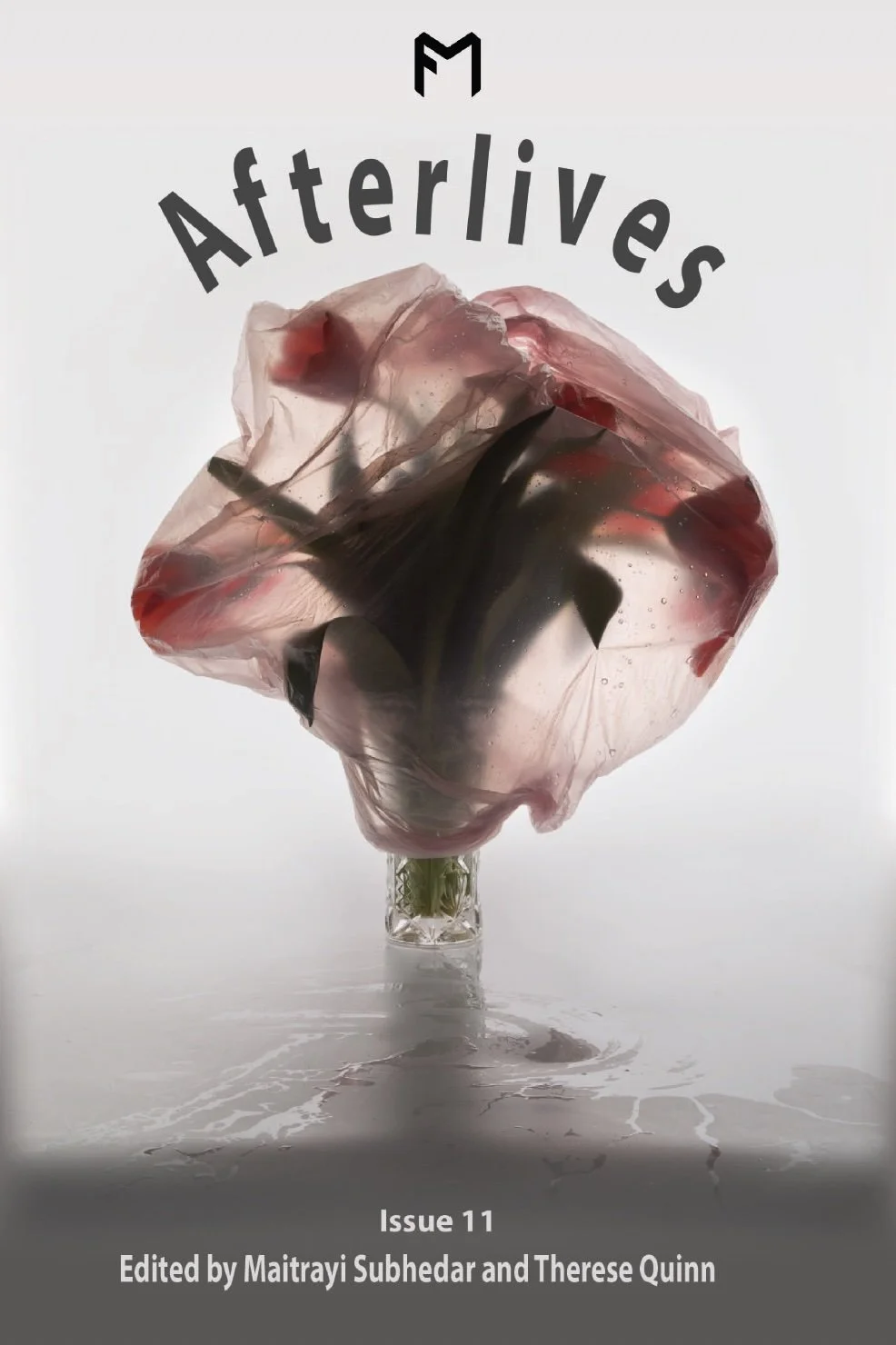
FWD: MUSEUMS: “Afterlives,” edited by Maitrayi Subhedar and Therese Quinn, seeks to explore the afterlives of museums, objects, and histories, exploring the ways they persist, transform, or dissolve after rupture.
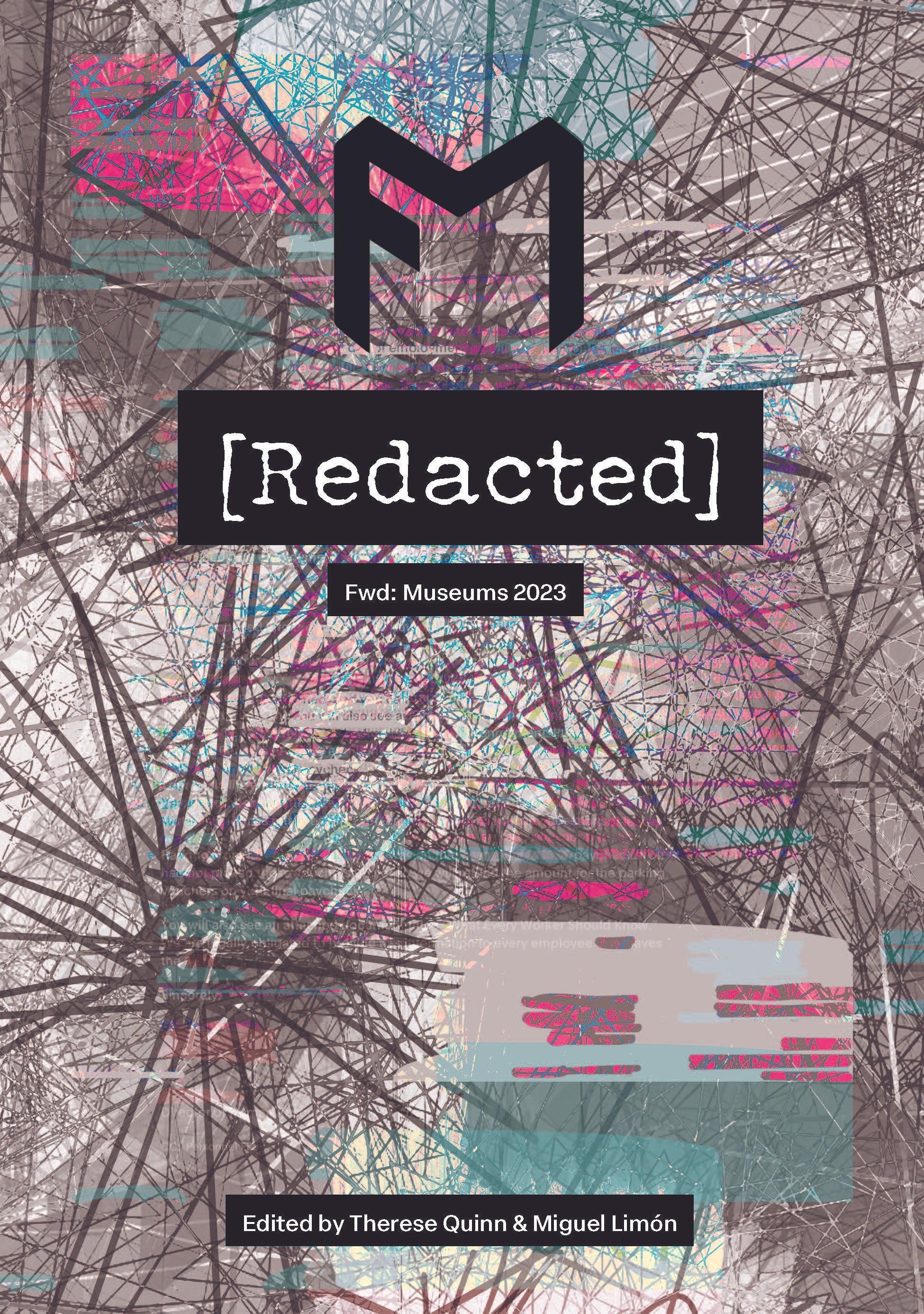
Produced and edited by graduate students in the University of Illinois Chicago Museum and Exhibition Studies program and published by Chicago-based Bridge Books, Fwd: Museums creates a space for challenging, critiquing, and developing alternative modes of thinking and cultural production within and beyond museums. The journal features academic articles, artwork, essays, reviews, creative writing, interviews, poetry, and experimental forms that examine museums, exhibitions, archives, objects, and cultural work from a range of critical perspectives.
What does it mean to be alive? To be dead? To exist in a state beyond?
An afterlife can be a refusal, it can be the archive’s inability to forget, the museum’s struggle to unmake itself, the artifact that resists its own display. An afterlife can be a haunting, a presence that insists, a structure that lingers past its collapse. An afterlife can be a release, an object freed from the logic that once defined it, a collection finding life in new hands, a museum breaking apart to make space for something unimagined.
This issue considers afterlives as sites of potential futures, of transformation, of uneasy continuities. What is the afterlife of a museum that has declared itself decolonized; does it free itself? How might it live against the notions that many histories cannot be undone? What does it mean for an archive to carry traces of what was never meant to be remembered? (What are the afterlives of looted objects: do they return, do they belong, do they remain displaced even when placed back?) What forms of autonomy emerge in ghostly persistence? How does something, once presumed dead, begin again?
FWD: MUSEUMS: “Afterlives,” edited by Maitrayi Subhedar and Therese Quinn, seeks to explore the afterlives of museums, objects, and histories, exploring the ways they persist, transform, or dissolve after rupture.
Produced and edited by graduate students in the University of Illinois Chicago Museum and Exhibition Studies program and published by Chicago-based Bridge Books, Fwd: Museums creates a space for challenging, critiquing, and developing alternative modes of thinking and cultural production within and beyond museums. The journal features academic articles, artwork, essays, reviews, creative writing, interviews, poetry, and experimental forms that examine museums, exhibitions, archives, objects, and cultural work from a range of critical perspectives.